| Standard Centrifugal Pump |
Clean water transfer, irrigation, construction dewatering, tank filling, and emergency drainage. |
Approximately 20–2,000 L/min, depending on engine and impeller size. |
Approximately 15–80 m. |
Usually limited to small particles; many models are intended for water with little or no debris. |
High flow
Simple design
Widely available
|
Can clog when used with leaves, stones, sludge, or fibrous materials. Priming may be required unless the pump is self-priming. |
Operate outdoors or in a properly ventilated area. Keep the exhaust away from people, doors, windows, and air intakes. Never use a gasoline engine in an enclosed space because of carbon-monoxide risk. |
Use the fuel grade specified by the engine manufacturer. Gasoline engines produce carbon monoxide, hydrocarbons, nitrogen oxides, and carbon dioxide. Fuel must be stored in approved, labeled containers away from ignition sources. |
Check the engine's applicable non-road emission approval, such as US EPA requirements, California requirements where applicable, or EU NRMM Stage V requirements. Apply machinery risk-assessment and guarding principles such as ISO 12100 and ISO 13857 where relevant. |
Check engine oil before every use; clean the air filter; inspect suction hose, strainer, clamps, and seals; drain the pump after freezing conditions; replace spark plug and engine oil at the interval specified in the owner's manual. |
| High-Pressure Centrifugal Pump |
Long-distance water delivery, sprinkler irrigation, fire-service support where legally permitted, and elevated-discharge applications. |
Approximately 50–500 L/min. |
Approximately 50–120 m. |
Generally suitable for clean water or lightly contaminated water only. |
High discharge pressure
Long pipe runs
Compact package
|
Usually provides less flow than a standard or trash pump. Excessive pressure can damage hoses, fittings, sprinklers, or downstream equipment. |
Use hoses, couplings, valves, and pressure gauges rated above the maximum pump pressure. Secure discharge hoses to prevent whipping. Do not direct high-pressure water at people, animals, or electrical equipment. |
Engine emissions and fuel-storage requirements are similar to other gasoline-powered non-road equipment. Avoid running rich or with a blocked air filter, as poor combustion increases emissions and can damage the engine. |
Confirm the engine emission category for the destination market. Use pressure components meeting the applicable national or regional product and workplace requirements; do not treat a water pump as a certified fire pump unless it has the required approval. |
Inspect pressure hoses and fittings for abrasion; clean the impeller and casing; verify pressure and flow; check for cavitation symptoms such as rattling, vibration, or unstable discharge; service the engine according to its maintenance schedule. |
| Trash Pump |
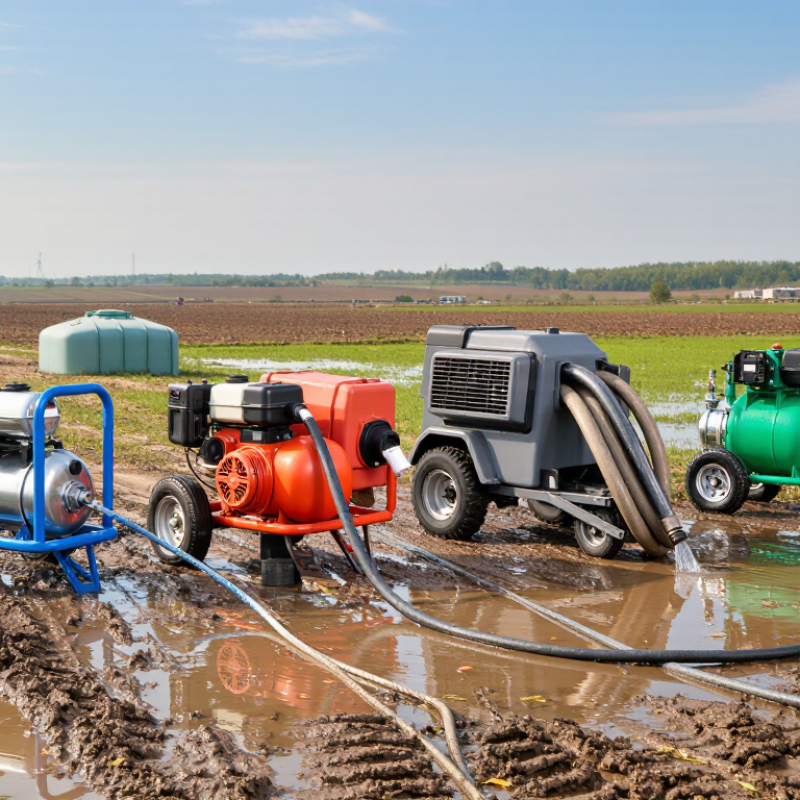
Flood control, muddy water, construction sites, agricultural drainage, ponds, and water containing stones or organic debris. |
Approximately 300–2,500 L/min. |
Approximately 20–45 m. |
Commonly handles solids around 20–35 mm, although the actual size depends on the impeller and casing design. |
High flow
Debris tolerance
Serviceable impeller
|
Lower pressure than high-pressure models. Abrasive sand and gravel can accelerate wear on the impeller, wear plate, seals, and casing. |
Use a suction strainer suitable for the debris size. Keep hands and tools away from the rotating assembly. Stop the engine and isolate the spark-plug lead before opening the pump casing for cleaning. |
Use clean, fresh fuel and prevent water or dirt from entering the tank. Extended idling wastes fuel and may increase deposits and emissions. Follow local rules for refueling and spill control. |
Review applicable non-road engine emission regulations, workplace fuel-storage rules, and general machinery guarding requirements. Verify whether the complete pump package requires local conformity documentation. |
Flush abrasive or muddy water with clean water after use; remove debris from the casing; inspect the wear plate and impeller clearance; lubricate or replace mechanical seals as specified; clean the fuel and air systems. |
| Semi-Trash Pump |
General drainage, irrigation, light construction work, and water containing limited leaves, silt, or small particles. |
Approximately 200–1,500 L/min. |
Approximately 20–50 m. |
Typically handles smaller solids than a trash pump, often around 8–20 mm depending on model design. |
Balanced performance
Moderate debris handling
Versatile
|
Not suitable for heavy sludge, large stones, long fibrous waste, or highly abrasive slurry. |
Place the pump on a stable surface and prevent the suction hose from collapsing. Use the correct hose diameter to reduce blockage and cavitation. Keep exhaust heat away from dry grass and combustible materials. |
Gasoline storage and refueling should be performed outdoors or in an approved, well-ventilated area with ignition control. Use the engine oil and fuel specified for the operating temperature and engine design. |
Check destination-market requirements for gasoline non-road engines, including US EPA or California rules where applicable and EU Stage V requirements for applicable engine categories. |
Clean the suction strainer after each dirty-water job; inspect hoses and clamps; change oil at the prescribed hours; clean the cooling fins; inspect seals and gaskets for leakage. |
| Diaphragm Pump |
Sludge, wastewater, slurry, mud, and liquids containing high levels of suspended solids or air. |
Approximately 20–250 L/min. |
Approximately 10–35 m. |
Can handle larger solids and heavy solids concentrations than most centrifugal pumps, subject to diaphragm and valve design. |
Self-priming
Sludge capable
Air-tolerant
|
Lower flow rate and more pulsating discharge. Diaphragms, check valves, and valve seats are wear parts and may require frequent replacement in abrasive service. |
Install the pump on a stable base and protect moving linkages. Use guards around exposed drive components. Release pressure before disconnecting hoses or opening the fluid chamber. |
Engine emissions remain subject to the engine category and destination market. Because sludge may release hazardous gases, assess the liquid and work area separately; engine exhaust must never be used as ventilation. |
Apply relevant machinery safety and non-road engine requirements. For wastewater or hazardous liquids, additional occupational, environmental, and hazardous-area rules may apply depending on the site. |
Inspect diaphragm condition, check valves, valve seats, and fasteners; flush corrosive or abrasive liquids; replace damaged diaphragms promptly; maintain engine oil, air filter, and spark plug. |
| Self-Priming Centrifugal Pump |
Repeated drainage and transfer jobs where the pump may lose prime, including construction dewatering and general site pumping. |
Approximately 100–2,000 L/min. |
Approximately 20–60 m. |
Usually handles limited solids; some designs can manage small debris, but they are not equivalent to a trash pump. |
Automatic re-priming
Fast setup
General-purpose use
|
Still requires a correctly installed suction line. Air leaks, excessive suction lift, or a blocked strainer can prevent priming and cause overheating or seal damage. |
Keep the suction hose short, airtight, and adequately supported. Do not operate dry beyond the period permitted by the manufacturer. Use a check valve or foot valve when required by the design. |
Ensure adequate ventilation and maintain the engine's emissions-control components. Avoid fuel overfilling because gasoline expansion and vapor release can create fire and environmental hazards. |
Confirm applicable engine certification and labeling for the import market. Use instructions and safety warnings in the required local language where regulations demand them. |
Check priming chamber water level; inspect suction-side fittings for air leaks; clean the strainer; monitor mechanical-seal leakage; service the engine and drain the pump before storage. |
| Portable Fire-Service Water Pump |
Emergency water supply and firefighting support only when the complete unit is approved and suitable for the intended fire-service application. |
Approximately 300–1,500 L/min. |
Approximately 40–100 m. |
Normally designed for relatively clean water; debris can reduce reliability and pressure. |
Rapid deployment
High pressure
Portable
|
A general-purpose gasoline water pump is not automatically a certified fire pump. Performance may decline with elevation, hose length, suction lift, and water temperature. |
Only trained personnel should operate the unit. Maintain safe distance from flames and fuel vapors. Use fire-service-rated hoses and fittings, and test the pump under the expected operating conditions. |
Gasoline storage near fire operations presents a significant ignition hazard. Engine exhaust can impair visibility and expose operators to carbon monoxide; position the unit upwind and outdoors where possible. |
Check local fire-service approval, occupational-safety rules, hose and coupling requirements, and engine emission regulations. Certification requirements differ substantially by country and by intended use. |
Perform documented pre-use checks; test starting, pressure, flow, seals, and emergency shutoff; inspect hoses and couplings; replace fuel according to storage guidance; follow a scheduled readiness test program. |
| Diesel-Powered Water Pump |
Long-duration dewatering, agricultural irrigation, municipal or industrial sites, and applications requiring high torque or extended runtime. |
Approximately 300–5,000 L/min. |
Approximately 20–100 m. |
Depends on pump construction; trash, semi-trash, and centrifugal configurations are available. |
Long runtime
Fuel efficiency
High torque
|
Diesel exhaust is hazardous. The engine and exhaust system become very hot. Vibration, noise, fuel spills, and battery hazards should be included in the site risk assessment. |
Applicable emission limits may require a compliant diesel engine, after-treatment system, or operating restrictions. In the EU, applicable non-road engines may fall under Stage V; in the US, diesel non-road engines are regulated under EPA requirements such as 40 CFR Part 1039. |
Use the specified diesel fuel and low-ash engine oil where required by the emission-control system. Do not remove or bypass oxidation catalysts, particulate filters, selective catalytic reduction, or other emission-control equipment. |
Verify the engine's emission certificate, labeling, import documentation, and local fuel-storage requirements. Apply relevant machinery safety, noise, and workplace-exhaust controls. |
Check oil, coolant, fuel-water separator, belts, hoses, battery, and air filter; drain water from the fuel system; inspect exhaust after-treatment; follow scheduled regeneration or service procedures where fitted. |
| High-Altitude or Cold-Climate Configuration |
Mountain regions, winter construction, remote agriculture, emergency drainage, and other environments where standard engine calibration may be unsuitable. |
Depends on the underlying pump type; output may decrease as altitude or temperature increases. |
Depends on the underlying pump type; available engine power can decline at high altitude. |
Depends on the selected pump configuration. |
Adapted operation
Improved starting
Environmental flexibility
|
Cold starts, fuel waxing, frozen water passages, reduced air density, and battery capacity loss can reduce reliability and performance. |
Use cold-weather starting procedures, keep hands clear of recoil starters and belts, and prevent frost or ice from blocking the suction or discharge line. Never use open flames to thaw fuel or pump components. |
High altitude can change air-fuel ratios and emissions. Use only manufacturer-approved altitude kits or calibrations, and confirm that modifications do not invalidate the engine's emission certification. |
Check whether the engine approval covers the intended altitude and temperature range. Follow local rules for fuel, winterization, noise, and outdoor equipment operation. |
Use the correct viscosity oil and fuel for ambient conditions; protect the pump from freezing; drain water after operation; charge and test the battery; inspect air filters more frequently in dusty or high-altitude areas. |