7 Best Dewatering Pump Types for Global Buyers

Choosing the right dewatering pump is rarely a simple matter of comparing flow rates and prices. Global buyers face changing ground conditions, different power standards, transport limits, and strict project schedules. A pump that performs well in a clean excavation may struggle when mud, sand, or debris enters the water.

This guide examines seven practical dewatering pump types used across construction, mining, agriculture, emergency response, and industrial drainage. It considers submersible, centrifugal, trash, diaphragm, pneumatic, wellpoint, and diesel-driven systems. Each type has a different working strength. Some handle abrasive water better. Others suit deep excavations, confined spaces, or locations without reliable electricity.

Real site experience often reveals details that catalogues overlook. A blocked intake can stop production within minutes. A long discharge hose can reduce expected output. Voltage differences may also create avoidable installation problems. These points deserve attention.

No single choice is perfect. That is the honest part.

Reliable selection depends on more than published capacity. Buyers should examine total head, solids size, duty cycle, fuel or power access, maintenance support, and local spare parts. Manufacturer data remains important, but field conditions can change the result. Even experienced teams sometimes underestimate sediment or noise requirements.

The following overview helps international purchasers compare each dewatering pump type with clearer expectations. It does not replace a site assessment. Instead, it provides a practical starting point for asking better technical questions, reducing downtime, and matching equipment with real operating conditions. Performance should be verified before purchase. That extra step can prevent an expensive mistake.
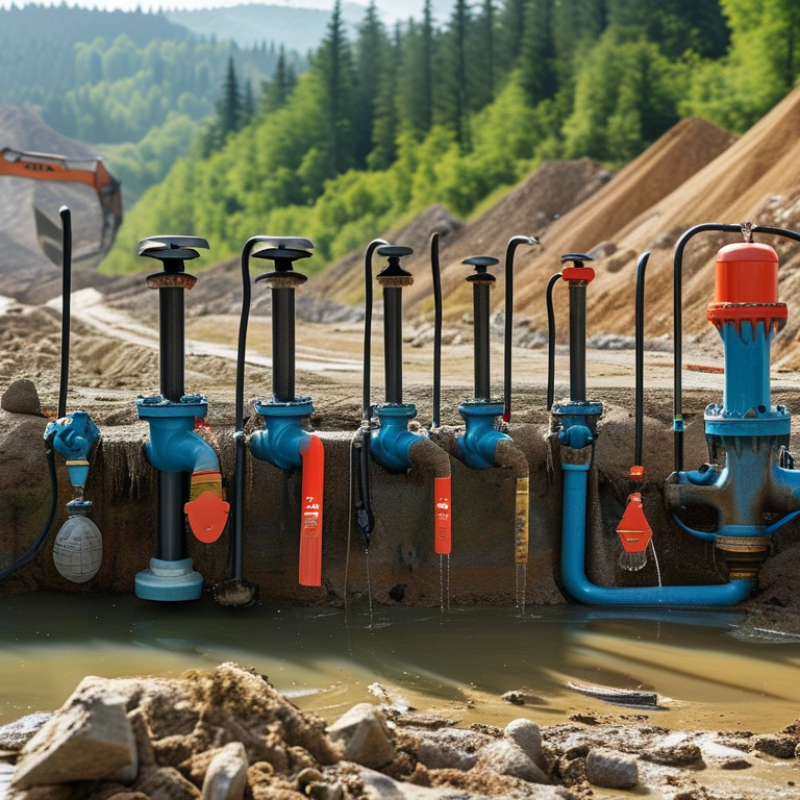
7 Best Dewatering Pump Types for Global Buyers

Dewatering Pump Basics: Purpose, Flow Rate, Head, and Site Conditions

7 Best Dewatering Pump Types for Global Buyers

Dewatering Pump Basics: Purpose, Flow Rate, Head, and Site Conditions

Dewatering removes groundwater, rainwater, or process water before work continues. The right pump depends on more than pipe diameter. Flow rate shows how quickly water must leave the site. Head combines vertical lift, pipe friction, bends, valves, and discharge pressure. A pump delivering 100 m³/h at low head may fail on a deep excavation.

Start with a measured inflow estimate, then add a practical safety margin. Avoid excessive oversizing. The U.S. Department of Energy reports that pumping systems can represent 25–50% of industrial electricity use in some facilities. Efficiency matters.

Centrifugal pumps Suit clear water and higher flow.
Trash pumps Handle larger solids.
Submersible pumps Save space in flooded pits.
Diaphragm pumps Can tolerate air and muddy water, but often provide lower flow.

Tips: Measure the deepest water level, discharge distance, pipe size, and expected solids. Check the pump curve at the actual total dynamic head, not its maximum rating. Inspect the inlet screen daily. A neat calculation can still miss a muddy inlet. Site conditions change quickly, especially after heavy rain. Prepare standby capacity where flooding could stop excavation, damage equipment, or delay workers. Document assumptions, because the first estimate is rarely perfect.

The Seven Main Dewatering Pump Types and Their Typical Applications

Dewatering choices depend on water depth, solids, discharge distance, and available power. The seven main types are submersible, centrifugal, self-priming, diaphragm, positive-displacement, wellpoint, and air-lift pumps. Submersible pumps suit flooded excavations, sumps, and construction pits. Centrifugal pumps handle high flow in mines, canals, and municipal drainage. Self-priming models are useful when suction lines may admit air. They reduce daily setup problems.

Diaphragm pumps manage muddy water and moderate solids, making them practical for trenches and sludge-rich sites. Positive-displacement pumps deliver steady flow at higher pressure, including deep-well and industrial transfer work. Wellpoint systems lower groundwater around foundations through multiple shallow wells. Air-lift pumps work in narrow wells and contaminated areas, but they need compressed air and often lose efficiency at greater depths. That limitation is easy to underestimate.

The UN World Water Development Report 2024 states that agriculture accounts for roughly 70% of global freshwater withdrawals. This supports continued demand for drainage, irrigation, and groundwater-control equipment. Market research from IMARC Group also identifies construction, mining, and municipal projects as major dewatering pump applications. Yet market forecasts are not site specifications. Field measurements matter more.

Record inflow, test solids, confirm total dynamic head, and check power stability before selecting equipment. I have seen a pump meet its flow rating but fail after sand entered the impeller. Real sites are rarely neat. A short trial can reveal more than a polished datasheet.

Submersible, Centrifugal, and Self-Priming Pumps for Water Removal

For global buyers, dewatering pump selection starts with water depth, solids, discharge distance, and available power.

Submersible pumps suit flooded pits because the motor sits underwater, reducing suction problems. They handle fast deployment, but cable damage and seal failure deserve attention.

Centrifugal pumps deliver high flow for clean or lightly contaminated water. Their performance drops when debris enters the impeller.

Self-priming centrifugal pumps are more forgiving above ground. They restart after air enters the suction line, although priming still takes time.

Three other useful options complete the seven: trash pumps for leaves, stones, and construction sediment; diaphragm pumps for abrasive sludge and intermittent flow; and axial-flow pumps for moving large water volumes at low lift.

Wellpoint systems, often paired with centrifugal pumps, lower groundwater around excavations. The choice is not always obvious.

A compact pump may look efficient, yet a long discharge hose can consume much of its rated flow.

Energy matters across large projects.

The International Energy Agency has estimated that water supply and wastewater services consume about 4% of global electricity. UN-Water’s 2024 World Water Development Report also notes that agriculture accounts for roughly 70% of freshwater withdrawals worldwide.

These figures favor efficient hydraulics, correct pipe sizing, and variable-speed control where operating conditions change.

Buyers should request tested flow curves, solids-passage limits, noise data, and service intervals. Do not trust catalogue flow alone. Field conditions are usually less tidy.

Trash, Sludge, Diaphragm, and Wellpoint Pumps for Difficult Sites

Choosing the right dewatering pump starts with the site, not the catalogue. The seven practical types include trash, sludge, diaphragm, wellpoint, submersible, centrifugal, and hydraulic pumps. Trash pumps handle muddy water, stones, and leaves through wide passages. Sludge pumps move thick solids, but their output falls when solids exceed the specified concentration. Diaphragm pumps suit abrasive slurry and air-prone suction lines. They are slower, yet forgiving. Wellpoint systems lower groundwater across trenches and foundations, especially where seepage continues overnight. Submersible pumps work quietly in flooded pits, while centrifugal pumps deliver high flow from cleaner water. Hydraulic pumps remain useful where electrical power is unreliable.

Field records should guide the choice. The U.S. EPA Construction General Permit identifies 280 NTU as a turbidity benchmark for certain construction discharges. That figure makes sediment control as important as pump capacity. USACE dewatering guidance also stresses staged pumping, filtered discharge, and monitoring piezometers. A pump rated at 100 cubic metres per hour may deliver far less through long hoses, elevation changes, and clogged screens. This is where many specifications become optimistic.

Tips: Measure inflow during rainfall and after excavation. Check solids size, suction lift, discharge distance, and available power. Use a settling tank or filter bag before discharge. Keep a standby unit nearby. I have seen teams select by horsepower alone; it looked efficient, but the pump overheated beside a silty trench. A short field trial is often more honest than a perfect calculation.

7 Best Dewatering Pump Types for Global Buyers - Trash, Sludge, Diaphragm, and Wellpoint Pumps for Difficult Sites
Pump Type Best Application Typical Flow Range Typical Total Head Solids Capability Typical Pumping Depth Main Advantages Key Limitations
Trash Pump Construction excavations, stormwater, flood response, and water containing leaves, stones, or debris 20–2,000 m³/h 10–60 m Approx. 25–100 mm semi-open or recessed passage, depending on design Usually 3–8 m suction lift for self-priming units; deeper water requires a submerged pump Handles debris better than standard clear-water centrifugal pumps; rapid setup; commonly self-priming Not ideal for highly abrasive sludge; suction lift decreases with altitude, temperature, and hose losses
Sludge Pump Thick silt, settled mud, drilling fluids, slurry, and sediment-rich excavation water 10–500 m³/h 15–80 m Often designed for solids up to 25–100 mm; abrasive-duty models use hardened wear parts Commonly submerged or installed at low level to reduce suction problems Suitable for high-solids liquids; can manage heavier mixtures than ordinary drainage pumps Higher wear, greater power demand, and lower efficiency when solids concentration increases
Diaphragm Pump Difficult-to-prime sites, sandy water, sludge, contaminated water, and intermittent bypass pumping 5–250 m³/h 10–80 m Typically handles solids around 25–75 mm, subject to valve and diaphragm design Self-priming; commonly effective with suction lifts of approximately 7–9 m under favorable conditions Runs dry for limited periods, tolerates air in the suction line, and offers good suction capability Pulsating flow, lower flow rate than many centrifugal pumps, and diaphragm or valve maintenance
Wellpoint Pump Lowering groundwater around trenches, foundations, pipelines, utility work, and shallow excavations 20–300 m³/h per pumping system 20–60 m Designed primarily for groundwater; generally unsuitable for large debris or thick sludge Effective drawdown commonly up to about 5–6 m per stage; deeper drawdown may require staged systems Controls groundwater before it enters the excavation; useful where multiple small wellpoints are needed Requires proper wellpoint spacing, filter design, sealing, and soil permeability assessment
Submersible Drainage Pump Clear or lightly contaminated water in sumps, basements, pits, tanks, and low-lying work areas 5–600 m³/h 5–75 m Typical passage of 6–30 mm; larger-passage versions are available for solids-bearing water Can operate at the bottom of the sump; practical depth depends on cable, motor, and installation design Compact, quiet, easy to deploy, and avoids suction-lift limitations Requires suitable electrical protection; dry running, abrasive solids, and clogged inlets can damage the pump
Sewage or Vortex Pump Wastewater, sanitary bypass, manholes, sewage pits, and liquids containing fibrous matter 10–500 m³/h 8–70 m Common free passage of 40–100 mm, depending on impeller and pump size Submerged installation is typical; suitable depth is determined by the motor and cable arrangement Good clog resistance, reliable wastewater handling, and no external priming system Lower efficiency than some closed-impeller pumps; requires hygiene, lifting, and maintenance procedures
Axial-Flow or Mixed-Flow Pump Large-volume, low-lift drainage, flood control, reservoirs, canals, and open excavations 500–10,000+ m³/h 2–25 m Usually limited to screened water or moderate debris; inlet protection is important Often installed vertically or on floating platforms; operating depth depends on intake design Moves very high volumes efficiently at low heads; suitable for major floodwater removal Poor choice for high head, thick sludge, or un screened debris; requires careful intake design
Technical note: Ranges are typical industry selection values for preliminary comparison only. Actual performance depends on pump size, impeller design, fluid viscosity, solids concentration, pipe diameter, elevation, temperature, power supply, and site conditions. Flow and head must be confirmed against the manufacturer’s certified performance curve.

Global Buyer Checklist: Power, Materials, Standards, Service, and Cost

7 Best Dewatering Pump Types for Global Buyers

A dewatering pump should match the duty point, not merely the advertised flow rate. Centrifugal, submersible, diaphragm, trash, wellpoint, and positive-displacement pumps serve different site conditions. Check flow, total dynamic head, solids size, suction lift, and duty cycle. A pump handling muddy water may fail quickly when its impeller clearance is too small. The U.S. Department of Energy reports that pumping systems can represent 25–50% of industrial electricity use. Power efficiency deserves serious attention. Confirm motor voltage, frequency, phase, starting current, and generator capacity before ordering. A “low-cost” pump can become expensive after repeated fuel stops.

Materials must reflect the water chemistry and abrasion level. Cast iron suits many general applications, while stainless steel or coated components may better resist corrosion. Ask for material certificates and test records. ISO 9906 provides pump performance testing requirements, while IEC 60034 covers rotating electrical machines. IEC 60529 IP ratings also help buyers compare enclosure protection. Standards are useful, but paperwork alone does not prove field performance. Request curves based on your actual liquid and operating point.

Tips: Compare total cost over three years, including energy, wear parts, transport, and technician time. Verify local spare-parts access and response times. A remote site needs simple maintenance. Ask whether seals, cables, floats, and impellers are stocked nearby. Also check noise, lifting points, discharge connections, and winter storage requirements. I would not trust a quote with unclear exclusions. That mistake is common. Industry reports offer guidance, but site measurements should make the final decision.

×

Cart