2026 Best Investment Castings for Global Buyers Insights?
Investment Castings have become essential for global buyers seeking high-quality production methods. The intricate process of investment casting allows for complex shapes and superior surface finishes. In an age where precision is paramount, understanding the best investment castings in 2026 could set companies apart.
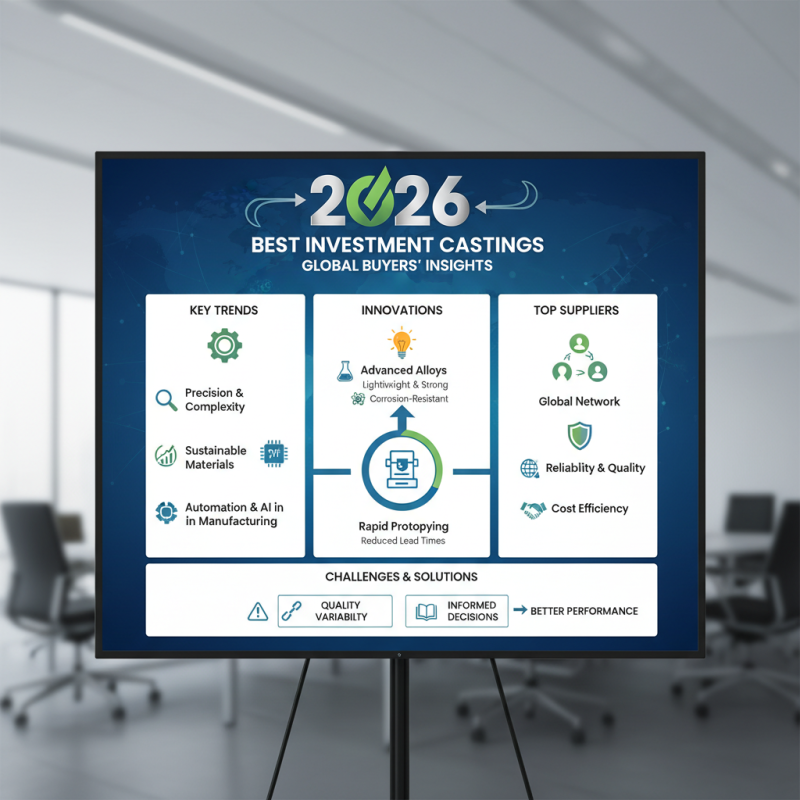
This guide explores the key trends, innovations, and suppliers in the investment castings industry. Global competition drives the need for reliable and efficient solutions. Many buyers often face challenges when selecting the right casting methods, especially in a landscape filled with options. However, informed decisions can lead to better performance and cost savings.
In examining the best investment castings available, we must also acknowledge potential setbacks. Not every supplier meets every requirement, and quality can vary significantly. Buyers must remain vigilant and continuously evaluate their choices. Through careful consideration and industry insights, companies can navigate these challenges effectively.
Overview of Investment Casting Process and Advantages
Investment casting is a precision metal casting process. It offers unmatched quality and versatility in producing complex shapes. This method is beneficial across various industries, including aerospace, automotive, and medical devices. Reports indicate that the investment casting market was valued at approximately $13 billion in 2020 and is projected to grow at a CAGR of around 5% through 2027.
The process begins with creating a wax pattern. This pattern is then coated in a ceramic material, which hardens. The wax is melted away, leaving a mold for metal casting. This technique allows for intricate designs and tight tolerances. Components made from investment casting often require less machining, which reduces waste and cost. However, the initial tooling investment can be high, posing challenges for small projects.
Tips: Consider using investment casting for intricate designs. Evaluate the cost-benefit analysis carefully. It's essential to account for material type and volume, as they impact the overall feasibility.
Investment casting also helps reduce lead times, which is crucial for modern manufacturing. However, achieving the right quality might require optimization. Not every design will yield the expected results, making it vital to consider engineering consultations before finalization. Balancing precision and cost can be tricky. Using simulation software may lead to better outcomes, but it requires expertise.
Key Materials Used in Investment Casting for 2026
Investment casting is gaining traction globally, driven by advancements in technology and materials. The key to this process lies in selecting the right materials. Steel remains a top choice due to its strength and versatility. It can withstand extreme temperatures and environments, making it ideal for various applications. Aluminum is also favored for its lightweight properties and excellent corrosion resistance. These characteristics make it popular in aerospace and automotive sectors.
Ceramics, used for molds, play an essential role in shaping the final product. They withstand high temperatures and offer precision in details. Recent innovations have led to the development of advanced ceramic composites. These materials not only improve durability but also enhance the surface finish of castings. However, challenges exist in achieving the perfect balance between material performance and cost-effectiveness.
Alloy selection is critical. Choices like titanium and nickel-based alloys add complexity due to their unique properties. While these materials can enhance performance, they often come with higher costs. Manufacturers strive to optimize processes, but inconsistencies can arise. Continuous improvement in material science and manufacturing techniques will be essential for meeting future demands in investment casting.
Market Trends Influencing Global Buyer Preferences in Investment Castings
The global market for investment castings is evolving rapidly. Buyers are now more informed than ever. They seek precision, durability, and cost-effectiveness. Market trends reflect a growing preference for sustainable practices. Many buyers prioritize suppliers with eco-friendly processes and materials. This shift is not a passing trend; it reflects a broader commitment to sustainability in manufacturing.
Technology plays a significant role in shaping buyer preferences. Automation and advanced manufacturing techniques lead to greater efficiency. Buyers are keen on reduced production times and lower costs. Moreover, the ability to customize products has become crucial. They want innovation that meets specific needs. Trust and reliability remain paramount. Buyers favor suppliers with solid reputations and proven track records.
However, challenges persist. Not all suppliers can meet the rising standards. Some still rely on outdated methods. This inconsistency can lead to dissatisfaction. Additionally, fluctuating material prices create uncertainty. Buyers must navigate this complex landscape. They need to balance cost, quality, and sustainability. As the market adapts, staying informed will be key to making wise purchasing decisions.
2026 Best Investment Castings Trends
This chart illustrates the market demand for investment castings across different industries for the year 2026. The automotive sector leads with a 35% demand, followed by aerospace and industrial machinery, reflecting current market trends influencing global buyer preferences.
Top Global Suppliers of Investment Castings in 2026
In 2026, the investment castings market continues to flourish. A recent report from the Global Investment Casting Association indicates a projected growth of 7% annually. This growth is driven by rising demands in the automotive, aerospace, and medical sectors. These industries rely heavily on high-precision components that investment castings provide.
Top global suppliers are adapting to this surge in demand by improving their production capabilities. They're focusing on advanced technologies like 3D printing and robotics. These innovations can enhance accuracy and reduce lead times. Notably, the need for eco-friendly practices is also rising. Several suppliers are exploring sustainable materials and methods.
However, challenges persist. Quality control remains a critical issue in production. Some suppliers struggle with consistency, leading to product discrepancies. This highlights the need for ongoing training and development within the workforce. As the market evolves, suppliers must navigate these complexities to maintain competitiveness.
Future Innovations in Investment Casting Technologies and Practices
In the realm of investment casting, innovation is key. New technologies are reshaping the landscape. According to a 2023 industry report, advancements in 3D printing and digital process automation are leading the way. These technologies enhance precision and reduce waste. Manufacturers are increasingly adopting these methods to stay competitive.
The integration of artificial intelligence is also noteworthy. AI allows for better quality control and predictive maintenance. A recent survey indicated that companies implementing AI have seen a 30% reduction in defects. However, the transition poses challenges. Many firms struggle with employee training and technology adaptation.
Sustainability is another crucial aspect. The industry is moving toward eco-friendly materials and processes. Reports show a 25% rise in demand for sustainable casting solutions. Yet, some companies remain reluctant to shift. The cost and complexity of new materials can be daunting. As innovation continues, firms must reflect on these obstacles to fully embrace the future.