Choosing the best China manufacturer for a self priming centrifugal pump requires more than comparing catalog prices. The right supplier must prove hydraulic performance, material consistency, and dependable after-sales support. In real installations, the pump may face muddy water, intermittent suction, air pockets, and long operating hours. Small design weaknesses become costly very quickly.
Industry data shows why this decision matters. The United Nations World Water Development Report identifies agriculture as responsible for approximately 70% of global freshwater withdrawals. Reliable pumping equipment therefore supports food production, municipal services, and industrial continuity. The U.S. Department of Energy also notes that pumping systems can represent a major share of industrial electricity consumption. Efficiency deserves equal attention. A low purchase price can conceal higher lifetime energy costs.
A capable Chinese manufacturer should provide tested flow curves, suction-lift data, NPSH information, and clear material specifications. ISO 9001 quality management is useful, but it does not replace product-level testing. Ask for inspection records, hydrostatic pressure results, vibration limits, and factory acceptance procedures. Check whether the supplier understands ISO 2858, ISO 5199, or relevant project standards. Field experience matters here. A pump that starts easily beside a clean test tank may behave differently with a six-meter suction line and suspended solids.
No manufacturer is perfect. Even strong factories may have uneven documentation or limited overseas service coverage. That weakness should be examined, not ignored. This guide compares China-based manufacturers through engineering capability, certification evidence, customization, production control, delivery reliability, and practical customer feedback. The goal is simple: identify a supplier that delivers measurable performance, not impressive promises.
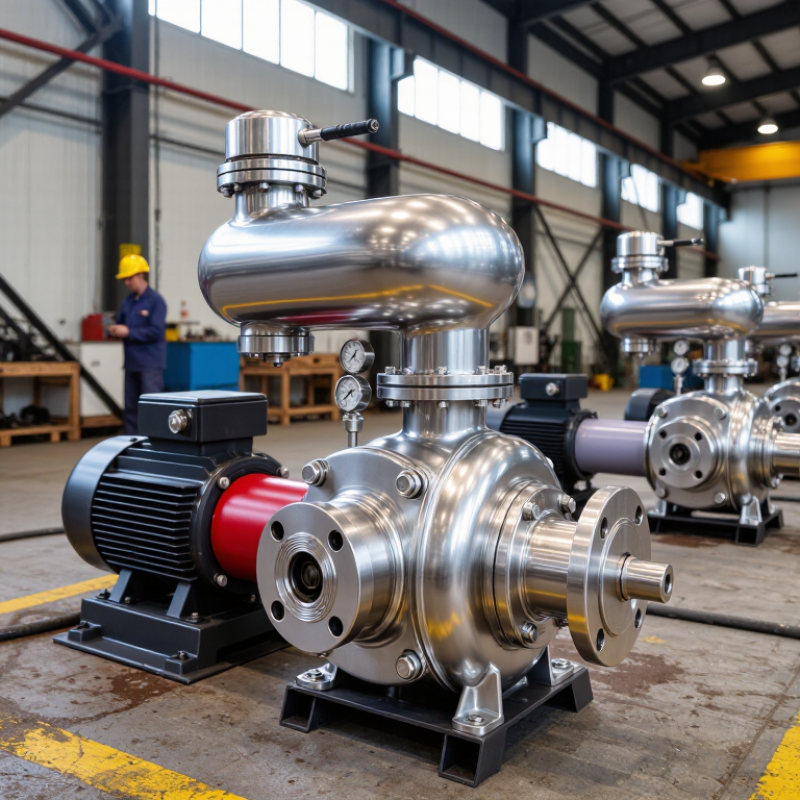
Self-priming centrifugal pumps can raise water from a lower source without manual priming after every start. Their suction lift may reach 8 m under ideal conditions. However, this is not a universal operating promise. Atmospheric pressure, water temperature, pipe length, and internal losses reduce the practical height. A realistic design often stays below the maximum.
Installation details matter. Keep the suction pipe short, straight, and airtight. Even a small leak can draw air and interrupt priming. The pump casing usually needs an initial water charge. It should not run dry while operators wait for suction. A foot valve can help maintain liquid in the line, but it also adds resistance and requires cleaning.
Field checks should include suction pressure, discharge flow, vibration, and priming time.
I have seen systems fail because the 8 m rating was treated like a guarantee. That assumption deserves review. A reliable manufacturer should provide tested performance curves, material details, seal options, and clear limits for temperature and fluid quality.
Ask for data from conditions close to the intended site. The best selection is not always the pump with the highest advertised lift. It is the pump that starts consistently, handles air properly, and matches the actual piping system.
China’s best self-priming centrifugal pump manufacturer should be judged by operating data, not catalog claims. Start with flow and head. Flow defines the required volume, while head covers elevation, pipe friction, valves, and discharge pressure. A pump delivering 50 m³/h at 35 m head may fail at 50 m³/h if the system curve was underestimated. Site measurements matter.
Efficiency affects lifetime cost. The U.S. Department of Energy reports that pumping systems can consume 25% to 50% of electricity in some industrial facilities. Select the duty point near the pump’s best efficiency point, then check performance at minimum and maximum flow. Hydraulic Institute guidance also stresses accurate system curves and proper pump selection. A small efficiency loss becomes expensive over thousands of operating hours. The spreadsheet may still be wrong.
Tips: Measure suction pressure, liquid temperature, pipe length, and actual elevation. Calculate NPSHA under the worst operating condition, not the average one. Keep NPSHA above NPSHR with a practical margin, especially for hot liquids or long suction lines. Self-priming ability does not remove cavitation risk. A foot valve, air leaks, or excessive suction lift can delay priming. Review the pump curve, motor load, materials, and test records before purchasing. Industry reports provide useful benchmarks, but field conditions remain decisive.
China Best Self Priming Centrifugal Pump Manufacturer?
When evaluating a China-based self-priming centrifugal pump manufacturer, certification should support evidence, not replace it. ISO 9001 shows that the factory operates a controlled quality management system. Ask for the certificate scope, issuing body, and current validity. Check whether it covers pump design, production, and testing.
ISO 9906 is more specific to pump performance testing. Request test records showing flow rate, head, efficiency, and shaft power. A reliable factory should explain the test conditions clearly. Look for calibrated gauges, recorded tolerances, and repeatable results.
During a factory visit, inspect the test bench, assembly area, and spare-part storage. Small details matter. Clean labels help.
CE compliance requires careful verification. It relates to applicable European safety and conformity requirements, not superior pump performance. Ask for the Declaration of Conformity, technical documentation, and relevant test evidence. Do not accept a logo image alone. I have seen documents that looked complete but lacked clear product identification. That is a warning sign. A supplier may also pass an audit while still having inconsistent surface finishing or weak packaging control. Discuss corrective actions openly. Good manufacturers can explain failures, revise procedures, and provide traceable inspection records before shipment.
China Best Self Priming Centrifugal Pump Manufacturer?
A credible performance test begins with a defined duty point, not a polished brochure curve. ISO 9906:2012 provides acceptance grades for centrifugal pump hydraulic performance. Tests should record flow, head, shaft power, speed, and efficiency. The curve must also state impeller diameter and test fluid temperature. Small measurement errors can change the buying decision. The U.S. Department of Energy reports that pumping systems may consume 25–50% of industrial electricity in some facilities. Therefore, a two-point efficiency advantage deserves careful verification, not quick marketing.
Priming time needs a repeatable method. Record suction lift, pipe volume, valve position, fluid temperature, and the time until stable discharge pressure appears. A “fast prime” claim means little without these conditions. Real site results can differ. They often do. Leakage testing should include casing pressure retention, shaft-seal observation, and post-test inspection. ISO 9906 supports hydraulic acceptance testing, but seal leakage limits may depend on the project specification and sealing arrangement. Test records should identify the pressure, duration, seal type, and observed leakage rate. Independent witness testing adds authority, although even witnessed tests can miss installation weaknesses. A supplier should preserve raw readings, calibration dates, and corrective actions. That evidence is more useful than a perfect-looking curve.
Choosing the best self-priming centrifugal pump manufacturer requires more than comparing catalog prices. Material selection should follow the liquid, temperature, solids, and operating hours. Cast iron suits many clean-water duties, while ductile iron handles higher mechanical stress. For corrosive or hygienic applications, stainless steel 304 or 316 may protect wetted components. However, stainless steel is not automatically the best choice. Seal faces, shaft sleeves, and impeller clearance still need technical review.
Customization separates a capable manufacturer from a simple equipment seller. Ask for verified flow, head, suction lift, motor power, NPSH, and flange dimensions. The manufacturer should adjust the impeller, mechanical seal, base, and control panel when site conditions demand it. Field experience shows that small suction-line changes can affect priming reliability. A drawing is useful. A tested prototype is better. I would still question any supplier promising identical performance under every liquid condition.
Warranty terms should define coverage, exclusions, response time, and replacement procedures. Reliable suppliers provide material certificates, performance curves, pressure-test records, and inspection photographs. Service quality also matters after delivery. Look for commissioning guidance, troubleshooting support, stocked wear parts, and technicians who understand pump installation. A two-year warranty sounds strong, but it means little without accessible service. Some suppliers communicate quickly before payment, then respond slowly after installation. That possibility deserves careful checking. Ask for realistic references from similar flow rates and working environments.
Copyright © 2025. Rotech Pumps & Systems Inc. All rights reserved.