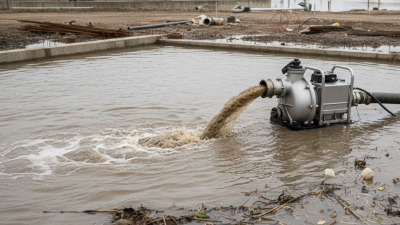
China Best Trash Pump Manufacturers and Suppliers?

Choosing the best trash pump manufacturers and suppliers in China requires more than comparing prices. Real field experience matters. A pump may look powerful on paper, yet struggle with muddy water, leaves, stones, or construction debris.

Dr. Lev Nelik, a respected pump engineer and author, has said, “Pump selection begins with understanding the application, not the catalog.” This principle remains practical. Buyers should examine flow rate, head pressure, solids-handling capacity, fuel consumption, and priming performance. A reliable trash pump should start steadily beside a flooded trench, maintain suction, and pass debris without frequent blockage. Cast-iron housings, durable impellers, mechanical seals, and accessible cleanout covers are useful details. Small features matter in dirty working conditions.

China has many capable manufacturers, but quality is not perfectly uniform. Some factories focus on agricultural drainage. Others specialize in construction, mining, municipal response, or rental equipment. The strongest suppliers usually provide factory testing, performance curves, spare-parts support, clear manuals, and consistent quality control. Ask for inspection records, material specifications, noise data, and videos showing the actual model operating. Do not rely on polished photos alone.

A lower purchase price can become expensive after repeated seal failures or delayed parts. I have seen buyers overlook maintenance access, then lose hours removing a clogged impeller. That mistake is easy to repeat. Compare suppliers by verified performance, production experience, warranty response, and communication quality. The best trash pump is not always the largest or cheapest. It is the one that performs reliably in your water, debris, climate, and work schedule.
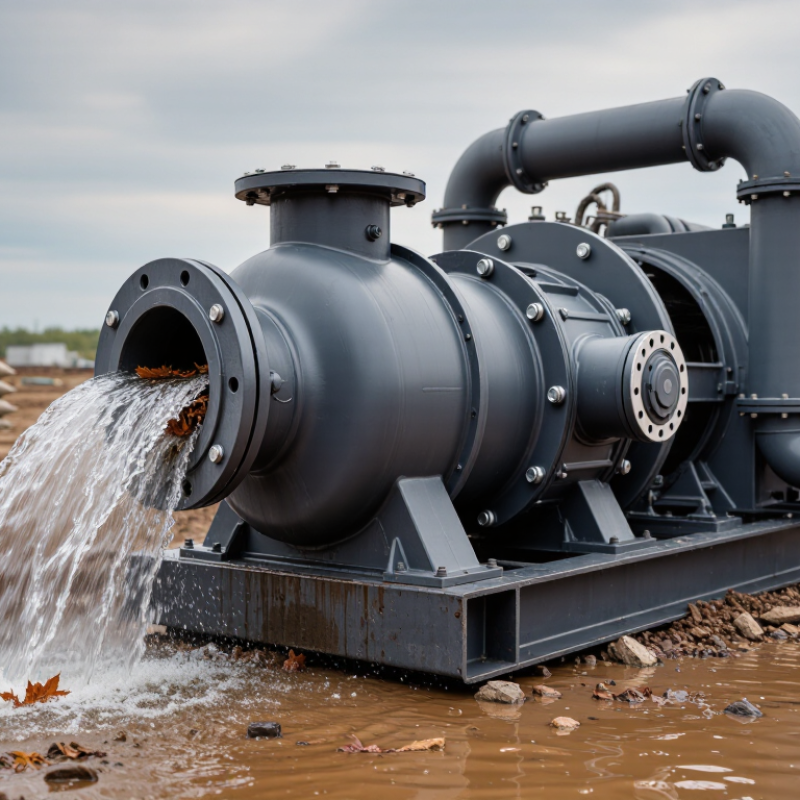
China Best Trash Pump Manufacturers and Suppliers?

What Is a Trash Pump and How Is It Used?

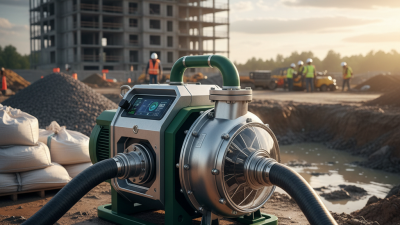
A trash pump is a centrifugal pump designed to move water containing solids. Unlike a clear-water pump, it can handle leaves, mud, small stones, and other debris. Its wide internal passage reduces clogging during drainage work. That matters on construction sites, farms, flood-control projects, and ponds.

In practical use, workers place the suction hose in the lowest area and connect the discharge hose to a safe outlet. The pump then removes dirty water from trenches, basements, tanks, or flooded fields. Before starting, check the fuel, oil, hose connections, strainer, and priming level. A loose connection can reduce suction quickly. It can also create an avoidable mess.

Size matters. A larger pump may move more water, but it can waste fuel when the hose is narrow or the lifting height is excessive. Reputable manufacturers and suppliers should provide flow data, maximum head, solid-handling capacity, maintenance guidance, and replacement parts. Ask for operating records or test information when possible. Specifications are useful, but field conditions are often less tidy. I have seen users choose by horsepower alone, then struggle with poor performance. That approach needs reconsideration. Clean the pump after muddy work, inspect the impeller, and never run it dry. Small habits protect expensive equipment.

Key Features of China-Made Trash Pumps

China-made trash pumps are designed for water carrying leaves, silt, gravel, and other coarse debris. Their defining feature is a wide passage, often around 50 to 100 millimeters, reducing blockage during drainage work. Cast iron or aluminum pump bodies balance durability and portability. Aluminum is lighter, but cast iron usually tolerates rough handling better. In field use, that trade-off becomes obvious when one worker moves the unit across wet ground.

Reliable models use replaceable wear plates and accessible clean-out covers. These parts allow operators to remove stones without dismantling the entire pump. Mechanical seals help control leakage around the impeller shaft. Seal quality matters more than a polished housing. A strong gasoline engine, stable frame, and low-oil protection support longer operation. Some units include electric starting, lifting handles, and vibration-reducing mounts. Small conveniences matter.

Quality should be checked through practical tests, not photographs alone. Inspect priming speed, discharge pressure, fuel use, noise, and performance with dirty water. Ask for material records and pressure-test results where available. Supplier consistency can vary between production batches, so sample inspection remains sensible. A common field lesson is that weak hose fittings can cause unexpected delays. That detail is easy to overlook. Buyers should match pump size to actual debris, distance, and working hours.

How to Evaluate Chinese Trash Pump Manufacturers

Evaluating Chinese trash pump manufacturers requires more than comparing catalog prices. Start with the pump’s working conditions: flow rate, total head, solid diameter, liquid temperature, and operating hours. A supplier should explain how each specification matches your site. Vague answers deserve caution.

Ask for factory evidence, not only product photos. A reliable manufacturer can show machining areas, assembly lines, inspection tools, and hydraulic test records. Request material details for the casing, impeller, shaft, and seals. These parts face mud, stones, and abrasive wastewater. Check whether the supplier tests a complete pump under load. A test video helps, but an independent inspection gives stronger confidence.

Experience also appears in small details. Can the engineer recommend a suitable hose diameter? Can the team explain priming problems and routine seal replacement? Request dimensional drawings, spare-parts lists, manuals, and clear warranty terms before payment. Export experience matters when packaging, documentation, and communication affect delivery. Certifications should be verifiable and relevant to the destination market.

My first supplier shortlist relied too heavily on low prices. That was a mistake. One quotation excluded essential accessories, while another used unclear performance data. Ask for a sample order when possible. Measure noise, fuel use, vibration, and actual discharge performance. Keep written records of every promise. A confident supplier will accept practical questions, although no factory performs perfectly every time. Leave room for correction, and judge how honestly the team handles problems.

Leading China Trash Pump Manufacturers and Suppliers

China’s leading trash pump manufacturers and suppliers serve construction, drainage, mining, agriculture, and emergency water removal projects. Their factories commonly offer diesel and electric models, with centrifugal designs built for water containing mud, leaves, gravel, and soft debris. Experienced suppliers discuss solids-handling diameter, head, flow rate, fuel use, and duty cycle before recommending a pump. That conversation matters more than a low quotation.

Reliable manufacturers usually maintain casting, machining, assembly, and testing procedures under one production system. Buyers should request performance curves, material specifications, inspection records, and practical test videos. Ask how the pump behaves after several hours with abrasive water. A clean showroom test proves little. Suppliers with export experience can also support spare parts, packaging, manuals, and remote troubleshooting. Response speed is useful evidence, although it is not proof of long-term quality.

Site conditions often expose weaknesses that catalogues hide. A pump may meet its rated flow but struggle with a long discharge hose, high lift, or irregular debris. I would confirm suction hose strength, priming method, seal design, and engine protection before purchase. In my experience, buyers sometimes choose oversized units and later face unnecessary fuel costs. That decision deserves review. Factory audits, sample orders, and independent inspections can reduce uncertainty. Still, no supplier can remove every operating risk; maintenance, operator training, and correct installation remain essential.

How to Choose the Right Chinese Supplier for Your Needs

Choosing the right Chinese trash pump supplier requires more than comparing online prices. Start by defining the job clearly. Record the required flow rate, lifting height, suction size, solid particle diameter, and daily operating hours. A supplier should explain how its pump handles muddy water, gravel, and fibrous debris. Vague answers deserve caution.

Request factory evidence, not only product photos. Ask for material details, machining tolerances, motor specifications, and recent quality inspection records. A live video tour can reveal testing benches, casting storage, and assembly conditions. Request a sample unit when possible. Measure vibration, fuel use, discharge pressure, and priming time under realistic conditions. Small differences become expensive in continuous pumping.

Communication is also a technical test. The supplier should provide a clear quotation, drawings, spare-parts list, warranty terms, and production schedule. Check whether replacement impellers, seals, and couplings are available. Speak with previous commercial customers if permission is given. A polished website proves little. I have seen attractive catalogs hide weak after-sales support. My own evaluation process has missed details before, especially when delivery pressure influenced the decision. Leave time for a second inspection, and confirm every specification in writing. A lower price is not a saving if the pump stops beside a flooded excavation.

China Best Trash Pump Manufacturers and Suppliers? - How to Choose the Right Chinese Supplier for Your Needs

Evaluation Dimension Practical Benchmark or Typical Range Why It Matters How to Verify a Supplier Recommended Decision
Pump Type Self-priming centrifugal trash pump for water containing solids; diaphragm pumps are more suitable for highly abrasive or difficult sludge. The pump design determines priming ability, solids handling, maintenance frequency, and operating cost. Request a complete technical datasheet, sectional drawing, and operating video using water with solid particles. Select a self-priming centrifugal model for general construction, agriculture, drainage, and flood-control use.
Flow Rate Common portable models cover approximately 20–500 m³/h, depending on pump size, head, and engine power. Insufficient flow increases drainage time; excessive flow can waste fuel and increase pipe losses. Compare the performance curve at the required total dynamic head rather than relying only on the maximum flow figure. Choose a model whose duty-point flow is close to the middle of its performance curve.
Total Head Portable trash pumps commonly operate within roughly 15–40 m of total head, although higher-head models are available. Total head includes vertical lift, friction losses, fittings, and discharge pressure. Ask for a pump curve showing flow at the exact head required by the installation. Do not select a pump based only on maximum head or maximum flow; both values are normally not achieved simultaneously.
Solids-Passing Diameter Typical trash-pump specifications range from approximately 20–75 mm, with larger models available for heavy debris. A larger solids passage reduces blockage risk when pumping leaves, mud, stones, or small debris. Confirm the actual solids-passing diameter and inspect the impeller, casing, and clean-out design. Use a solids passage larger than the largest expected particle and install an appropriate suction strainer.
Suction and Discharge Size Common portable connections are approximately 50–200 mm, depending on pump capacity. Correct pipe sizing affects velocity, friction loss, priming performance, and overall efficiency. Check flange or coupling dimensions, thread standards, gasket requirements, and hose compatibility. Specify connection standards and dimensions in the purchase contract.
Engine or Motor Power Small portable units often use approximately 3–15 kW; larger diesel-driven units may require substantially more power. Power must match the required flow, head, pump efficiency, and operating speed. Request rated power, rated speed, fuel-consumption data, motor voltage, and overload protection details. Require the supplier to calculate the power requirement from the duty point instead of recommending an oversized engine.
Priming Performance Many self-priming trash pumps are designed to lift water from several metres, subject to atmospheric pressure, hose design, and operating conditions. Reliable priming reduces downtime and eliminates the need for frequent manual filling. Request the maximum suction-lift rating, dry-running limitations, priming-time test, and installation instructions. Treat advertised suction lift as a maximum; use the shortest practical suction hose and airtight connections.
Materials and Wear Resistance Common materials include cast iron or aluminium housings, stainless-steel or steel shafts, and replaceable wear components. Material selection influences service life, weight, corrosion resistance, and repair cost. Request material certificates where necessary and confirm impeller, casing, seal, and wear-plate materials. Use abrasion-resistant components for sand, gravel, and muddy water; use corrosion-resistant materials for aggressive liquids.
Mechanical Seal Seal materials should be specified according to water temperature, abrasiveness, chemical exposure, and operating speed. The mechanical seal is a common wear item and a frequent source of leakage if incorrectly selected. Ask for seal material, spare-part pricing, replacement instructions, and test records. Make seal specifications and spare availability part of the quotation.
Testing and Quality Control A credible supplier should be able to provide dimensional inspection, leak testing, no-load testing, and performance testing records. Documented testing reduces the risk of receiving a pump that fails to meet its stated performance. Request a sample test report, calibration information, inspection checklist, and independent pre-shipment inspection option. Prioritize suppliers that accept measurable acceptance criteria and third-party inspection.
Compliance Documentation Depending on the destination market, documentation may include user manuals, declarations of conformity, electrical reports, engine-emission documents, and safety labels. Missing documents can delay customs clearance, installation, or legal sale in the destination country. Identify the exact destination-market requirements before ordering and verify certificates with the issuing body where applicable. Never accept generic certificates that do not identify the supplied model or applicable standard.
Spare Parts Availability Essential spare parts include mechanical seals, impellers, wear plates, gaskets, bearings, hoses, filters, and engine service components. Fast access to wear parts minimizes downtime and lowers the total cost of ownership. Request a parts list, exploded drawing, stock policy, lead times, and five-year parts-support commitment. Order a starter spare-parts kit with the first shipment for critical applications.
Warranty and After-Sales Service Commercial warranty terms commonly define a fixed period, exclusions for wear parts, and requirements for proper installation and maintenance. A written warranty clarifies responsibility for manufacturing defects and service support. Review the warranty period, claim process, response time, replacement policy, and technical-support channels. Prefer clear written terms over informal promises made only through messaging applications.
Supplier Manufacturing Capability Relevant capabilities include machining, casting or fabrication control, assembly, testing, quality inspection, and export packing. A factory with control over key processes usually provides better consistency and technical traceability. Request a live video audit or on-site audit covering production, testing, warehouse, quality records, and finished goods. Distinguish a manufacturer from a trading intermediary and confirm who is responsible for quality and warranty claims.
Order Quantity and Lead Time Lead time varies by model, customization, production schedule, inspection requirements, and shipping method; obtain a written production schedule. Unclear lead times can disrupt project schedules and inventory planning. Confirm minimum order quantity, sample policy, production milestones, packing date, and delay remedies. Use a sample or pilot order before committing to a large quantity.
Total Landed Cost Evaluate product price together with tooling, spare parts, packaging, inland transport, freight, insurance, duties, taxes, and inspection fees. The lowest quoted unit price is not necessarily the lowest operating or delivered cost. Request a comparable quotation under the same Incoterm, currency, specification, warranty, and delivery location. Compare at least three technically equivalent quotations using a landed-cost worksheet.
Selection note: Specifications shown are typical planning ranges rather than guarantees for every model. Final selection should be based on the required flow, total dynamic head, solids size, liquid characteristics, operating environment, and destination-market requirements.
×

Cart