How to Choose the Best Electric Water Pump for Your Needs in 2025
In 2025, the demand for electric water pumps continues to rise, driven by their efficiency, versatility, and environmental benefits. According to the Global Water Pump Market report by Research and Markets, the electric water pump segment is projected to witness a growth rate of over 7% annually, as more consumers and industries recognize the advantages of transitioning from traditional pumps to electric models. This growth can be attributed to the increasing awareness regarding water conservation and the pressing need for sustainable practices in both agricultural and industrial sectors.
Choosing the best electric water pump for your specific needs requires careful consideration of various factors, including flow rate, power requirements, and intended application. Data from the U.S. Department of Energy indicates that electric pumps typically offer higher operational efficiencies than their gas counterparts, often achieving energy savings of up to 50%. These pumps cater to a wide range of applications from residential use to agricultural irrigation and even municipal water supply systems, making it essential for users to understand their unique requirements before making a purchase. As we navigate through 2025, it is crucial to stay informed about the latest advancements in electric water pump technology to ensure you select the most suitable option for your needs.
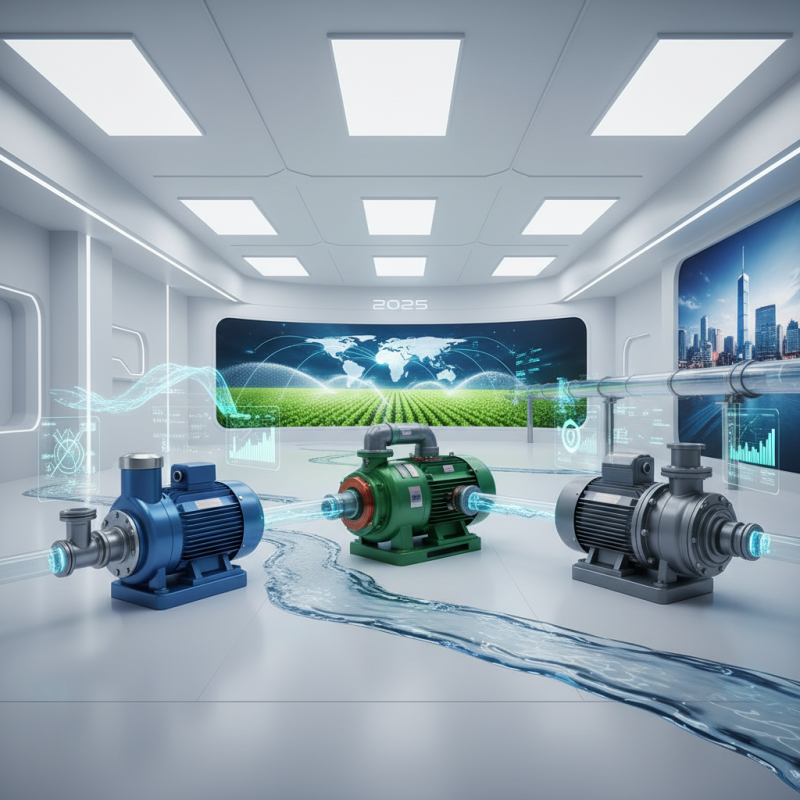
Understanding Electric Water Pumps: Types and Applications
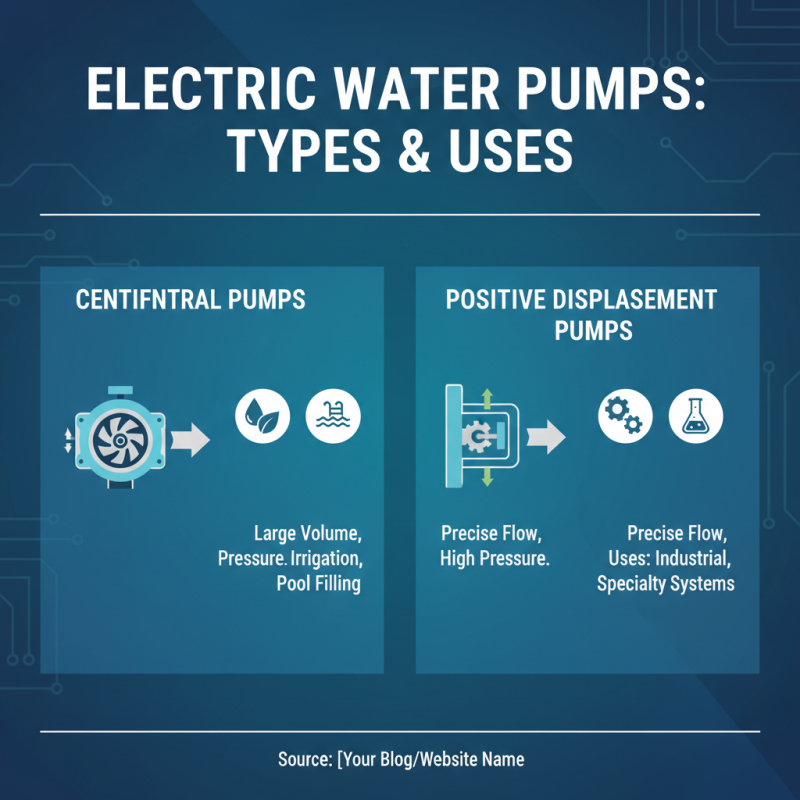
Electric water pumps are versatile devices that serve various applications, each suited to specific needs. The two primary types of electric water pumps are centrifugal pumps and positive displacement pumps. Centrifugal pumps utilize rotational energy to move water, making them ideal for applications requiring large volumes over lower pressures, such as irrigation or swimming pool filling. In contrast, positive displacement pumps operate by trapping a fixed amount of water and forcing it out, which is beneficial for applications requiring precise flow rates and higher pressures, such as in industrial settings and specialty water systems.
When selecting an electric water pump, it's essential to consider the specific application and the required flow rate and pressure. For gardening or domestic use, a smaller centrifugal pump might suffice, while larger-scale operations in agriculture or municipal services may necessitate robust positive displacement pumps designed for efficiency under pressure. Additionally, factors such as the pump's portability, energy efficiency, and maintenance requirements should also guide the decision-making process to ensure optimal performance and longevity in various settings.
Key Specifications: Flow Rate and Pressure Requirements Explained
When selecting the best electric water pump, understanding key specifications such as flow rate and pressure requirements is essential for ensuring optimal performance.
Flow rate, typically measured in gallons per minute (GPM), indicates the volume of water the pump can move within a specified timeframe. According to industry reports, a typical residential electric water pump should have a flow rate ranging from
10 to 40 GPM, depending on the intended use, whether for irrigation, drainage, or domestic water supply.
For instance, a higher flow rate is crucial for applications requiring rapid water transfer, such as filling a swimming pool or draining flooded areas.
Pressure requirements are equally important, as they determine how effectively the pump can push water through pipes, valves, and other fixtures. This is measured in pounds per square inch (PSI).
A report from the American Society of Mechanical Engineers highlights that most household applications require a pressure range of
20 to 60 PSI for optimal performance. However, specialized applications like sprinkler systems may necessitate higher pressures, sometimes exceeding
80 PSI. Potential users should consider the specific demands of their systems, as mismatched flow rates and pressures can lead to inefficiencies or
system failures, emphasizing the importance of choosing a pump that aligns with both flow and pressure needs.
Energy Efficiency Ratings: Choosing Pumps with Optimal Performance
When selecting an electric water pump in 2025, one of the most critical factors to consider is energy efficiency. Pumps with high energy efficiency ratings not only reduce operational costs but also contribute to environmental sustainability. Look for models that feature advanced designs and technology, such as variable speed drives and durable materials, which enhance performance while minimizing energy consumption.
To ensure you're making an informed decision, check for labels or certifications that indicate energy efficiency levels. A pump with an Energy Star certification or similar recognition typically guarantees optimal performance and lower energy use. Additionally, evaluating the pump's duty cycle—how often and for how long it operates—can help you identify options that save both energy and money in the long run.
Tip: Always compare the kilowatt-hour (kWh) consumption of different pumps, as this can reveal significant differences in running costs. Consider your specific water usage needs when assessing pump size and power. Remember, a well-chosen electric water pump not only meets your requirements but also respects your budget and the environment.
How to Choose the Best Electric Water Pump for Your Needs in 2025 - Energy Efficiency Ratings: Choosing Pumps with Optimal Performance
| Pump Type |
Power Rating (HP) |
Max Flow Rate (GPM) |
Energy Efficiency Rating (EER) |
Weight (lbs) |
| Submersible Pump |
1.5 |
50 |
4.5 |
40 |
| Centrifugal Pump |
2.0 |
80 |
5.0 |
50 |
| Diaphragm Pump |
0.75 |
30 |
4.0 |
25 |
| Jet Pump |
3.0 |
100 |
4.8 |
70 |
Market Trends in 2025: Innovations in Electric Water Pump Technology
As we look towards 2025, the electric water pump market is expected to witness remarkable innovations driven by technology and sustainability. This evolution is largely influenced by the growing demand for energy-efficient solutions that not only cater to residential and agricultural needs but also align with eco-friendly practices. The integration of smart technology into electric water pumps is a significant trend, enabling users to monitor and control their pumps remotely via smartphone applications. This innovation not only enhances convenience but also improves efficiency and reduces operational costs.
When selecting an electric water pump, it’s essential to consider these technological advancements.
**Tip 1:** Look for models that include smart sensors that can adjust operating parameters based on real-time conditions, ensuring optimal performance and energy savings.
In addition to smart features, manufacturers are now placing a heavier emphasis on sustainable materials and designs. This shift not only reduces the environmental impact but also promises a longer lifespan for the pumps.
**Tip 2:** Evaluate pumps that utilize recyclable materials and innovative engineering to minimize waste and enhance durability.
As electric water pumps continue to evolve, staying informed about these emerging trends will empower users to make smarter purchasing decisions that both meet their needs and contribute to a greener future.
Cost Analysis: Evaluating Price vs. Performance in Electric Pumps
When evaluating electric water pumps, cost analysis plays a crucial role in striking a balance between price and performance. First, potential buyers should identify their specific needs, as pumps vary significantly in terms of operation capacity, energy efficiency, and additional features. For example, a high-capacity pump may be more expensive upfront, but its efficiency in handling large volumes of water can lead to lower operational costs over time. By determining the pump's primary function—whether for irrigation, draining, or circulating water—users can better match their budget with performance requirements.
Moreover, it's essential to assess the long-term value of an electric water pump rather than just its initial cost. While cheaper models may seem attractive, they often come with compromises in durability, energy consumption, or service life. Investing in a higher-quality pump with advanced features may result in reduced energy costs and lower maintenance expenses, ultimately leading to savings over the pump's lifespan. Therefore, conducting a thorough analysis of the pump's specifications against its pricing can help consumers make informed decisions that cater to their demands while maximizing value.