How to Choose the Right Truck Tail Lift for Your Needs?
Choosing the right Truck Tail Lift can significantly impact your logistics efficiency. With various options available, knowing what suits your needs is crucial. A well-selected tail lift improves loading speed and enhances safety.
The market offers diverse truck tail lifts, each designed for specific tasks. For instance, some are lightweight, perfect for smaller deliveries. Others are robust, made for heavy loads. However, not all models fit every truck. Oversized lifts can lead to unnecessary complications.
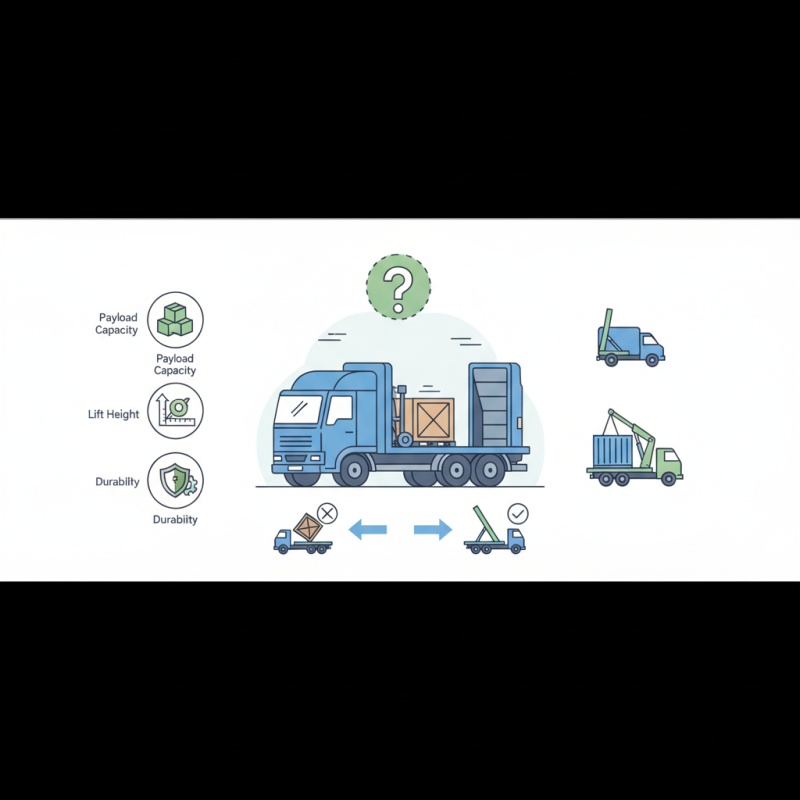
Consider factors like payload capacity, lift height, and durability. A tail lift should match your truck's specifications. It's essential to weigh these elements carefully. Misjudging your choice may lead to operational challenges. Reflect on your requirements before making a decision.
Factors to Consider When Selecting a Truck Tail Lift Model
Choosing the right truck tail lift requires careful consideration. Different models serve various needs. Weight capacity is a primary factor. If you transport heavy goods, select a lift with a higher capacity. Lifts typically range from 500kg to over 2000kg. Always assess your typical cargo weight to avoid overloading.
Mobility and height are crucial too. Consider the lift’s platform height and its ability to handle different terrains. If you often work on uneven surfaces, a more robust lift is necessary. Some models offer manual operation, while others are fully electric. Think about your team’s preference for ease of use and efficiency.
Safety features should not be overlooked. Automatic brakes, anti-slip surfaces, and safety guards can be vital. These elements protect your team and cargo during loading. Also, reflect on maintenance and service support. Regular upkeep ensures reliability and longevity. Without proper care, even the best lift can fail unexpectedly.
Understanding Weight Capacities: Choosing the Right Load Rating
When selecting a truck tail lift, understanding weight capacities is crucial. The right load rating ensures safety and efficiency in operations. According to industry data, a truck's lift should ideally match or exceed the maximum weight expected. Overloading can lead to severe mechanical failure.
Typically, tail lifts come in various capacities, commonly ranging from 500 kg to 3000 kg. A recent industry report highlights that 70% of operators underestimated their weight requirements, leading to operational delays or accidents. For instance, choosing a lift with a 1500 kg rating for loads regularly exceeding this limit is risky.
Additionally, considering the lift's design is essential. Flat platform designs might accommodate larger loads but could compromise stability. Therefore, it's vital to assess both the weight and the distribution of that weight. A common mistake is overlooking how weight is distributed across the lift. This can result in uneven wear and tear.
In short, choosing the right load rating affects not just efficiency but also safety. The best choice is one that fits your most common usage scenarios while leaving room for unexpected loads. It’s prudent to consult with professionals to ensure your lift meets all operational needs.
Different Types of Tail Lifts: Which Design Suits Your Operations?
Choosing the right truck tail lift is crucial for efficient operations. Different types of tail lifts cater to various needs. Understanding these deviations can lead to better decision-making.
Hydraulic lifts are popular in industries requiring heavy-duty operations. They offer higher lifting capacities. A recent industry report indicated that hydraulic lifts can safely hold loads up to 2,000 kg. However, they might not be suitable for smaller, agile tasks. Users often find them cumbersome in tight spaces.
On the other hand, electric tail lifts provide convenience. They are easier to operate and maintain. Data shows that electric lifts became more efficient over the past five years. They now require 30% less energy than older models. But, they may lack the lifting power for heavier goods. In some cases, this choice could lead to underperformance.
Consider the specific demands of your operations before making a choice. Each design has its strengths and weaknesses.
Evaluating Power Sources for Tail Lifts: Electric vs. Hydraulic Options
When choosing a truck tail lift, power sources play a vital role. Electric and hydraulic options offer distinct advantages and disadvantages. Electric lifts are typically easier to maintain. They are also quieter and can be operated with the push of a button. However, battery life can be a concern. Long operation without recharging is not always feasible.
Hydraulic lifts, on the other hand, offer powerful lifting capabilities. They can handle heavier loads and provide smoother operation. Yet, they often require more maintenance due to hydraulic fluid leaks and pump issues. This can lead to increased downtime. Think about the types of loads you will be lifting and the frequency of use.
Tips: Consider the environment where the lift will operate. For outdoor use, hydraulic may be better due to weather resilience. Evaluate your crew’s experience. If they are less experienced, electric lifts can be simpler to use. Always weigh your options carefully. The small details can influence your operational efficiency significantly.
| Feature | Electric Tail Lifts | Hydraulic Tail Lifts |
| Power Source | Electric Motor | Hydraulic System |
| Load Capacity | Up to 1500 kg | Up to 3000 kg |
| Speed of Operation | Moderate (up to 10 seconds) | Fast (around 5 seconds) |
| Maintenance | Low (less frequent) | Medium (more regular) |
| Weight | Lightweight | Heavier |
| Noise Level | Quiet | Moderate |
| Cost | Generally lower | Generally higher |
Maintenance and Safety Features: Ensuring Longevity and Compliance
When selecting a truck tail lift, maintenance and safety features are crucial. Regular inspections can significantly extend the lifespan of the tail lift. According to a report by the National Association of Trailer Manufacturers, 30% of tail lift failures result from inadequate maintenance. A regular service schedule should be adhered to. This can help identify minor wear and tear before it escalates into major issues.
Safety features play a vital role in compliance. Features like overload protection and emergency stop mechanisms are essential. These components ensure that loads remain stable and secure during the lift operation. Statistics from the Occupational Safety and Health Administration show that proper use of safety features can reduce workplace accidents by up to 20%. Operators should be trained to recognize potential hazards. Ignoring this can lead to serious consequences.
A tail lift with a solid safety record is a wise choice. Ensure that your tail lift meets local safety standards. Regular load testing is advisable. This checks if the lift can handle maximum capacity. Insights from industry experts suggest that 15% of professional haulers experience difficulties due to improper load handling. Overall, maintenance and safety should not be overlooked. These factors ensure not just compliance, but also the long-term functionality of the equipment.