How to Choose the Best Pump Products for Your Needs?
When selecting the best pump products, industry insight is invaluable. John Smith, a renowned expert in the pump products field, emphasizes, "Choosing the right pump is crucial for efficiency." This statement underscores the importance of understanding your specific needs.
Different applications require varied pump characteristics. You might need a specific flow rate or pressure. An inappropriate choice can lead to inefficiency and increased costs. It's easy to overlook details when overwhelmed by options.
Many buyers focus solely on price. However, durability and performance should also be priorities. Take the time to research. User reviews can reveal valuable insights. Reflect on your past experiences with pump products. What worked? What didn't? Addressing these questions can guide you toward a more informed decision.
Understanding Different Types of Pumps and Their Applications
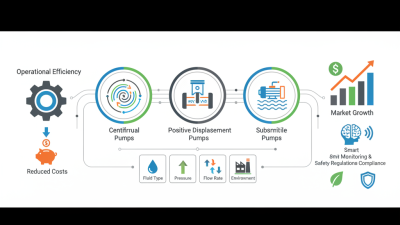
When choosing a pump, understanding the various types is essential. Pumps can be categorized into several types, including centrifugal, positive displacement, and gear pumps. Each type has distinct applications and efficiencies. Centrifugal pumps, for instance, are widely used in water supply systems. They operate through rotational energy, making them suitable for high-flow applications. According to the Hydraulic Institute, centrifugal pumps account for about 80% of the global pump market. However, these pumps may struggle with high-viscosity fluids.
Positive displacement pumps excel in applications requiring consistent flow rates, regardless of pressure. They are ideal for transferring thick fluids like slurries or chemicals. This type of pump works by trapping a fixed amount of fluid and forcing it into the discharge pipe. Although they are effective, they can generate excessive pressure if not matched appropriately to the application. It is crucial to assess the specific viscosity and flow requirements for optimal performance.
Gear pumps are another option, often found in automotive and industrial applications. They function by using interlocked gears to move fluids. These pumps are accurate in flow measurement, but they may not handle large volumes well. Discerning the best pump type requires analyzing application needs and fluid properties. Decisions about pumps can be complex and require careful consideration. There is no one-size-fits-all solution in the pump market. Understanding these differences is vital for making an informed choice.
Evaluating Key Features to Look for in Pump Products
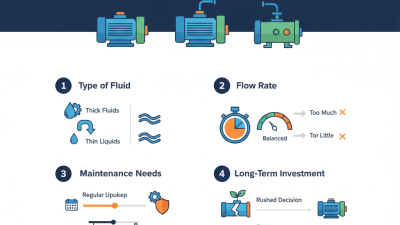
Choosing the right pump products can be overwhelming. There are many features to consider before making a decision. It’s essential to identify the specific needs you have. Different applications may require various types of pumps. For instance, if you need to move water, look for pumps with high flow rates. If it’s for chemicals, make sure materials are compatible.
Evaluate the size and portability of the pump. A compact design can be beneficial for small spaces. Think about energy efficiency too. Many pumps consume significant power. An energy-efficient model can save costs in the long run. However, always check performance ratings. Sometimes, a lower energy rating can mean less effective operation.
Consider maintenance and durability. A complex system might require professional help often. Simplicity can save time and hassle. Some pumps are built to withstand harsh conditions. Others may not last long when used intensively. Reflect on your needs. A pump that works well initially might not meet long-term requirements. It's essential to choose wisely, based on your actual use cases.
Choosing the Best Pump Products: Key Features Comparison
Assessing Capacity and Performance Requirements for Your Needs
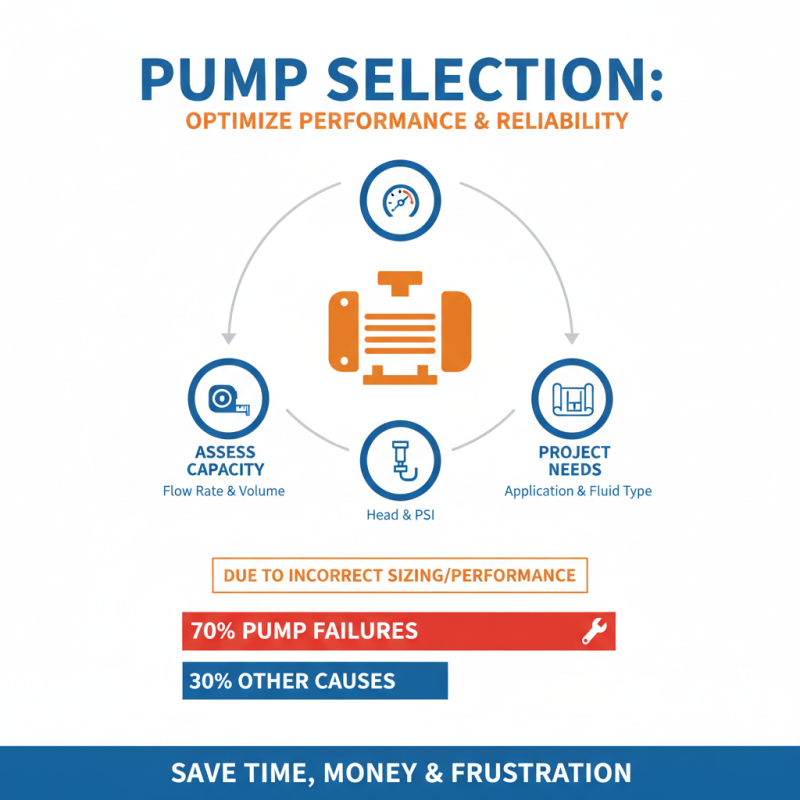
Choosing the right pump products requires careful assessment of your capacity and performance needs. Understanding the specific requirements of your project can save time, money, and frustration. According to a recent industry report, 70% of pump failures result from incorrect sizing or inadequate performance metrics. Many professionals overlook key factors such as flow rate and pressure requirements, which are crucial for optimal operation.
When evaluating capacity, consider your system's fluid characteristics. For instance, viscous fluids need pumps with higher torque capabilities. This means not all pumps are created equal. Tips: Always calculate the maximum flow rate you expect. Also, factor in any potential future expansions of your system. A pump that meets today’s needs may quickly become inadequate.
Performance requirements are defined by the application's nature. Pay attention to the total dynamic head (TDH) when selecting a pump. TDH influences energy consumption and efficiency, impacting long-term costs. Some may underestimate this factor, resulting in excess energy use. Tips: Review historical performance data if available. Additionally, consult with industry experts to better understand your unique needs. Effective communication can prevent costly mistakes down the line.
Comparing Pump Brands and Models for Reliability and Efficiency
When selecting pump products, reliability and efficiency are key factors. Different models exist for various applications. Understanding specifications and features is essential. Some pumps excel in high-pressure situations, while others are better for flow rates. Efficiency ratings can vary greatly between brands and models. Look for energy-efficient designs to save on costs long-term.
Consider the materials used in the pumps. Some models may use cheaper components, which could lead to quicker wear and tear. A durable pump may cost more at first but can save you money through reduced maintenance. Reviews and feedback from users can provide insight into the longevity of different models.
Don’t overlook after-sales support. A product might perform well initially but may falter under prolonged usage. Ensure that the manufacturer offers adequate support and service options. This can greatly affect your overall experience. Each choice should be made with thorough research to ensure that you meet your specific needs effectively.
Considering Budget and Maintenance Costs in Your Selection Process
When selecting pump products, budget and maintenance costs play a crucial role. It's tempting to go for the cheapest option available. However, this may lead to higher long-term expenses. A low upfront cost can result in frequent repairs. Analyzing the total cost of ownership over time is essential.
Maintenance can also be a significant factor. Some pumps require regular servicing, which adds to operational expenses. In contrast, others may have a longer lifespan with less frequent maintenance needs. Understand the specific requirements of the products you are interested in. Ignoring these details can result in unexpected financial strains.
Consider the environment where the pump will be used. Harsh conditions can significantly affect performance and durability. It’s important to evaluate how these factors influence maintenance costs. Reflecting on your choices now can save trouble in the future. Failure to fully assess these elements can lead to regret. Think critically and choose wisely.
How to Choose the Best Pump Products for Your Needs? - Considering Budget and Maintenance Costs in Your Selection Process
| Pump Type |
Initial Cost ($) |
Annual Maintenance Cost ($) |
Energy Efficiency (kW) |
Lifespan (Years) |
| Submersible Pump |
1200 |
150 |
1.5 |
10 |
| Centrifugal Pump |
1500 |
200 |
2.0 |
15 |
| Diaphragm Pump |
800 |
100 |
1.2 |
8 |
| Gear Pump |
2000 |
300 |
3.0 |
20 |
| Peristaltic Pump |
1000 |
120 |
1.8 |
12 |