2026 How to Choose the Right Industrial Water Pump for Your Needs?
Choosing the right industrial water pump is crucial for any facility. The pump's efficiency directly impacts operations. A suitable pump can enhance productivity while reducing costs.
When selecting an industrial water pump, consider specific needs. Different applications require different pump types. Flow rate, pressure, and fluid characteristics matter. It's easy to overlook these details. Many make choices based on price alone. However, this often leads to inadequate performance.
Investing time in research is essential. Understanding the application can prevent future issues. Remember, a poorly matched pump can cause serious setbacks. Reflect on your needs before making a decision. The right industrial water pump is an investment in your success.
Understanding the Different Types of Industrial Water Pumps
Choosing the right industrial water pump can seem overwhelming. Understanding the different types of pumps is crucial. Each type serves a particular function. Centrifugal pumps are common. They move water efficiently and are great for continuous flow. Positive displacement pumps are another option. They are effective for thick fluids and provide consistent flow rates.
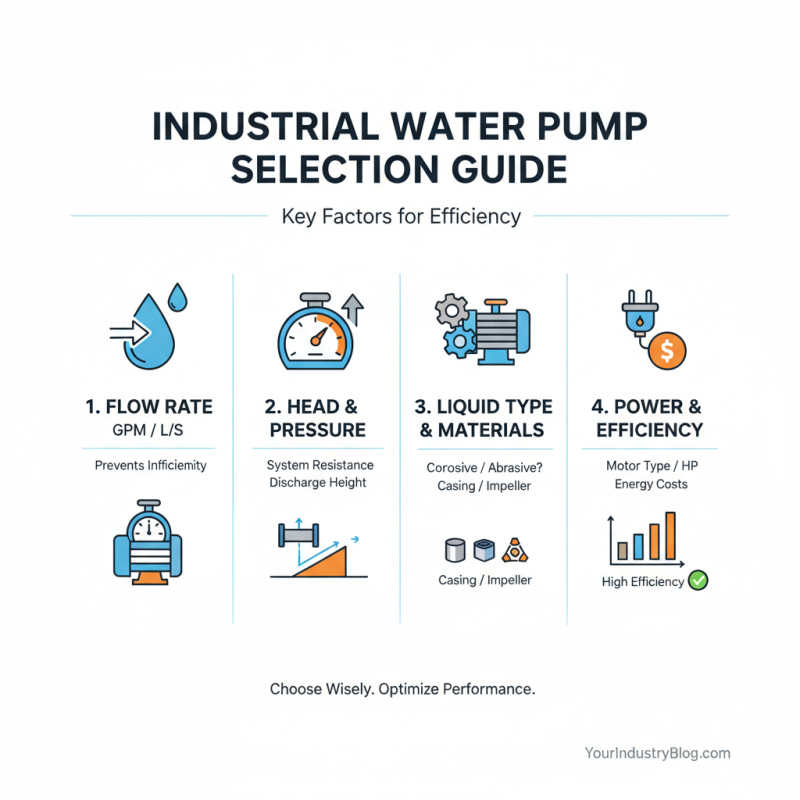
When selecting a pump, consider your specific needs. Flow rate is a key factor. You should also think about the distance the water needs to travel. Don’t overlook the type of fluid. Some pumps can handle solids, while others cannot.
Tips: Assess your system's pressure requirements. It’s important to select a pump that operates efficiently at your desired pressure level. Make sure you consider maintenance needs too. Some pumps are easier to maintain than others. Reflect on how often you will need to service the pump. Choosing wisely can save time and money in the long run.
Evaluating Pump Specifications for Your Specific Application
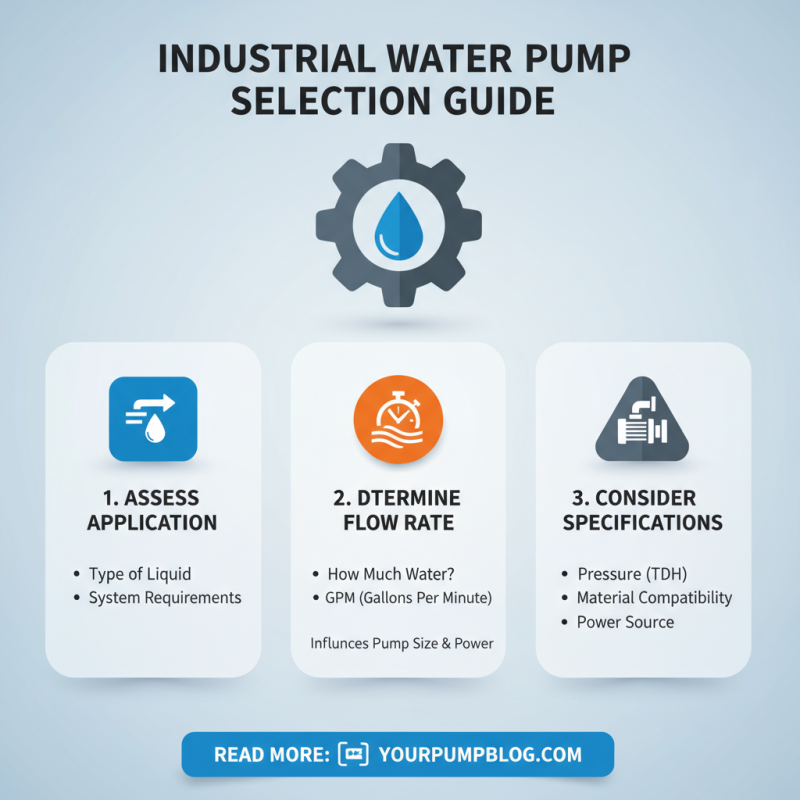
When selecting an industrial water pump, specifications play a critical role. Understanding your specific application will help narrow your choices. Begin by assessing the required flow rate. How much water do you need to move? This number influences pump size and power.
Next, consider the fluid properties. Is the water clean or does it contain solids? The viscosity of the fluid is important, too. It can affect pump efficiency. Also, the temperature you’ll be working with matters. Can your chosen pump handle high temperatures? Many overlook this.
Additionally, remember pressure specifications. What pressure is necessary for your process? A pump that operates below required pressure can lead to inefficiencies. It might also shorten its lifespan. Finally, think about the environment. Is the pump to be used outdoors? If so, ensure it has adequate protection against elements. Reflecting on these details can lead to better outcomes.
Maintenance and Troubleshooting Tips for Industrial Water Pumps
Maintaining industrial water pumps is crucial for optimal performance. Regular inspections can prevent many issues. Check for leaks frequently. Inspect seals and gaskets for wear. A simple leak can lead to significant problems if ignored. Monitor the pump's vibration levels. Unusual vibrations may indicate misalignment or wear in bearings.
Troubleshooting can be tricky. If the pump isn't moving water, examine the power supply first. A blown fuse might be the culprit. Clogged filters can also cause low flow issues. Clearing any obstructions is vital. Overheating is another common problem. Ensure the pump isn't running dry. Simple practices can help maintain efficiency.
Don’t forget about lubrication. Keeping bearings properly lubricated extends their lifespan. However, over-lubrication can be harmful as well. Regularly check your lubrication schedule. Detailed logs of maintenance work can highlight patterns. Every pump has its quirks. Acknowledge what works for your specific equipment. Use this knowledge to improve and refine your maintenance practices.
2026 How to Choose the Right Industrial Water Pump for Your Needs? - Maintenance and Troubleshooting Tips for Industrial Water Pumps
| Pump Type |
Max Flow Rate (GPM) |
Max Head (Feet) |
Power Source |
Common Applications |
Maintenance Tips |
| Centrifugal Pump |
300 |
150 |
Electric |
Water Supply, Irrigation |
Regularly check seals and bearings |
| Diaphragm Pump |
120 |
50 |
Pneumatic |
Chemical Transfer, Water Treatment |
Inspect hoses and diaphragm regularly |
| Submersible Pump |
500 |
300 |
Electric |
Sump Draining, Sewage |
Clean pump and check float switch |
| Gear Pump |
200 |
75 |
Electric |
Viscous Fluids, Lubrication |
Lubricate gears and check for leaks |
Cost Considerations and Budgeting for Your Water Pump Project
When planning for an industrial water pump project, budget plays a crucial role. It’s important to consider the initial cost, as well as ongoing expenses. Factor in installation costs, maintenance, and energy consumption. Often, businesses overlook these recurring costs, impacting long-term budgets. If your pump fails early due to oversight, expenses can escalate rapidly.
Materials and specifications affect pump price. High-quality materials may seem costly upfront, but they offer longevity and reliability. A cheaper option might save money now but could lead to higher repair costs. Balancing performance and cost is essential. Gather quotes and evaluate warranties. Sometimes, the cheapest option has hidden flaws.
Unexpected costs may arise. Think about additional fittings, piping, and control systems that could increase your total. It's tempting to focus solely on the pump, but a complete overview is necessary. Neglecting to account for these variables complicates your budgeting. Consider the long-term needs of your facility as well, as changing demands may require flexibility in your initial choice.
Cost Considerations for Industrial Water Pumps
This chart illustrates the estimated costs associated with various types of industrial water pumps. Understanding these cost considerations is crucial for budgeting your water pump project effectively.