What Are the Different Types of Water Radiators?
Water Radiators look simple: warm water enters, metal surfaces release heat, and cooler water returns. Yet choosing a type affects comfort, response time, room layout, and compatibility with the heating system. Common options include steel panel radiators, cast-iron columns, aluminum models, and towel rails. They are not interchangeable. A tall column radiator may suit a period room, while a compact panel unit can fit beneath a modern window. The details matter.
The English Housing Survey 2022–23 reported that 96% of English households had central heating. That figure describes heating access, not radiator ownership, so it should not be mistaken for radiator-market data. Still, it shows why understanding heat delivery matters. Hydronic-heating educator Dan Holohan’s technical guidance emphasizes a practical point: radiator performance depends on the whole system, including water temperature and circulation. A radiator cannot compensate for poor flow. Small, but important.
This guide compares radiator types by material, shape, heat output, and typical use. It also considers installation constraints, maintenance, and how each design feels in a lived-in room. A cast-iron unit can hold heat after the boiler stops, but it may warm slowly and weigh heavily on an old floor. Aluminum responds quickly, though its suitability depends on system design. The trade-offs are real, and no single type wins every room. Some choices look obvious on a showroom wall; they can feel less obvious beside a cold window on a winter morning.
How Water Radiators Are Classified
What Are the Different Types of Water Radiators?
How Water Radiators Are Classified
Water radiators are commonly classified by their construction, material, and connection to a heating system. These categories overlap, so one radiator can fit several descriptions. That matters when comparing models.
By construction, common types include flat panel, column, and tubular radiators. Flat panels have broad, relatively slim faces and often suit narrow wall spaces. Column designs use vertical sections, leaving gaps where air can circulate. Tubular units have exposed pipes and are often chosen for bathrooms or utility rooms. Their shape affects heat release and placement, but does not tell you the exact output.
Material is another useful distinction. Steel is widely used in panel and tubular designs; cast iron is heavy and may take longer to warm and cool. Aluminum is lighter and can respond quickly, though performance depends on the radiator’s size and design. Material alone is not a reliable guide to efficiency.
Radiators can also be grouped by plumbing layout, such as one-pipe or two-pipe systems, and by whether connections are at the side or bottom. Check the existing pipe positions before choosing a replacement. A radiator that looks compatible may need different valves or pipework. Classification helps narrow the options, but heat output should be matched to the room and system’s operating temperature. Details are easy to overlook.
Panel Water Radiators
Panel water radiators heat rooms through warm water circulating inside pressed-steel panels. Their broad, ribbed surfaces release heat quickly, while compact depths suit many homes. Output depends on panel size, internal convectors, water temperature, and room heat loss.
The EN 442-2 rating method tests radiators at a 50°C temperature difference between mean water temperature and room air. A common rating condition is 75/65/20°C: flow, return, and room temperatures. Real systems may run cooler. That matters.
Lower water temperatures can reduce radiator output, so a panel sized for an older boiler may struggle with a heat pump. The IEA’s 2022 report The Future of Heat Pumps says heat pumps typically provide 3–5 units of heat per unit of electricity; lower operating temperatures can support efficient performance.
A room-by-room heat-loss calculation helps determine whether existing panels are large enough. Check the radiator’s EN 442 output against the room’s design heat demand, not just its width. A small panel may look tidy but leave a cold corner near a window. Not always.
Pipe balancing, insulation, and airflow also affect comfort. I would verify the figures before replacing panels; catalogue ratings do not describe every installation.
Column and Cast-Iron Water Radiators
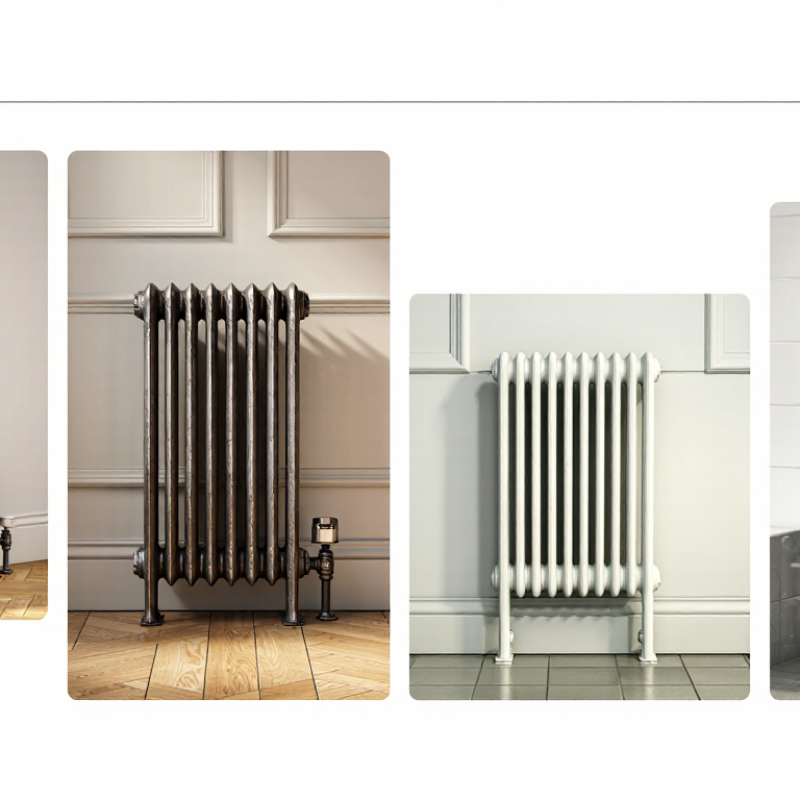
Column and cast-iron water radiators are related, but the terms describe different things. “Column” refers to the radiator’s shape: upright sections create channels where heated water circulates. “Cast iron” describes the material. Many traditional column radiators use cast iron, though column designs can also be made from other metals.
Cast iron holds heat well, so a radiator may keep warming a room after the boiler stops. That can feel comfortable in a chilly hallway or beside a drafty window. The trade-off is slower warm-up and a heavy unit that needs secure support. Output depends on radiator size, water temperature, and room conditions; appearance alone cannot confirm whether a unit will heat a space adequately. They are not identical. It is easy to overlook that distinction when choosing by style.
Tips: Check the radiator’s heat output against the room’s needs, and ask a qualified heating professional to assess the system. Keep air vents clear, and watch for leaks or uneven heating. Older systems may need balancing or careful cleaning. A little uncertainty is normal, especially when replacing a radiator in an existing system.
Towel-Rail and Other Specialty Water Radiators
Towel-rail water radiators use heated water from a central heating system to warm a bathroom and dry towels. Their horizontal bars hold towels without covering the entire heating surface. Many models also come in ladder-style or curved designs, but the shape affects how much heat reaches the room. A warm towel feels inviting. Yet a rail alone may not heat a large, poorly insulated bathroom adequately.
Other specialty water radiators include tall vertical units, narrow models for tight spaces, and low-profile radiators fitted beneath windows. Vertical designs can free up wall space, though they need enough clearance for airflow. Some decorative or bench-style units combine heating with a practical surface. That can be useful, but furniture-like forms may be harder to clean or may deliver less heat than expected.
Before choosing a style, check its rated heat output against the room’s heating needs. Confirm that the radiator suits the system’s water temperature and pipe connections. In bathrooms, placement matters: towels should not block airflow, and the unit should be installed with appropriate clearances. Appearance can dominate the decision. I would pause there. A heating professional can help assess pipework, output, and installation limits before purchase.