Choosing a dewatering pump starts with the water, not the equipment catalogue. A pump that clears a shallow trench may struggle with a basement pit full of silt. Before comparing models, estimate the required flow rate and total head, including the height and distance water must travel. Check whether the water contains sand, gravel, leaves, or other solids. Small details matter. A narrow hose, a sharp bend, or a rising water level can change how well a pump performs.
The right choice also depends on the site. Electric models may suit steady work near reliable power, while engine-driven pumps can offer more flexibility in remote areas. Confirm the available power source, discharge route, expected operating hours, and conditions around the pump. Review the manufacturer’s limits for solids handling, temperature, and dry-running protection. Match materials to the water, especially when it may be corrosive or contaminated. A suitable dewatering pump should meet the job’s real demands without being unnecessarily large or difficult to maintain.
Specifications are useful, but they do not replace a site assessment. Even experienced crews can underestimate sediment or overlook how quickly a pit refills after rain. That happens. If the flow rate or water quality is uncertain, record conditions during a short trial and ask a qualified supplier or engineer to check the selection. Leave room for practical adjustments. The best pump is not simply the most powerful one; it is the model that can move the expected water reliably, safely, and with manageable upkeep.
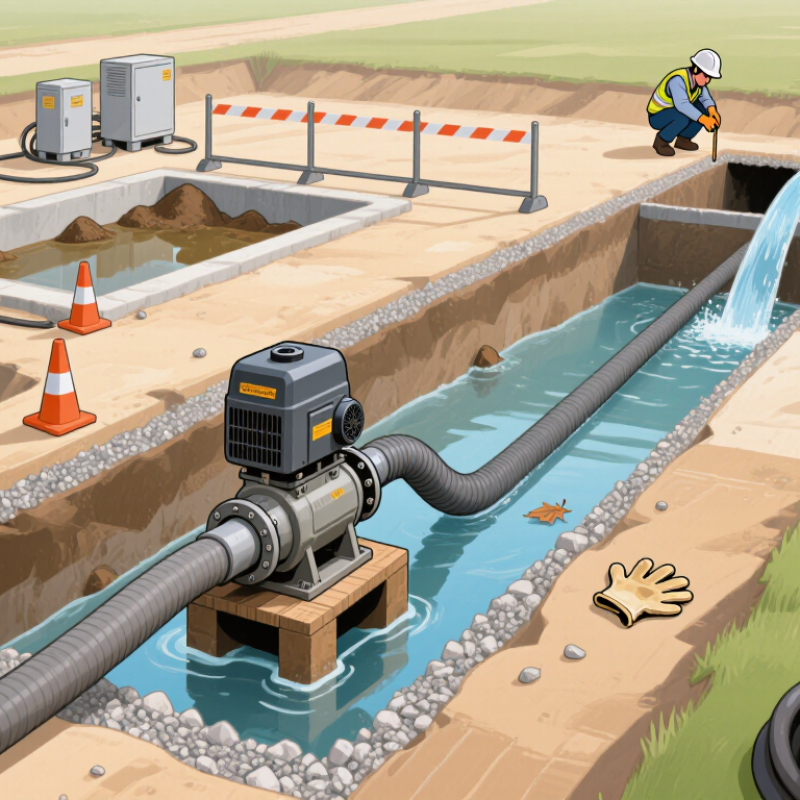
Start by defining what must be drained: a flooded basement, a rain-filled trench, or a pond being lowered. Each task has a different water volume, inflow rate, and acceptable drainage time. A muddy excavation may need a pump that passes solids, while relatively clean seepage calls for a different setup. Small details matter.
Estimate the volume to remove and how quickly it needs to go. Then account for water entering during pumping; a trench fed by steady seepage can refill faster than expected. Measure the vertical lift from the water surface to the discharge point, and include hose length, bends, and elevation changes. These affect flow.
Compare the required output with the pump’s performance at that total head, not just its advertised maximum flow rate. Check the water itself, too. Note whether it contains sand, leaves, or larger debris, since these can clog or wear pump components.
Confirm that the discharge route can handle the flow without flooding another area. Site estimates are rarely perfect, and mine would not be either; a quick water-level check during operation can reveal whether the chosen output is keeping pace. Recheck after rainfall or when the inflow changes.
How to Choose the Right Dewatering Pump?
Compare Dewatering Pump Types and Their Suitable Uses
Choosing a dewatering pump starts with the soil, water depth, and solids—not just the flow rate. A submersible sump pump suits shallow pits where water collects at one low point. A trash pump handles water containing grit and small debris, such as runoff around a muddy excavation. For sandy, permeable ground, wellpoints can lower groundwater across a wider area. Deep wells are better suited to deeper drawdowns in permeable soils.
The U.S. Army Corps of Engineers’ technical manual TM 5-818-5, Dewatering and Groundwater Control, describes ordinary wellpoint stages as typically achieving about 15–20 feet of drawdown. Greater depths may require staged wellpoints or deep wells. In fine silts, eductor systems may help where conventional wells perform poorly, though their flow can be limited. Real sites are messier: mixed soil layers can change the best choice, so a pump trial may reveal more than a soil description alone.
Tips: Check the expected solids size, discharge route, and required drawdown before renting. Measure before buying. Watch the discharge for rising sediment; cloudy water can signal soil loss, not just a hardworking pump.
Compare typical suitability by water and job conditions
Ratings are a relative guide from 1 (less suitable) to 5 (more suitable), not pump performance specifications. Check required flow, total head, solids size, and site conditions before selecting a pump.
Choose capacity from the water entering the work area, not from the largest number on a pump label. Estimate inflow during peak conditions, then allow room for uncertainty. The USGS Water Science School gives 1 cubic foot per second as approximately 448.8 gallons per minute; that conversion helps compare site flow estimates with pump ratings. A 300-gpm target is about 0.67 cfs. The first estimate is rarely perfect.
Head matters just as much. Add vertical lift to friction losses from hose length, bends, and fittings; a pump rated for high flow at low head may deliver far less at the site. The U.S. Army Corps of Engineers’ EM 1110-2-3102, General Principles of Pumping Station Design, describes evaluating pumps against the system curve. Check the operating point, not only maximum capacity. A 4-inch hose with several tight bends can change the result.
Match solids handling to what is actually in the water. Measure the largest expected particle and consider grit, mud, and debris that may clog an inlet or wear an impeller. Hydraulic Institute ANSI/HI 12.1–12.6 addresses rotodynamic slurry pump selection and application; use its guidance alongside manufacturer passage-size data. A screened intake can help, but screens clog. Leave access for inspection, and recheck the estimate after the first shift.
Start with the water, not the pump catalogue. Estimate the inflow rate and the vertical lift from the water surface to the discharge point. Note whether the water carries sand, silt, or debris; these can wear parts or block narrow passages. Measure the lowest expected water level, too, since it can change suction performance. Small details matter. A quick site sketch helps, but it may miss sudden inflow after heavy rain, so leave a practical margin in your capacity estimate.
Check the available power before selecting a model. Confirm voltage, phase, and outlet location, then compare them with the pump’s requirements. For generator use, allow for the higher current needed during motor start-up. Long or undersized cables can cause voltage drop and unreliable operation. Keep connections protected from standing water, and arrange safe cable routing where workers or vehicles pass.
Installation constraints often decide what will work. A submersible pump may suit a narrow pit, while a surface-mounted unit needs stable footing and a reliable suction line. Check hose diameter, total hose length, bends, and discharge elevation; each can reduce delivered flow. Leave room to lift the pump for cleaning, and secure hoses against movement. I would recheck these measurements on site: drawings rarely show every obstruction, and a layout that looks simple on paper can be awkward to service.
A dewatering pump should fit the water, the site, and the hours it will run. Check the expected flow, lift height, and amount of grit before comparing models. Abrasive solids can wear impellers and seals faster than clear water does. Ask how often these parts need inspection, and whether crews can reach them without dismantling half the unit. Easy service access matters on a wet, muddy site.
Safety and operating costs deserve equal attention. Look for stable placement, guarded moving parts, suitable electrical protection, and clear shutdown procedures. Keep cables and connections away from standing water where practical. A pump with a low purchase price may use more power or require frequent repairs. Estimate energy, routine parts, labor, hose replacement, and downtime over the expected service period. The estimate will not be perfect; site conditions change, and that is easy to underestimate.
Tips: Record operating hours and inspect the intake screen, seals, and discharge hose on a set schedule. Compare actual energy use with the estimate. If vibration, unusual noise, or flow changes appear, stop and investigate rather than waiting for a failure. Keep the maintenance log simple enough that someone will actually use it.
| Pump type | Best suited to | Maintenance considerations | Key safety checks | Main operating-cost drivers |
|---|---|---|---|---|
| Submersible centrifugal | Sumps, excavations, and flooded areas where the pump can be placed in the water. Choose a solids-handling model if the water contains debris. | Inspect the intake, impeller, cable, seals, and float controls. Follow the manual for cleaning and inspection intervals; abrasive or gritty water can increase wear. | Use an appropriately protected electrical supply and inspect cables before use. Do not lift or suspend the pump by its power cable; use the designated lifting point. | Electricity, pump efficiency, run time, wear from abrasive solids, and the cost of retrieving or servicing a submerged unit. |
| Self-priming centrifugal | Surface installations where the pump can remain out of the water and draw water through a suction hose. Confirm the required suction lift and hose arrangement. | Check the suction hose and joints for air leaks, inspect the strainer and impeller, and maintain the priming system according to the manufacturer’s instructions. | Secure hoses against movement and protect rotating parts. For engine-driven units, operate outdoors in a well-ventilated area to prevent carbon monoxide exposure. | Fuel or electricity, priming and idling time, suction-side leaks, fuel-system service, and access for routine maintenance. |
| Diaphragm pump | Sludge, muddy water, and fluids containing solids that may be unsuitable for some centrifugal pumps. Check the pump’s specified solids capacity and fluid compatibility. | Inspect diaphragms, check valves, hoses, and air connections as applicable. Solids and abrasive materials can accelerate wear and increase service frequency. | Relieve pressure before disconnecting lines. Keep hands clear of moving parts and use suitable protection when handling contaminated or chemically affected water. | Fuel or compressed air, diaphragm and valve replacement, air-system losses, and the effect of solids on service life. |
| Trash-handling centrifugal | Construction-site water containing larger debris, when the selected model’s published solids-passage capacity meets the job requirement. | Clear debris from the strainer and pump casing, and inspect the impeller and wear components. Never assume all “trash” pumps can handle stringy or fibrous material. | Shut down and isolate the power source before clearing a blockage. Keep the discharge hose secured and direct pumped water away from people and unstable ground. | Fuel or electricity, debris-related blockages, component wear, cleaning time, and the cost of downtime during a blockage. |
| Any pump in a hazardous location | Sites where flammable gases, vapors, or combustible dust may be present. Select equipment specifically approved for the site’s classified hazardous area. | Include the required inspection, testing, and maintenance for the approved equipment and any site-specific control measures. | Do not use ordinary electrical or engine-driven equipment where it is not approved. Follow the site risk assessment, isolation procedures, and applicable electrical and safety rules. | Approved equipment and installation, inspection requirements, energy use, and the cost of meeting site safety controls. |
Before choosing, confirm required flow and total head, solids size and type, discharge distance, power availability, and expected run time. Use the pump’s performance curve and operating manual; maintenance intervals and capabilities vary by model and conditions.
Copyright © 2025. Rotech Pumps & Systems Inc. All rights reserved.