
What Is a Rake System and How Does It Work?

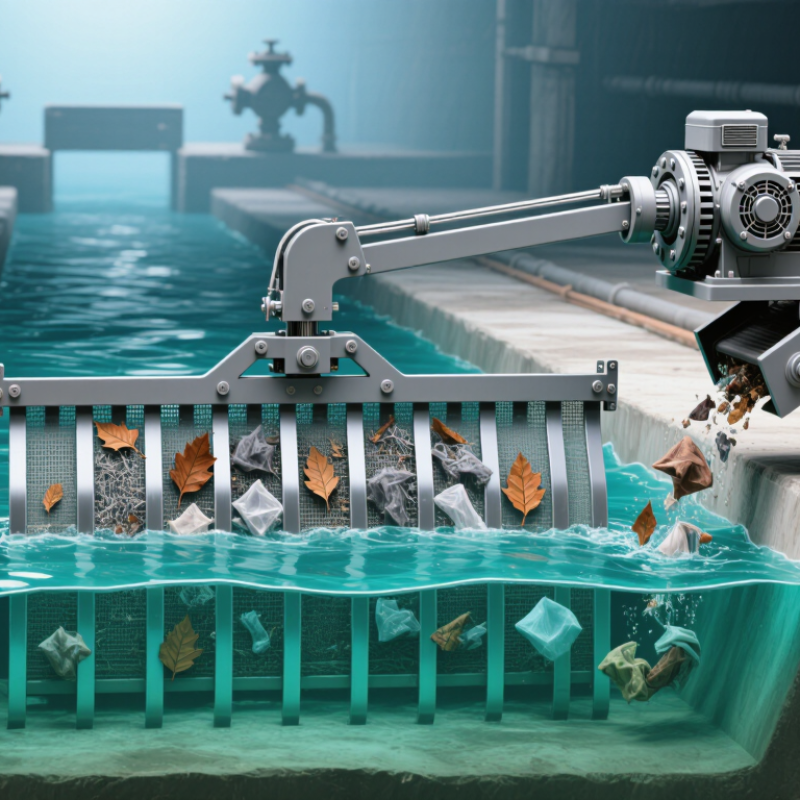
A Rake System is a mechanical screening solution used to remove leaves, plastics, rags, and other coarse debris from water or wastewater channels. It protects pumps, gates, pipes, and downstream treatment equipment. In a typical installation, wastewater flows through fixed bars while a motor-driven rake travels along the screen face. The rake teeth capture debris, lift it above the waterline, and discharge it into a conveyor or collection bin.

The principle is simple. The design is not.

Screen spacing, channel depth, flow speed, and debris type determine performance. Excessive spacing can allow damaging materials to pass through. Narrow spacing improves capture but increases clogging, power demand, and maintenance. Sensors often monitor water-level differences across the screen. A rising differential head can trigger automatic raking before flooding occurs.

George Tchobanoglous, a leading wastewater-treatment authority, describes preliminary treatment as the stage intended to remove “coarse solids and other materials that may damage or interfere with subsequent treatment processes” (Wastewater Engineering: Treatment and Resource Recovery, 5th edition). That principle still guides modern rake-system design.

The U.S. Environmental Protection Agency’s 2022 Clean Watersheds Needs Survey, published in 2024, identified approximately $630.1 billion in documented wastewater infrastructure needs through 2041. The figure highlights the value of durable, maintainable equipment. The Water Environment Federation’s 2024 industry survey also shows continuing concern about aging assets, workforce shortages, and operational reliability.

A well-selected Rake System reduces manual cleaning and protects critical equipment. It cannot solve poor channel design. It also requires inspection, lubrication, and safe access. Small oversights matter. Performance depends on the whole system, not the rake alone.
What Is a Rake System and How Does It Work?

What Is a Rake System?

A rake system is a farm machine that gathers cut grass, hay, or straw into a narrow row called a windrow. This row makes baling, drying, and collection more efficient. Most systems use rotating wheels, spring tines, or parallel bars. As the machine moves forward, the rake lifts scattered forage and guides it toward one side or the center.

The working principle is simple. Ground wheels or a tractor power input turns the rake assembly. Flexible tines touch the field, but they should not scrape deeply into the soil. Excessive pressure can collect stones, increase contamination, and damage the crop.

The USDA National Agricultural Statistics Service reported about 119 million tons of U.S. all-hay production in its 2023 Crop Production report. That volume shows why consistent windrow formation matters during short weather windows. Small errors become expensive quickly.

Field experience still matters. Operators usually adjust rake height, travel speed, and rotor spacing after checking moisture and crop density. A dry, light crop needs gentler handling. Heavy forage may require slower travel.

The American Society of Agricultural and Biological Engineers emphasizes standardized testing for forage equipment, yet real fields rarely behave perfectly. Soil changes. Wind changes. Human judgment remains necessary. That is the part many equipment explanations miss.

Core Components and Their Functions

What Is a Rake System and How Does It Work?

A rake system is a mechanical screening unit used in wastewater treatment plants. It removes plastics, rags, leaves, and other solids before they damage pumps or block channels. The U.S. Environmental Protection Agency identifies screening as a key preliminary treatment stage. It protects equipment that operates later in the process.

The system has several working parts. Bar screens create a fixed barrier, often with coarse openings of about 6 to 25 millimeters, according to Water Environment Federation guidance. Rake teeth travel along the screen face and catch trapped material. A chain, cable, or hydraulic arm moves the rake. A drive motor controls speed and lifting force. Guide rails keep the rake aligned, while a discharge chute drops collected waste into a container.

Sensors can detect rising water levels or motor overloads. Operators then adjust cleaning cycles. This matters because excessive scraping increases wear, while slow cleaning allows upstream flooding. The 2024 UN-Water wastewater report estimated that 42% of household wastewater was not safely treated in 2022. Reliable screening remains a practical concern, not a minor detail.

Field inspections reveal problems that specifications miss. Wet wipes may twist around teeth. Fine grit can wear guide rails. A rake may still move, but poorly. Engineers should check tooth spacing, corrosion, emergency stops, and access for manual cleaning. Automation helps. It does not replace judgment.

How a Rake System Operates Step by Step

A rake system is a mechanical setup that gathers leaves, grass, soil, or loose debris. It usually includes a frame, tines, wheels, and a drive mechanism. The exact design changes with the material and working surface.

Operation begins when the operator positions the rake at the correct height. The tines then contact the ground or material gently. As the system moves forward, rotating teeth or fixed tines pull debris into rows. A conveyor, tray, or rear attachment may collect the material. In powered models, the motor transfers force through belts, chains, or gears. The operator adjusts speed and pressure during this stage. Too much pressure can damage the surface or bend the tines. The gathered material is then moved, emptied, or left in a neat windrow for later handling.

Tips: Check tine alignment before use. Keep moving parts clear. Use a slower speed on uneven ground. Inspect bolts, bearings, and guards after each session. Small faults often become expensive repairs. No setup is perfect, and field conditions can expose design weaknesses. Wet debris may clog the system, while dry soil can create dust and uneven collection. Experienced operators make small adjustments instead of forcing one fixed setting. Record these changes, because a setting that works today may fail after weather or surface conditions change.

Common Types and Practical Applications

What Is a Rake System and How Does It Work?

A rake system is a mechanical screening device used to remove solid debris from flowing water. It usually sits across an intake channel or treatment basin. A set of metal bars allows water to pass while catching leaves, plastic, cloth, wood, and other large materials. Teeth or hooked blades then lift the trapped debris onto a discharge point. Some systems operate continuously, while others activate when the screen becomes blocked.

Common types include coarse bar rakes, fine screens, traveling rakes, and manually cleaned screens. Coarse rakes handle large objects at stormwater stations and wastewater plants. Fine screens capture smaller particles, but they often need more frequent cleaning. Traveling rakes use chains, cables, or hydraulic drives to move the cleaning teeth through the water. Manual systems suit small channels with light debris loads. They cost less, but staff must inspect them carefully.

Practical applications vary by site conditions. Municipal treatment plants use rake systems to protect pumps, pipes, and downstream filters. Factories may install them before process-water equipment. Flood-control channels also use heavy-duty screens near culverts and pumping stations. In my experience, correct spacing matters as much as motor power. Narrow gaps improve screening but can increase clogging and energy use. Poor alignment creates uneven wear. Maintenance teams should check teeth, bearings, guides, and emergency stops routinely. No system performs perfectly. Unexpected debris still exposes weak design assumptions.

Maintenance, Benefits, and Operational Limitations

A rake system is a mechanical cleaning unit used at wastewater intake screens. Its teeth capture rags, plastics, and other coarse debris. A motor then lifts the rake along the screen face. The debris is discharged into a bin or conveyor. This process protects pumps and downstream treatment equipment from blockages and abrasive damage.

Maintenance determines whether the system delivers those benefits. Operators should inspect teeth, chains, guide rails, bearings, and limit switches during scheduled rounds. Grease points need attention, but excess lubricant can attract grit. The U.S. Environmental Protection Agency’s 2022 Clean Watersheds Needs Survey estimated $630.1 billion in U.S. wastewater infrastructure needs over 20 years. Reliable screening can help protect that investment, although it cannot replace sound asset planning. Field inspections also show a common weakness: operators may clean the rake but overlook rising headloss across the screen.

Operational limits remain important. Heavy grit can accelerate wear. Wet wipes may bind around moving parts. Sudden storm flows can exceed the rake’s lifting capacity. Power failures may leave debris blocking the channel. Automation reduces routine labor, but sensors can misread foam, grease, or uneven loading. The Water Environment Federation recommends matching screening equipment to flow, debris type, and access conditions. That judgment is easy to underestimate.

Tips: Keep a spare chain and critical shear pins onsite. Record motor current and cycle time weekly. Compare readings after storms. If headloss rises quickly, inspect the screen before increasing rake speed. A faster cycle may hide a deeper hydraulic problem.

What Is a Rake System and How Does It Work? - Maintenance, Benefits, and Operational Limitations

Data Dimension Description Typical Information Operational Importance
System definition A rake system is a mechanical cleaning mechanism used to remove solids and debris from a fixed screen, bar rack, or similar filtration surface. Commonly used at water-intake structures, wastewater treatment plants, stormwater facilities, and industrial process-water systems. It protects downstream pumps, channels, valves, and treatment equipment from blockage or damage.
Main components The system normally includes a bar screen, rake head or teeth, lifting mechanism, drive unit, guides, discharge point, and control system. Drive arrangements may use chains, cables, hydraulic cylinders, linear actuators, or electrically driven lifting mechanisms. Component selection depends on flow rate, debris type, channel geometry, lift height, and required automation level.
Basic operating sequence The rake travels along the screen, engages trapped material, lifts it above the waterline, and discharges it into a collection area. The rake then returns to its starting position, often through an automatic cycle controlled by time, water level, or differential head. Correct timing prevents excessive head loss while avoiding unnecessary mechanical cycles.
Screen bar spacing Bar spacing determines the minimum size of solids retained by the screen. Coarse screens commonly use openings of approximately 25–75 mm; finer screens may use openings of approximately 6–25 mm, depending on design requirements. Smaller openings provide better solids capture but generally increase clogging risk, cleaning frequency, and head loss.
Installation angle The screen may be installed vertically or at an incline to support debris removal and accommodate site constraints. Inclined bar screens are often designed within a broad range of approximately 45–75 degrees from horizontal, subject to equipment design. The angle affects rake travel, required lifting force, retained-solids drainage, and the available installation footprint.
Control method Raking can be initiated automatically or manually. Typical automatic triggers include preset time intervals, upstream water level, differential water level across the screen, motor load, or a combination of signals. Differential-level control usually responds more directly to actual fouling than a fixed timer alone.
Cleaning frequency The required cycle frequency varies with seasonal debris loading, rainfall, upstream conditions, and screen opening size. Low-debris sites may rake intermittently, while high-debris or storm conditions may require repeated cycles or near-continuous operation. Operating settings should be adjusted using observed head loss, motor load, and debris accumulation rather than a universal interval.
Routine maintenance Maintenance focuses on removing accumulated debris, inspecting moving parts, and confirming safe operation. Typical tasks include visual checks, lubrication where specified, chain or cable inspection, fastener checks, guide cleaning, and testing of limit switches and alarms. Preventive maintenance reduces jamming, uneven loading, unexpected downtime, and premature wear.
Safety requirements Rake systems contain moving equipment and are often installed near open water or contaminated flows. Common safeguards include guarding, emergency stops, lockout/tagout procedures, access platforms, protective covers, and controlled maintenance access. Maintenance should be performed only after hazardous energy has been isolated and the equipment has been secured.
Primary benefits The system provides continuous or programmed removal of screened material with limited manual intervention. Key benefits include reduced downstream blockage, improved flow stability, lower manual-cleaning exposure, and better protection of pumps and process equipment. Benefits are greatest when the rake, screen spacing, controls, and debris-disposal process are properly matched to site conditions.
Energy consumption Energy use is mainly associated with the drive motor, hydraulic power unit, controls, and optional conveyors or compactors. Consumption varies significantly with rake mass, lift height, cycle frequency, debris load, and drive efficiency; it should be established from the equipment duty calculation. Operating only when cleaning is required can reduce energy use compared with unnecessary continuous cycling.
Operational limitations A rake system is not a complete solids-management solution and may be affected by unusual or excessive debris. Large objects, ropes, wire, fibrous material, heavy grit, ice, or compacted debris can cause bridging, jamming, tooth damage, or excessive drive torque. A bypass screen, overload protection, manual removal procedure, or additional pretreatment may be necessary for difficult debris conditions.
Head loss and hydraulic impact Water level difference increases as solids accumulate on the screen. The actual allowable head loss is site-specific and should be established during hydraulic design and control-system commissioning. Excessive head loss can reduce available flow, increase upstream flooding risk, and place additional demand on pumps.
Best-use conditions Rake systems are most suitable where debris loading is recurring and reliable screening is required. They are particularly useful for continuously operating facilities with defined channels, predictable flow paths, and sufficient access for inspection and debris handling. A site assessment should consider hydraulic capacity, debris characteristics, access, maintenance staffing, and disposal requirements before selection.

Article Source:

×

Cart