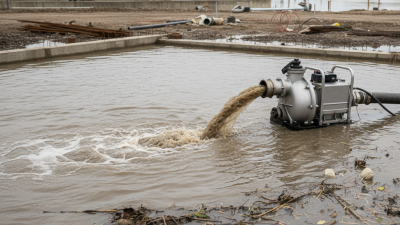
Buying a slurry pump for an international project is rarely a simple equipment purchase. The wrong model may consume excess power, wear quickly, or disrupt production. A specification sheet can look convincing. Reality is harsher.
Fluid density, particle size, temperature, pipeline length, and elevation all affect performance. A pump handling fine mineral dust faces different risks from one moving coarse tailings. Experienced buyers therefore examine operating data, not marketing claims alone. They ask for performance curves, material recommendations, test records, and references from comparable sites. That evidence helps connect supplier promises with field experience.
This guide presents ten practical slurry pump buying tips for global buyers. It covers hydraulic requirements, wet-end materials, drive selection, maintenance access, spare parts, and total ownership cost. It also considers communication, documentation, packaging, and after-sales support across borders. Small details matter. A few extra meters of head can change motor selection. An overlooked abrasive component can shorten service life within weeks.
Still, no checklist can replace honest site data and technical review. Some recommendations may remain uncertain when samples or operating records are incomplete. That limitation deserves attention, rather than a confident guess. Reliable decisions come from comparing verified information, realistic duty conditions, and supplier accountability. The best purchase is not always the lowest quotation. It is the solution that performs predictably, can be maintained safely, and remains supportable after delivery.

Before selecting a slurry pump, define the fluid, not just the flow rate. Record solids size as D50 and maximum particle size. A few large stones can damage a pump faster than a high average concentration. Measure slurry specific gravity and solids concentration separately. They are related, but not identical. A 40% solids slurry can behave very differently when particles are dense iron ore or light tailings.
USGS Mineral Commodity Summaries 2024 reports about 2.5 billion metric tons of iron ore production worldwide in 2023. This scale explains why small errors in slurry data create major energy and maintenance costs. Record concentration by weight or volume, and state the measurement method. Also test pH at operating temperature. Acidic slurry may accelerate corrosion, while alkaline slurry can affect seals and elastomers. Particle hardness matters too, although it is often forgotten.
Tip: Send a representative sample to an independent laboratory. Test at least three operating points, not one convenient sample. Include D10, D50, D90, maximum size, SG, concentration, temperature, and pH. The Hydraulic Institute’s pump guidance emphasizes using verified system data for reliable selection. A practical warning: laboratory results may still miss settling in long pipelines. Review the sample again after transport and storage. This extra check feels excessive, but field conditions are rarely perfect.
This representative screening profile uses a mineral slurry with a median particle size of 150 µm, a solids specific gravity of 2.65, 40 wt% solids concentration, and a pH of 8.5. These values are realistic engineering inputs, but the final pump selection should use measured site data and operating conditions.
Particle size affects wear and passage requirements, specific gravity affects hydraulic load, solids concentration influences pump capacity and power, and pH helps determine material compatibility and corrosion resistance.
10 Slurry Pump Buying Tips for Global Buyers: Match Pump Type to Duty
Choosing between a centrifugal and positive displacement pump starts with the slurry, not the catalog. Measure flow, discharge pressure, particle size, solids concentration, temperature, and viscosity. Centrifugal pumps usually suit high-flow duties with moderate pressure and changing production rates. Their open or recessed impellers can pass solids, but wear rises quickly when particles are sharp or oversized.
Positive displacement pumps are better for lower, controlled flow and higher pressure. They can handle thicker slurries and maintain flow despite pressure changes. However, blocked discharge lines can create dangerous pressure, so relief protection and proper controls are essential. The Hydraulic Institute’s slurry-pump guidance emphasizes particle size, solids concentration, and wear characteristics during selection. Ignoring any one of these details can distort the duty calculation.
Energy also deserves attention. U.S. Department of Energy pumping-system assessment materials identify pumping systems as a major industrial electricity user, often representing about 25% of motor-system energy in process plants. A pump that is oversized may consume unnecessary power and still wear faster. I have seen specifications built around water-like viscosity, then fail when density changes. That assumption is easy to make. It is also costly. Request tested performance curves using the actual slurry density, solids content, and operating temperature. Leave room for uncertainty, but do not hide it inside an oversized pump.
| No. | Buying Dimension | Typical Duty or Selection Data | Centrifugal Slurry Pump | Positive Displacement Slurry Pump | Recommended Buying Action |
|---|---|---|---|---|---|
| 1 | Required Flow Rate | Confirm the normal, minimum, and maximum flow in m³/h. Include expected operating variation rather than sizing only for the average value. |
Usually preferred Well suited to continuous, high-flow transfer. Flow changes with speed, impeller diameter, system resistance, and slurry properties. |
Consider for controlled flow Delivers a more predictable volume per cycle or revolution, but the selected pump must tolerate abrasive solids and pulsation. |
Request a duty-point curve showing flow, head, speed, efficiency, and power at the actual slurry concentration. |
| 2 | Discharge Pressure or Head | Define static lift, pipe friction, valves, elevation changes, and the required discharge pressure at the pump outlet. |
Best for moderate head Multi-stage or specially designed units can provide higher head, but efficiency and wear must be checked at the selected point. |
Strong option for high pressure Positive displacement action can maintain flow against changing pressure, subject to relief protection and allowable differential pressure. |
Compare total dynamic head with the pump curve; do not select from maximum shut-off or maximum pressure alone. |
| 3 | Solids Concentration | Provide solids concentration by weight or volume, slurry density, particle-size distribution, and the liquid carrier. |
Common choice Handles many mineral slurries effectively when the impeller, casing, speed, and clearances are matched to density and rheology. |
Useful for dense or difficult slurry Can handle high-viscosity material in some applications, but valves, liners, diaphragms, pistons, or hoses may experience severe wear. |
Send a representative slurry sample or complete laboratory data for hydraulic and material compatibility review. |
| 4 | Particle Size and Shape | Specify the largest particle, maximum particle size, percentage of coarse solids, sharpness, hardness, and likelihood of tramp material. |
Often suitable Large-passage designs can pass coarse solids, but oversized particles may damage the impeller or cause blockage. |
Requires careful screening Valves and close clearances may be vulnerable to large or irregular solids; some designs use larger passages or specially shaped components. |
Verify free passage, maximum recommended particle size, and whether a screen, separator, or protection device is required. |
| 5 | Abrasive Wear | Estimate hardness and abrasiveness using operating history, mineral composition, solids loading, velocity, and expected annual running hours. |
Material selection is critical Replaceable rubber or hard-metal wet-end parts are commonly selected according to particle size, sharpness, and impact conditions. |
Material selection is critical Wear may affect diaphragms, pistons, hoses, seals, valves, or liners. Lower speed can reduce wear but may affect capacity. |
Compare expected wear-part life, replacement time, spare-part cost, and the supplier’s inspection intervals. |
| 6 | Viscosity and Rheology | Identify whether the slurry is Newtonian, shear-thinning, settling, non-settling, or yield-stress material. Include temperature at the pump inlet. |
Best for lower viscosity Performance can fall significantly as viscosity and yield stress increase; standard water-based curves may not apply. |
Often advantageous Positive displacement pumps can handle viscous material more effectively, provided the inlet is adequately filled and the solids do not damage moving parts. |
Require slurry-corrected performance data, including viscosity, yield stress, pump speed, and inlet conditions. |
| 7 | Suction and NPSH Conditions | Check suction lift or flooded suction, tank level variation, temperature, vapor pressure, pipe diameter, and available NPSH. |
Needs adequate NPSH margin Cavitation can reduce performance and damage the impeller. Slurry-related air entrainment may further complicate suction performance. |
Needs proper inlet filling Inlet starvation can cause reduced capacity, excessive pulsation, cavitation-like damage, or mechanical problems depending on the design. |
Provide the complete suction layout and request NPSH or inlet-filling requirements at minimum operating level. |
| 8 | Flow Control and Variable Operation | Determine whether the process requires throttling, frequent starts and stops, batch dosing, or a broad operating range. |
Flexible with speed control Variable-frequency drives can adjust flow efficiently within the allowable speed range; prolonged throttling may waste energy and increase wear. |
Excellent metering capability Flow is closely related to displacement and speed, making it suitable for dosing or controlled transfer; bypass and relief systems are essential. |
Ask for the turndown range, minimum stable flow, allowable speed range, and control-system interface. |
| 9 | Pulsation and Pipeline Effects | Review pipe length, flexible connections, pressure rating, surge sensitivity, instrumentation, and whether steady flow is required. |
Low-pulsation output Normally provides smooth continuous flow, which is useful for long pipelines and processes sensitive to pressure fluctuations. |
Pulsation management may be needed Reciprocating and some rotary designs can create flow or pressure pulsation; dampeners and properly sized piping may be required. |
Request pulsation data and confirm the need for dampeners, pulsation bottles, expansion joints, or pressure monitoring. |
| 10 | Lifecycle Cost and Serviceability | Evaluate energy use, wear-part consumption, seal failures, downtime, local service capability, spare-parts availability, and operator skill. |
Often economical for large continuous flow Simple hydraulic layouts and replaceable wet-end parts can support efficient maintenance when the pump operates near its best-efficiency region. |
May reduce process-control cost Can be valuable where accurate flow, high pressure, or viscous slurry handling offsets higher mechanical complexity or maintenance requirements. |
Compare total cost of ownership over the planned service period, not only purchase price, rated power, or initial delivery time. |
Selection note: Actual pump performance depends on slurry density, solids concentration, particle size, rheology, temperature, suction conditions, pipe layout, materials, and operating speed. Final sizing should be confirmed using application-specific test data or verified slurry-correction calculations.
Slurry pump sizing starts with measured duty, not a catalog number. Confirm required flow, static head, pipe length, elevation, and discharge pressure. Record solids concentration, particle size, specific gravity, temperature, and viscosity. These details can change the required head dramatically. Hydraulic Institute standard ANSI/HI 12.1–12.6 highlights application conditions as central to slurry pump selection.
A practical design margin is often 10–20% for flow and total head. Keep it controlled. Excessive margin can push the pump far from its best efficiency point, increasing wear and power use. The U.S. Department of Energy reports that pumping systems consume nearly 20% of industrial electricity. Efficiency is not a minor purchasing detail. It affects operating cost for years.
Tip: Build the duty point from real site measurements. Then check the pump curve at normal and peak conditions. Do not add margin twice through oversized piping and oversized equipment. A neat spreadsheet can still be wrong. Field data may be incomplete, especially during seasonal production changes. Ask for a verified performance curve, efficiency data, allowable solids size, and wear-life assumptions. Compare these values against ANSI/HI guidance and the supplier’s test procedure. For long pipelines, calculate friction losses with slurry properties rather than clean-water assumptions. A 10% margin may be reasonable for stable duties, while variable ore feed may justify closer review of the full 20% range.
Choosing a slurry pump begins with the solids, not the catalog photo. In field inspections, I check particle size, hardness, shape, concentration, and flow velocity. A 1 mm rounded grain behaves differently from a 100 mm angular fragment. Hard, sharp solids usually need high-chrome alloy wet ends. Softer particles may suit natural or synthetic rubber liners. Rubber can reduce impact damage, but it may swell or crack in aggressive chemicals. Material compatibility must match the actual liquid.
Corrosion changes the decision. Measure pH, chloride content, temperature, and oxidizing conditions during operation, not only in a laboratory sample. Stainless or duplex alloys can help with corrosive slurries, while specialized coatings may protect selected surfaces. Coatings are not magic. A damaged edge can expose the base metal quickly. I have seen pumps fail early because operators selected for corrosion resistance and ignored abrasion. The reverse mistake is common too. Not every chart helps.
Ask for the impeller passage and liner thickness, especially when solids approach 100 mm. A narrow passage may clog, even when the pump has enough power. Check wet-end replacement access, expected wear rate, and spare-part lead time. Request test data using representative solids. That detail matters. A clean-water efficiency figure can mislead. Keep a slurry sample and record seasonal changes. Selection is rarely perfect. Recheck it after real operating hours.
Buying a slurry pump should begin with operating data, not catalog promises. Record flow rate, head, slurry density, particle size, temperature, and daily running hours. Efficiency must be checked at the real slurry condition. Clear-water curves can look impressive but often hide energy losses. Request a tested performance curve and review its assumptions. Small errors in density can change motor demand significantly.
Wear life depends on particle hardness, concentration, velocity, and the selected wet-end materials. Ask whether liners and impellers are designed for your specific duty. Require wear-rate evidence from similar applications, not only estimated service hours. Inspectable clearance settings can extend useful life. Standards matter too. Request material certificates, inspection records, and documented compliance with applicable safety, electrical, pressure, and quality requirements. Traceability protects buyers when equipment crosses borders.
Spares should be planned before commissioning. Confirm critical parts, interchangeability, lead times, storage conditions, and local technical support. Keep practical items available, such as liners, impellers, seals, bearings, and fasteners. A complete cost review includes energy, maintenance labor, downtime, freight, and disposal. The lowest purchase price may become expensive by month three. One uncomfortable lesson is that predicted wear life is never perfect. Site measurements should challenge the original estimate. Build a review point after the first operating period.
Copyright © 2025. Rotech Pumps & Systems Inc. All rights reserved.