Global buyers rarely choose pumps from a catalogue alone. They compare efficiency, materials, certifications, service coverage, delivery times, and lifecycle costs. That decision becomes more important as industrial facilities face higher energy prices and stricter efficiency expectations.
Grand View Research estimates that the global industrial pumps market was worth approximately USD 67 billion in 2023. Its report also projects continued growth through 2030, supported by water infrastructure, chemicals, mining, energy, and manufacturing. Other research firms publish different figures because their market definitions vary. That is worth remembering.
The International Energy Agency reports that electric motor systems consume a substantial share of global electricity. Pumping systems represent a major opportunity for efficiency improvements, especially when motors, controls, pipes, and operating conditions are considered together. A pump may look efficient on a test bench, yet waste energy inside a poorly designed system.
Pump-industry author Igor J. Karassik emphasized this practical principle: “A pump is only a part of a system, not the system itself.” The quotation remains relevant for today’s pump manufacturers. Product quality matters, but application knowledge matters just as much.
This guide examines the top 10 pump manufacturers worldwide for global buyers. It considers engineering depth, product range, regional support, reliability, digital monitoring, and documented performance. Rankings are never perfectly objective. A chemical plant may value corrosion resistance, while a municipal operator may prioritize spare parts and long service life.
The strongest suppliers do more than ship equipment. They help buyers select the right pump, manage installation risks, and maintain stable performance after commissioning.
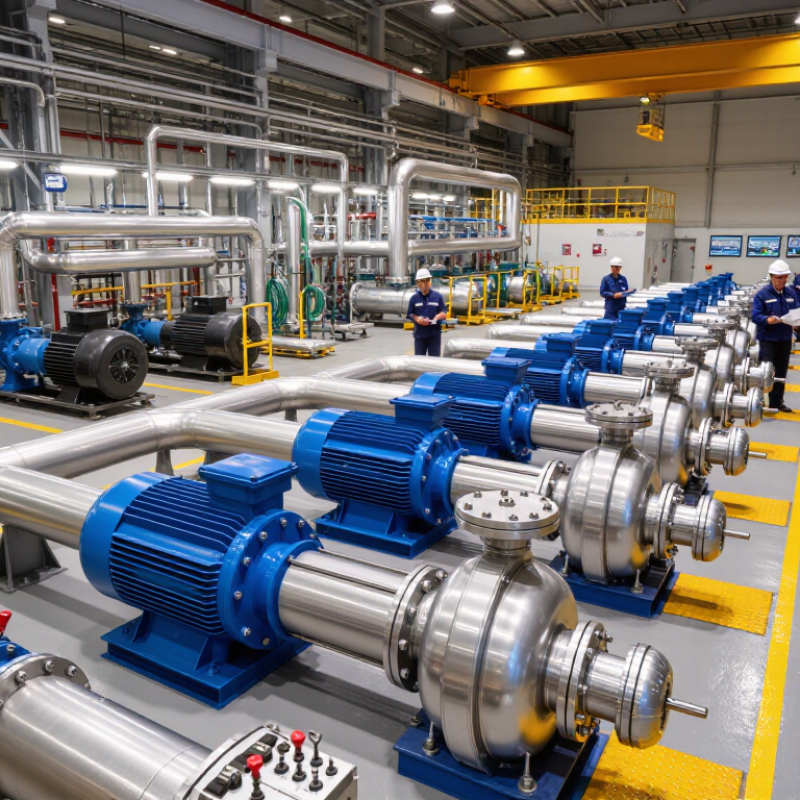
The top 10 pump manufacturers should not be selected by visibility alone. Global buyers need to define performance requirements first. Consider fluid type, flow rate, pressure, temperature, power supply, and installation environment. A pump handling abrasive slurry needs different materials than one moving clean water. Small details matter. I have seen projects suffer because buyers compared catalog prices before checking seal compatibility and spare-part access.
A reliable manufacturer should provide test records, material certificates, dimensional drawings, maintenance instructions, and clear warranty terms. Compare manufacturing experience in similar industries, not only company age. Review factory inspection procedures, quality controls, delivery history, and technical support across time zones. Ask for references from installations with comparable operating conditions. Site visits can reveal practical details, such as organized testing areas or poorly labeled components. No scorecard is perfect. Still, a documented comparison reduces guesswork and exposes weak claims.
Tips: Build a weighted scorecard before requesting quotations. Give meaningful weight to efficiency, lifecycle cost, service response, and parts availability. Request a performance test at the required duty point. Check whether the quoted pump meets that point under real operating conditions. Keep room for engineering judgment, because the cheapest option can become expensive after repeated seal failures. Also question your own assumptions. A familiar specification may not suit a new climate, fluid, or maintenance team.
Top 10 Pump Manufacturers Worldwide for Global Buyers?
Leading pump manufacturers serve very different operating conditions. Centrifugal pumps remain common in water supply, HVAC, chemicals, and general process lines. Positive displacement pumps suit thick fluids, dosing, and high-pressure transfer. Submersible pumps handle drainage, wastewater, and deep wells. Diaphragm pumps are useful where chemical resistance and careful metering matter. Axial and mixed-flow pumps support irrigation, flood control, and large water volumes.
Industry demand is closely linked to energy and infrastructure. The U.S. Department of Energy reports that pumping systems can consume 25% to 50% of electricity in some industrial facilities. This makes hydraulic efficiency, motor control, and correct sizing important purchasing factors. The International Energy Agency also identifies motor-driven equipment as a major industrial electricity user. Buyers should examine the complete system, not only the pump casing. A highly efficient pump can still waste energy through throttled valves, oversized motors, or poor pipe design.
Leading suppliers typically serve municipal water, oil and gas, mining, food processing, pharmaceuticals, agriculture, marine operations, and power generation. The Global Water Intelligence market reports continue to track strong investment in water and wastewater infrastructure, especially in expanding urban regions. However, market rankings can change by revenue, shipment volume, or regional coverage. That distinction is easy to miss. Procurement teams should verify test standards, spare-parts access, lifecycle cost, materials, and local service capacity. A cheaper purchase may become an expensive maintenance problem.
| Profile | Core Pump Portfolio | Primary Industries Served | Typical Applications | Hydraulic Configuration | Common Materials | Common Compliance Requirements | Key Buyer Selection Factors |
|---|---|---|---|---|---|---|---|
| 01 | End-suction centrifugal; split-case; multistage | Municipal water, HVAC, building services, general industry | Water transfer, pressure boosting, chilled-water circulation, boiler feed | Single-stage and multistage centrifugal designs | Cast iron, ductile iron, bronze, stainless steel | ISO 2858, ISO 5199, EN 733, local electrical codes | Efficiency, duty-point stability, lifecycle cost, spare-part availability |
| 02 | Vertical turbine; vertical mixed-flow; axial-flow | Water infrastructure, irrigation, flood control, power generation | Raw-water intake, drainage, irrigation lift, condenser-water circulation | Vertical shaft, bowl assemblies, high-flow low-head hydraulics | Carbon steel, stainless steel, bronze, engineered coatings | Hydraulic Institute standards, API 610 where applicable, local codes | Wet-well geometry, submergence, column length, vibration control |
| 03 | Submersible drainage; sewage; dewatering pumps | Wastewater, construction, mining, municipal services | Sewage lifting, stormwater removal, groundwater control, slurry drainage | Submerged motor and pump assembly; vortex or channel impellers | Cast iron, stainless steel, high-chrome wear components, elastomers | IEC/EN motor requirements, wastewater standards, ingress protection ratings | Solids passage, cable protection, seal design, automatic coupling system |
| 04 | Process centrifugal; magnetic-drive; canned-motor pumps | Chemical processing, pharmaceuticals, semiconductor, specialty manufacturing | Corrosive-fluid transfer, solvent circulation, leak-free chemical handling | Sealless or mechanically sealed centrifugal configurations | 316 stainless steel, duplex steel, alloy materials, fluoropolymers | ISO 15783, ATEX or IECEx for hazardous areas, GMP-related requirements | Chemical compatibility, containment, temperature range, emissions control |
| 05 | API process pumps; multistage; barrel-type pumps | Oil and gas, refining, petrochemicals, energy infrastructure | Hydrocarbon transfer, boiler feed, pipeline boosting, refinery circulation | Horizontal or vertical centrifugal pumps for continuous process duty | Carbon steel, stainless steel, duplex and nickel-based alloys | API 610, API 682 seal systems, ISO 13709, hazardous-area rules | Reliability, seal performance, NPSH margin, maintainability, certification |
| 06 | Slurry; froth; abrasive-duty centrifugal pumps | Mining, mineral processing, dredging, aggregate production | Ore transfer, tailings, flotation, cyclone feed, dredging and ash handling | Heavy-duty centrifugal designs with replaceable wear parts | High-chrome alloy, rubber lining, hardened steel, ceramic options | Mining-site safety rules, pressure testing, material and wear specifications | Solids concentration, particle size, wear rate, slurry rheology, service access |
| 07 | Progressive cavity; twin-screw; rotary lobe pumps | Food and beverage, wastewater, pulp and paper, biogas | Viscous-product transfer, sludge handling, dosing, hygienic processing | Positive-displacement pumps for controlled, low-pulsation flow | Stainless steel, food-grade elastomers, hardened steel, sanitary finishes | EHEDG or 3-A where required, FDA-compliant materials, hygienic design rules | Viscosity, shear sensitivity, cleanability, solids content, seal replacement |
| 08 | Diaphragm; piston; plunger metering pumps | Water treatment, chemical dosing, power, industrial utilities | pH control, disinfection, corrosion inhibition, boiler-water treatment | Positive displacement with adjustable or digitally controlled dosing | PVC, PVDF, PTFE, stainless steel, Hastelloy-type alloys | API 675, IEC electrical requirements, chemical compatibility standards | Turndown ratio, dosing accuracy, pulsation control, materials compatibility |
| 09 | Fire pumps; jockey pumps; packaged fire-pump systems | Commercial buildings, manufacturing, logistics, marine and offshore facilities | Automatic sprinkler systems, hydrants, fire-water storage and pressure maintenance | Horizontal split-case, end-suction, vertical turbine and multistage designs | Cast iron, ductile iron, bronze, stainless steel | NFPA 20, UL/FM approvals where specified, local fire-protection codes | Listed components, tested performance, redundancy, controller integration |
| 10 | Marine; ballast; cargo; seawater-service pumps | Marine transport, shipbuilding, offshore platforms, coastal infrastructure | Ballast transfer, bilge drainage, cooling-water circulation, cargo handling | Horizontal centrifugal, vertical inline, self-priming and screw-pump designs | Duplex stainless steel, bronze, marine-grade alloys, coated cast iron | IACS class rules, IMO requirements, marine electrical and environmental codes | Saltwater corrosion resistance, compact footprint, class approval, service support |
| Buyer note: The profiles summarize pump types and industry applications commonly associated with major international pump suppliers. Actual performance depends on the selected model, duty point, fluid properties, installation conditions, applicable standards and local service capability. No company names, brands or brand-level performance data are included. | |||||||
For global buyers, a top-ten ranking means little without a repeatable supplier check. A reliable pump manufacturer should show verified experience with your fluid, pressure range, temperature, and duty cycle. Ask for project records with comparable operating conditions. Photos help, but signed performance data matters more. I have seen polished catalogs hide weak field support. That risk deserves attention.
Technical review should begin with the pump curve, efficiency point, materials, seal design, and motor compatibility. Request test reports, tolerance limits, spare-part lists, and maintenance intervals. Confirm whether data comes from factory testing or a sales estimate. A supplier with qualified engineers should explain cavitation margins in plain language. Vague answers are warning signs. They are not proof of failure, but they require evidence.
International reliability also depends on quality controls, traceability, packaging, export documents, and responsive communication. Check serial-number records and inspection procedures before placing a large order. Ask how warranty claims are handled across time zones. A clear service agreement is stronger than a friendly promise. Price comparisons should include energy use, downtime, installation, and replacement parts. I would also test a small batch first, even when the deadline feels uncomfortable. No evaluation is perfect. Assumptions can survive until the first breakdown.
Profiles of the Top 10 Pump Manufacturers Worldwide
The leading ten pump manufacturers serve different operating needs, not identical markets. One profile focuses on municipal water systems, with stainless-steel casings and tested efficiency curves. Another specializes in wastewater equipment, handling ragging, grit, and uneven inflow. These details matter in real plants.
A third manufacturer targets chemical processing, offering corrosion-resistant materials and carefully selected seals. A fourth builds high-pressure units for industrial boilers and process lines. The fifth profile covers mining pumps, where abrasive slurry can damage impellers within weeks. A sixth serves building services, supplying compact circulation pumps for heating and cooling loops. The seventh combines standardized models with broad replacement-part availability. That can reduce downtime. The eighth emphasizes custom engineering for unusual flow, temperature, or pressure demands. The ninth develops energy-saving systems with variable-speed control and remote monitoring. The tenth supports agricultural and irrigation projects, where seasonal demand can change sharply.
Experience shows that a famous scale does not guarantee the best fit. Buyers should compare duty points, material compatibility, motor efficiency, seal design, service coverage, and delivery records. Ask for performance data at the actual operating point, not only the maximum rating. Verify testing procedures and after-sales responsibilities in writing. No ranking is perfect. A manufacturer may excel in heavy industry but perform poorly in small installations. Even a reliable pump can fail when the system is poorly sized, poorly aligned, or exposed to unexpected solids. That uncomfortable detail deserves more attention during procurement.
Global pump demand context by end-use sector
Agriculture represents the largest share of global freshwater withdrawals, followed by industrial and domestic applications. This demand profile helps global buyers evaluate pump requirements across irrigation, process systems, water treatment, municipal networks, and building services. The figures are rounded global estimates reported by FAO AQUASTAT and are not manufacturer or brand sales data.
Source: FAO AQUASTAT, global freshwater withdrawal distribution by sector.
Global buyers should compare more than catalog capacity and quoted price. The ISO 9001 certificate supports quality management, but it does not prove every pump will perform well. For process applications, buyers should verify relevant standards, including API 610, ISO 5199, or local electrical requirements. The U.S. Department of Energy’s pump-system guidance emphasizes lifecycle energy costs, which can exceed the initial equipment price. A cheaper pump may quietly consume more electricity for years. That mistake is common.
Service capability matters when a seal fails on a wet Tuesday. Ask for spare-parts lead times, commissioning support, vibration limits, and technician response locations. UNESCO’s World Water Development Report 2024 states that agriculture accounts for about 70% of global freshwater withdrawals. This creates strong demand for dependable irrigation and water-transfer equipment, especially where maintenance resources are limited. Delivery terms should include factory testing, export packaging, documentation, and realistic customs buffers. “In stock” needs proof.
Pricing comparisons also require equal specifications. Check duty point, efficiency, materials, motor rating, warranty coverage, and testing scope. The Hydraulic Institute and U.S. DOE both promote system-level evaluation rather than pump-only selection. I have seen buyers compare three quotes while ignoring pipe losses. That approach looks professional, but it is incomplete. Reported market figures also vary by region, exchange rates, and project size. Buyers should record assumptions and request written clarification before approval. Small omissions become expensive later.
Copyright © 2025. Rotech Pumps & Systems Inc. All rights reserved.