China Top 10 Centrifugal Water Pump Manufacturers

Selecting a centrifugal water pump is about more than comparing prices or choosing a familiar brand. The right model must match the required flow, head, liquid, and operating conditions. A mismatch can mean weak pressure, excess energy use, or avoidable maintenance. Small details matter.

China has a broad pump manufacturing sector, serving agricultural, industrial, building, and water-treatment applications. This guide introduces ten manufacturers and offers a practical starting point for comparing their products. It considers factors such as pump materials, impeller design, motor options, product range, and available technical support. Buyers should also review performance curves, efficiency data, warranty terms, and test documentation before making a decision. A polished catalog is useful, but it cannot answer every question.

The list should not be treated as a universal ranking. A supplier well suited to irrigation may not meet the needs of a high-temperature industrial process. Confirm the operating point, installation requirements, and service arrangements directly with each manufacturer. Ask for evidence that the selected model can perform under your actual conditions. That step is easy to overlook. Even careful comparisons leave uncertainty when product information is incomplete, so verify key specifications before placing an order.
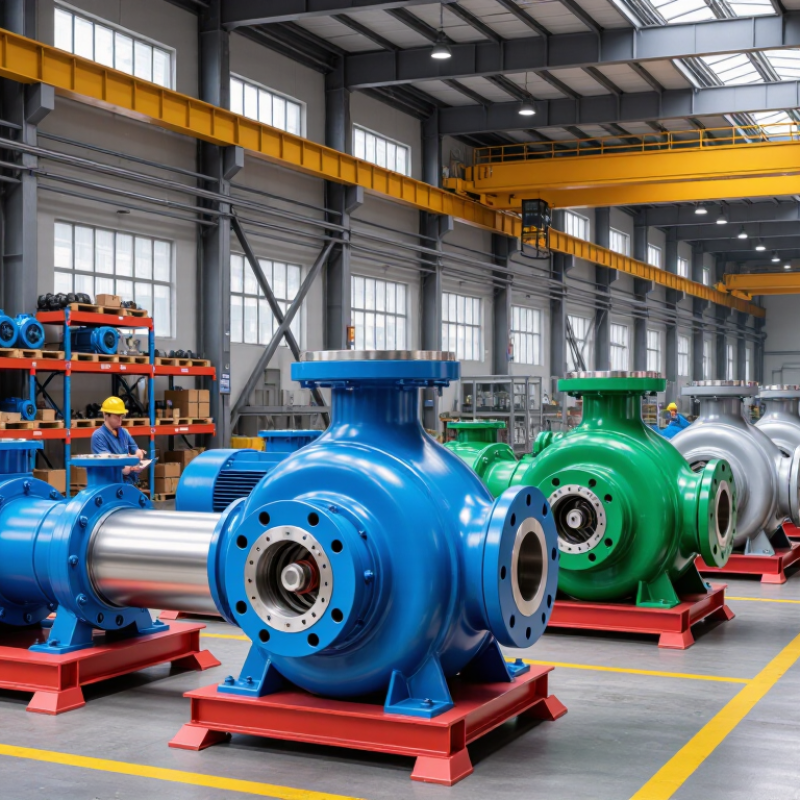
China Top 10 Centrifugal Water Pump Manufacturers

Understanding Centrifugal Water Pumps and Their Main Applications

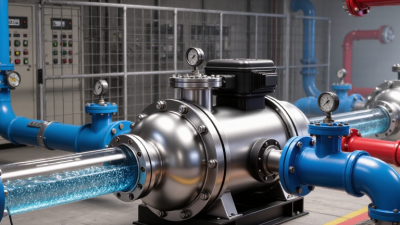
A centrifugal water pump converts rotational energy into flowing water. An impeller spins inside a casing, pushing water outward and creating pressure. The design suits steady, high-volume flow, from building circulation to irrigation and municipal water supply. Think of a pump room: pipes shiver slightly, a pressure gauge holds steady, and water moves continuously. Small details matter. Air trapped in the casing can interrupt operation, while a partly closed valve changes the pump’s working point.

The U.S. Department of Energy’s Improving Pumping System Performance sourcebook reports that pumping systems use nearly 20% of global electricity demand. It also notes that they can account for 25–50% of energy use in some industrial facilities. These figures cover pumping systems broadly, not centrifugal pumps alone. Still, they show why selecting a pump around actual flow and pressure needs matters. Oversizing can waste energy and increase wear; undersizing may leave distant taps weak or irrigation uneven.

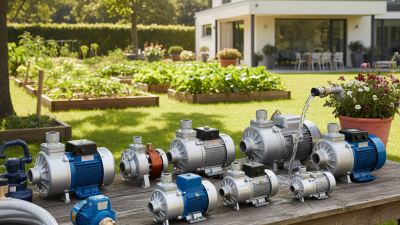
Common applications include water treatment, cooling circuits, fire-water supply, and agricultural pumping. Each setting brings different demands. A treatment plant may need dependable, continuous flow, while a farm may face changing water levels and seasonal use. Engineers should check flow rate, total head, fluid temperature, and maintenance access before choosing equipment. Efficiency curves help, but they rarely capture every site condition. Real installations can be messier. A careful field check still counts.

Centrifugal Pump Speed and Performance

How changing rotational speed affects flow, head, and power

Values are relative to operation at 100% speed. Under the pump affinity laws, flow varies approximately with speed, head with speed squared, and power with speed cubed. These relationships are approximate and assume the same pump and impeller operating under similar conditions.

How China’s Centrifugal Pump Manufacturing Sector Is Organized

China’s centrifugal-pump sector is organized as a production chain, not a single factory model. The National Bureau of Statistics’ industry classification places pump and vacuum equipment manufacturing within general equipment manufacturing. Around pump makers are foundries, casting and machining shops, motor suppliers, seal producers, control-system firms, and testing laboratories. Some manufacturers handle design, casting, assembly, and testing in-house. Others buy key components and focus on assembly or project-specific engineering. That distinction matters. A pump sold through an export distributor may involve several independent suppliers before it reaches a water-treatment plant or irrigation site.

The National Bureau of Statistics reported China’s 2023 research and development spending at 3.3357 trillion yuan, equal to 2.64% of GDP, in its Statistical Communiqué.

This is a national figure, not a pump-sector total; it shows the broader innovation environment, not the capability of any individual manufacturer. For buyers comparing the top ten, useful evidence includes hydraulic test records, material traceability, efficiency curves, and service capacity. Ask for the test point, not just the rated flow. A polished catalogue can hide gaps.

Smaller suppliers may offer flexible machining, while larger operations may provide wider testing and export support. Neither scale nor a low quoted price proves long-term reliability. Industry data also leave room for reflection: public statistics rarely separate centrifugal pumps cleanly from the wider equipment category.

Criteria for Identifying China’s Leading Pump Manufacturers

China Top 10 Centrifugal Water Pump Manufacturers

Criteria for Identifying China’s Leading Pump Manufacturers

Choosing a capable pump manufacturer takes more than comparing catalog prices. Check whether the company can provide clear performance curves for the required flow rate and head. Ask how tests are performed, and request records for pressure, vibration, and motor temperature. Good documentation matters. Material options should match the water’s temperature and composition, while seals and bearings should suit expected operating hours. Verify that the stated efficiency applies near your actual duty point, not only under ideal conditions.

Factory visits or live video inspections can reveal practical details: calibrated test equipment, marked components, and orderly assembly areas. Ask for traceability records and written inspection procedures. Discuss installation limits, spare-part availability, and response times before placing an order. Independent certificates can help, but check their scope and validity. A polished brochure is not proof of consistent production. No checklist catches everything. Even careful reviews leave some uncertainty, so compare evidence from more than one source and speak with users handling similar water and workloads.

Tips: Send suppliers the same operating data, including flow, head, fluid temperature, and duty cycle. Compare like for like, and keep every technical promise in writing.

Profiles of Ten Chinese Centrifugal Water Pump Manufacturers

China’s centrifugal pump sector includes manufacturers with different strengths, rather than one standard production model. These ten profiles highlight practical differences buyers can investigate. One manufacturer may focus on municipal water transfer, while another builds pumps for agricultural irrigation. A third may specialize in industrial circulation, where steady operation matters more than a compact footprint. Some workshops produce stainless-steel units for cleaner processes. Others concentrate on high-head systems, large-flow equipment, or space-saving designs.

The remaining profiles show further variations: custom production for project specifications, energy-conscious hydraulic designs, export-oriented manufacturing, and broad product ranges for varied applications. These are useful categories, not verified rankings. Check each supplier’s pump curves, material options, inspection procedures, and available test records before comparing quotations. Ask how the equipment performs at your actual flow and head; a catalogue rating alone can mislead. Small details matter. A buyer should also confirm spare-part availability and service response times. One point is easy to overlook: a capable factory may still be a poor fit for a particular site. These profiles offer a starting framework, but documented performance and clear technical communication deserve closer attention.

Comparing Manufacturers by Product Range, Quality, and Service

Comparing China’s centrifugal water pump manufacturers means looking beyond headline capacity and price. Product range matters when a project needs clean-water, wastewater, or multistage units, plus options for different flow rates and operating temperatures. A broad catalogue can simplify sourcing, but it does not prove every model suits a particular duty point. Check pump curves against the real system head, pipe losses, and daily run hours. Small mismatch, costly later.

Quality is easier to judge through evidence than polished claims. Request material specifications, performance-test records, inspection steps, and details on motor protection and seal choices. For demanding sites, ask how the supplier handles vibration, corrosion, and spare-part availability. Service also separates suppliers: clear lead times, accessible technical staff, installation guidance, and a workable warranty process matter when a pump stops. Compare response commitments in writing, not only during a sales call. Public listings rarely reveal long-term failure rates, so a shortlist should include reference checks and a sample document review. A “top ten” label is not a technical ranking; fit varies by application, and no catalogue can replace site data.

China Top 10 Centrifugal Water Pump Manufacturers - Comparing Manufacturers by Product Range, Quality, and Service
Comparison Dimension What to Compare Useful Evidence to Request Why It Matters
1. End-Suction Pumps Availability of horizontal, single-stage end-suction pumps for general water transfer, circulation, and boosting. Current catalogue, model selection chart, pump curves, and dimensional drawings. End-suction designs are widely used; the selection must match the required flow, head, liquid, and installation layout.
2. Multistage Pumps Vertical or horizontal multistage options and their stated operating ranges. Curve sheets for the offered model and confirmation of the specified operating point. Multiple impellers can provide higher head than a comparable single-stage design, but the actual duty point must be checked against the curve.
3. Split-Case Pumps Availability of horizontal split-case designs for higher-flow water duties. Sectional drawings, performance curves, materials list, and maintenance instructions. The casing layout can allow access to internal components without disconnecting the main pipework, depending on the installation and design.
4. Inline and Booster Pumps Inline circulation pumps and packaged booster sets, including control and motor options. System diagrams, control-panel specifications, motor data, and package scope of supply. Confirming exactly what is included helps avoid gaps in controls, valves, sensors, or commissioning responsibilities.
5. Materials and Liquid Compatibility Available casing, impeller, shaft, and seal materials for the water quality and operating conditions. Material declarations, seal data, and written confirmation of suitability for the specified liquid and temperature. Material choice affects corrosion resistance, wear, service life, and suitability for potable or process-water applications.
6. Performance Verification How the supplier verifies flow, head, power, and efficiency for the ordered pump. A model-specific test report and the agreed acceptance criteria; where applicable, ask whether testing follows ISO 9906. A catalogue curve is not the same as a test result for the supplied unit. Agree on the test scope before ordering.
7. Quality Management Documented production controls, inspection procedures, and traceability for components and finished pumps. Current quality-management certificate, inspection plan, material records, and sample production documentation. A certificate can indicate a documented management system, but it does not by itself prove that a particular pump meets its duty point.
8. Motor and Efficiency Options Motor ratings, voltage and frequency options, protection class, and stated efficiency information. Motor nameplate data, applicable efficiency documentation, and confirmation of compatibility with the local power supply. Motor compatibility and energy consumption affect installation, operating cost, and compliance with local requirements.
9. Spare Parts and Warranty Warranty terms, spare-parts availability, parts identification, and stated lead times. Written warranty conditions, exploded parts list, recommended spares list, and a service contact. Clear terms and parts support can reduce downtime; confirm exclusions and the process for warranty claims.
10. Export and After-Sales Support Export documentation, packaging, installation guidance, troubleshooting, and support hours. Sample shipping documents, manuals in the required language, packing details, and a written service-response process. Support quality is easier to compare when response channels, responsibilities, and expected response times are stated in writing.
Note: This is a practical comparison framework for evaluating manufacturers, not a verified ranking or a company-specific product audit. Product availability, certifications, performance, warranty, and service terms vary by supplier and model; verify all claims with current documentation before purchase.
×

Cart