What Are the Top Drainage Pump Types in 2026?
Drainage problems can begin with a slow-rising puddle, a flooded basement, or water pooling beside a worksite. The right drainage pump can move that water safely and efficiently, but no single design suits every job. Water depth, debris, discharge distance, and available power all affect the choice. A pump that handles clear rainwater may clog when leaves or sediment enter the intake. Small details matter.
This guide examines the leading drainage pump types to consider in 2026, including submersible, centrifugal, trash-handling, and portable models. It explains how each type works and where its strengths—and limits—become clear. For example, a compact submersible pump may fit a tight sump, while a solids-handling model may be better for muddy water. Check the manufacturer’s flow and head ratings, materials, maintenance instructions, and duty-cycle guidance before buying. These figures help, but they do not guarantee the same results at every site. Pipe length, bends, and debris can reduce real-world performance. That distinction is easy to overlook.
The best option depends on the actual conditions, not just the pump’s advertised capacity. Even a well-matched unit can disappoint if its intake blocks or its discharge line is undersized. Use this overview as a practical starting point, then verify the details against your site and the product documentation. Some trade-offs remain.
Drainage Pumps: Purpose and Basic Operating Principles
What Are the Top Drainage Pump Types in 2026?
Drainage Pumps: Purpose and Basic Operating Principles
Drainage pumps move unwanted water away from places where it can collect, such as basements, trenches, sump pits, and low-lying work areas. They help limit water damage and keep spaces usable after heavy rain or leaks. Common designs include submersible pumps, which sit in the water, and surface pumps, which draw water through an intake hose. The right choice depends on water depth, debris, and how far the water must travel.
Many drainage pumps use a motor to spin an impeller. The impeller pushes water into a discharge line, creating flow away from the flooded area. A float switch can start the pump as water rises and stop it when the level falls. Simple in theory. In practice, a blocked intake, kinked hose, or undersized pump can slow drainage. A pump can look powerful on paper and still disappoint at a muddy site. Water finds weaknesses.
Tips: Keep the intake clear and place the pump on a stable surface when possible. Check that the discharge hose is secure and directs water away from foundations. Test the float switch before relying on automatic operation. If the water contains sand or leaves, confirm the pump is designed to handle those materials. Don’t assume every pump suits every job.
The Main Types of Drainage Pumps and Their Applications
Drainage pumps differ by the water they move and the conditions at the site. Submersible pumps sit underwater and suit flooded basements, sumps, and construction pits. A float switch can start them as water rises. For water carrying leaves or gravel, a trash pump with a wider solids passage is often more practical. But check the specified particle size; “handles debris” is not precise enough.
Portable utility pumps work well for shallow water on floors or patios, while high-head centrifugal models serve longer discharge runs or elevated outlets. Sewage-capable pumps handle wastewater with solids, not just rainwater. Selection depends on flow, lift, solids, power, and discharge-hose length. Small details matter. A narrow hose can reduce actual flow.
The U.S. EPA’s 2022 Clean Watersheds Needs Survey estimated $630.1 billion in capital needs over 20 years for wastewater, stormwater, and related pollution-control infrastructure. That figure describes infrastructure needs, not pump sales, but it shows the scale of drainage challenges.
For a home sump, test the float switch and check-valve operation; for a muddy jobsite, confirm solids capacity and wear-part access. A pump that is oversized may cycle too often. That trade-off is easy to miss.
Comparing Pump Types by Capacity, Head, and Installation
Drainage pump selection in 2026 still comes down to the job, not a single “best” design. Submersible pumps sit inside the water, making them practical for pits and flooded rooms. Their capacity depends on the impeller and discharge size, while the required head includes vertical lift and pipe losses. More lift often means less flow.
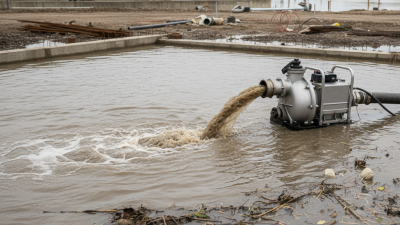
Portable trash pumps can move higher volumes of dirty water containing small debris. They usually sit outside the water, so the suction line must be sealed and the pump may need priming. For basement seepage, a sump pump with a float switch can start automatically. It suits routine water removal, but may struggle with heavy solids or a long, high discharge route. Measure both. A pump’s advertised flow at low head may look impressive, then drop sharply in a real installation.
Installation details change performance. Leave room to lift a submersible pump out for cleaning, and check that the basin can supply water without frequent cycling. Keep a surface pump close to the water source; long suction lines can reduce flow. Include fittings, bends, and the discharge height when estimating head. A neat specification can still miss a clogged screen or undersized hose. Test the installed system with water, and compare its actual flow with the site’s drainage needs.
Installation, Maintenance, and Safe Operation of Drainage Pumps
What Are the Top Drainage Pump Types in 2026?
Installation, Maintenance, and Safe Operation of Drainage Pumps
Choosing a drainage pump starts with the water, not the catalogue. Submersible pumps suit flooded pits and basements; pedestal models keep the motor above water for easier access. For water carrying grit or debris, check the pump’s solids-handling rating. A mismatch can clog the intake or wear the impeller. Small details matter.
Set the pump on a stable, level base, clear of loose sediment. Size the discharge pipe to the manufacturer’s guidance, and fit a check valve where specified to limit backflow. Keep the float switch free to move; a wall, cable, or pipe can trap it. The U.S. Department of Energy’s Improving Pumping System Performance: A Sourcebook for Industry reports that pumping systems use nearly 20% of global electricity. This is a broad estimate, not a drainage-pump figure, but it underscores why correct sizing and avoiding needless cycling matter.
Before maintenance, disconnect power and follow the equipment instructions. Use electrical protection required by local code, and never reach into a live or flooded pit. Clean the intake screen, inspect the cable and float, and test operation with a controlled pour of water. Keep a simple service log. It may feel fussy, but missed inspections are easy to regret after the next heavy rain.
What Are the Top Drainage Pump Types in 2026?
Typical solids-passage ranges by pump type
These approximate ranges illustrate common use cases: clean-water utility pumps handle little or no debris, drainage pumps manage small solids, and sewage and trash pumps are designed for larger debris. Actual capacity varies by model. Check the manufacturer’s specifications and follow the installation, maintenance, and safe-operation instructions for the specific pump.