An inline pump places its suction and discharge connections along a shared pipe axis, helping keep installations compact and piping straightforward. In 2026, the leading options include close-coupled horizontal models, vertical in-line pumps, and multistage designs for higher-pressure duties. Variable-speed versions can also adjust flow to changing demand. Each type solves a different problem. None is best everywhere.
The right choice starts with the duty point: required flow, head, fluid properties, and operating hours. A pump serving a chilled-water loop may face different demands from one handling hot process water. Look closely at the pump curve, motor efficiency, seal arrangement, materials, and available service clearance. Small details matter. A few centimeters around a motor can determine whether routine maintenance is simple or frustrating. Manufacturers’ current datasheets should confirm temperature, pressure, and fluid limits; product labels alone are not enough.
This guide compares the main inline pump types and explains where each may fit. It also considers energy use, installation, and upkeep, so readers can weigh more than purchase price. Still, rankings can be misleading. A popular model may be poorly matched to a particular system, and actual performance depends on correct sizing and commissioning. That is worth remembering. The practical goal is not to find one universal winner, but to identify a reliable pump for the system’s real operating conditions.
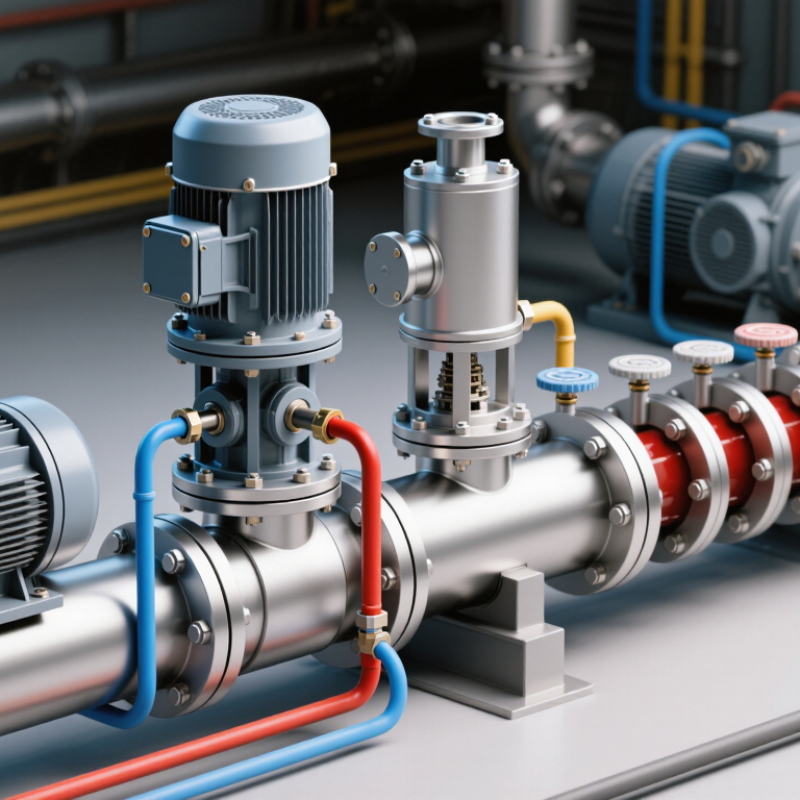
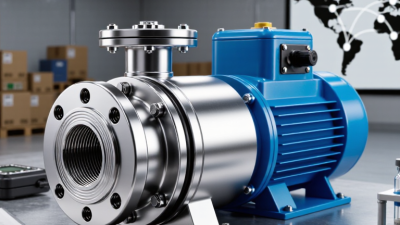
An inline pump places its suction and discharge ports along one pipe axis, helping keep the installation compact. Its main parts include a casing, impeller, shaft, bearings, mechanical seal, and motor. Common centrifugal designs include vertical inline pumps, horizontal inline pumps, and multistage inline pumps. Vertical models save floor space; multistage models use several impellers to build higher pressure. The right choice depends on flow, head, liquid properties, and available space.
Most inline centrifugal pumps work by rotating an impeller. Liquid enters near the center, gains velocity, then moves through the casing, where part of that velocity becomes pressure. The flow curve matters: a pump can run noisily or waste energy when selected far from its best efficiency point. A clean diagram can make the layout look simpler than it is. Pipe strain, trapped air, or a poorly aligned coupling may still cause vibration or seal wear.
Tips: Check the duty point against the pump curve, confirm suction conditions, and inspect for leaks or unusual vibration after startup. Record readings; small changes can be easy to miss.
Inline pumps are easiest to classify by how their casing, shaft, and impeller move water. In vertical inline designs, the suction and discharge ports share one pipe axis, while the motor usually sits above the casing.
Close-coupled models connect the motor directly to the pump, saving floor space and reducing alignment work. Frame-mounted versions separate the motor and pump with a coupling, which can make maintenance access easier. Small distinction. Big effect. Both layouts need proper support; pipe strain can still affect alignment.
Flow classification looks at the impeller, not just the pipe connection. Radial-flow impellers push liquid outward from the shaft, suiting many duties where pressure matters. Mixed-flow designs combine outward and axial movement, often balancing moderate head with higher flow. Axial-flow impellers move liquid mostly along the shaft and suit large volumes at relatively low head.
Not every inline pump fits neatly into one label. Stage count matters too: single-stage units serve common circulation loops, while multistage designs build greater pressure.
Compare flow rates at the specified head, fluid temperature, and speed; a catalog maximum alone can mislead. Real installations rarely stay textbook-perfect.
Inline pumps are arranged so the suction and discharge connections sit along a shared pipeline. In 2026, common types include close-coupled, vertical inline, horizontal inline, and multistage designs. Each suits different flow, pressure, and maintenance needs. The best choice depends on the actual system, not just the pump label.
Close-coupled models connect the impeller directly to the motor, reducing footprint and installation work. They often suit building water circulation and compact mechanical rooms. Vertical inline pumps use a vertical motor-and-shaft arrangement, keeping floor space clear around the pipes. They can be useful where access is tight, though overhead clearance still matters. Horizontal inline models place the motor beside the pipe axis. They may be easier to inspect in some layouts, but need more lateral room. Details matter.
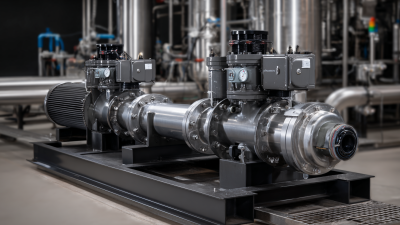
Multistage inline pumps use several impellers to raise pressure in stages. They can serve taller buildings or systems with demanding pressure requirements. However, selecting one based only on maximum pressure can lead to poor efficiency at normal operating conditions. Check the duty point, fluid temperature, pipe losses, and service access. Real installations are messier than catalogs suggest. A small mismatch in flow can cause noise, vibration, or unnecessary energy use.
| Pump Type | Typical Configuration | Common Applications | Key Advantages | Selection Considerations |
|---|---|---|---|---|
| Vertical In-Line, Single-Stage | One impeller; suction and discharge connections are arranged in line, usually in a vertical pipe run. | Building heating and cooling loops, chilled-water systems, and general water circulation. | Compact footprint; can often be installed directly in the piping; available in a range of capacities. | Check allowable pipe loads, motor access, operating point, and whether the system provides adequate inlet pressure. |
| Vertical In-Line, Multistage | Multiple impellers arranged in series within a vertical casing to develop higher pressure. | Booster sets, pressure systems, water treatment, and circulation duties requiring more head than a single stage provides. | Higher head in a relatively small footprint; stage count can be selected to suit required pressure. | Confirm the required flow and total head, fluid compatibility, minimum flow needs, and pressure limits of the casing and system. |
| Horizontal In-Line | Suction and discharge ports lie on a common horizontal axis; the pump is supported in a horizontal arrangement. | Industrial and commercial water circulation, process services, and pipe systems where horizontal mounting is preferred. | In-line piping connection with a layout that may simplify access in some installations. | Allow for the pump’s support and service space; verify alignment, pipe support, and the manufacturer’s mounting requirements. |
| Close-Coupled In-Line | The impeller is mounted on the motor shaft, eliminating a separate flexible coupling between motor and pump. | Compact HVAC and water-circulation installations with compatible fluid and operating conditions. | Fewer coupling components and a compact assembly can reduce installation space and routine alignment work. | Motor and pump servicing may be linked; check motor suitability, seal access, temperature limits, and expected operating hours. |
| Long-Coupled In-Line | A separate pump shaft connects to the motor through a coupling, commonly with a spacer arrangement. | Commercial or industrial duties where maintainability and access to rotating components are important. | A spacer coupling can permit some seal or pump-end maintenance without moving the motor, depending on the design. | Requires more space and correct alignment; confirm coupling-guard requirements and the maintenance procedure for the specific model. |
| Selection note: Inline pumps are commonly classified by mounting arrangement, coupling design, and number of stages. The appropriate choice depends on required flow, total dynamic head, fluid properties, temperature, system pressure, and installation constraints. Confirm duty-point performance and materials against the pump’s published curve and technical documentation. | ||||
What Are the Top Inline Pump Types in 2026?
Typical Applications and Strengths of Each Pump Type
Single-stage inline centrifugal pumps suit HVAC loops, chilled-water circulation, and general building services. Their straight-through piping layout can save floor space and simplify installation. Vertical inline models offer similar flow performance while keeping the motor and pump above the pipe, which helps in crowded mechanical rooms. But access for maintenance still matters; a compact layout can make repairs awkward.
Multistage inline pumps use several impellers to build higher pressure. They are often selected for tall buildings, pressure boosting, and boiler-feed duties. The U.S. Department of Energy’s Improving Pumping System Performance sourcebook reports that pumping systems consume nearly 20% of global electricity demand. That figure makes efficient sizing important, not just choosing a pump with a high nameplate rating. A pump running far from its best-efficiency point can waste energy, even when it is new.
Tips: Match flow and head to measured system demand, then check the pump curve at expected operating conditions. Leave room to remove the motor or seal. A small detail, easily missed. Real systems change over time, so review the selection after commissioning rather than assuming the design estimate was perfect.
Typical head ranges and where each pump type is commonly used
Vertical multistage inline pumps are commonly selected for higher-head duties, while single-stage inline pumps suit general circulation and transfer. HVAC circulators are typically used in closed-loop heating and cooling systems; mixed-flow designs suit higher-flow duties at moderate head. Ranges are representative examples, not universal limits—actual performance depends on the pump model and system.
How to Compare Inline Pumps for Different Systems
Choosing an inline pump starts with the system, not a popularity list. End-suction inline pumps suit steady circulation in compact heating and cooling loops. Vertical multistage models provide higher pressure for water supply and pressure-boosting duties. Close-coupled designs can save space, but access for seal replacement may be tighter.
Small detail. Check the installation drawing before choosing.
Compare required flow and total head at the actual operating point, not just the pump’s maximum ratings. Then check fluid temperature, viscosity, solids, suction conditions, and daily operating hours. A variable-speed drive can help match changing demand, though it cannot fix poor pump sizing. The U.S. Department of Energy’s Improving Pumping System Performance: A Sourcebook for Industry reports that pumping systems use nearly 20% of global electricity demand. That makes efficiency worth checking across the full operating range, not at one advertised point.
For a fair comparison, request performance curves, efficiency data, motor input, and allowable operating limits. The Hydraulic Institute’s guidance on acceptable operating regions is useful when checking whether a pump can run reliably away from its best-efficiency point. Also compare service clearance, seal access, and replacement-part requirements. A pump that fits the pipework may still be awkward to maintain. I would recheck the assumptions: real systems rarely behave exactly like a clean specification sheet.
Copyright © 2025. Rotech Pumps & Systems Inc. All rights reserved.