
China has become a major source of concrete machinery for infrastructure, housing, precast production, and ready-mix operations. The Global Cement and Concrete Association reports that the world uses about 14 billion cubic metres of concrete each year. That scale creates constant demand for reliable, high-throughput mixing equipment. Within this market, JS twin-shaft mixers are widely considered practical choices for projects requiring fast and consistent material blending.
This guide examines leading Js Concrete Mixer Manufacturers in China through measurable criteria. These include mixing uniformity, shaft durability, discharge efficiency, motor protection, spare-parts access, and after-sales support. The review also considers factory experience, export records, quality systems, and the ability to customize mixer capacity. A polished brochure is not enough. Field performance matters more.
Data from the China Construction Machinery Industry Association and international construction-equipment market reports indicate continuing investment in batching plants and concrete automation. However, available rankings are not always comparable. Some reports measure equipment sales, while others focus on production capacity or export value. That limitation deserves attention. A large manufacturer may not offer the best solution for every site.
Practical details can reveal more. Check whether the mixer handles low-slump concrete, recycled aggregates, or abrasive stone without excessive residue. Inspect the liner thickness, inspection doors, gearbox layout, and cleaning access. Ask for test records, installation guidance, and realistic delivery schedules. Some suppliers appear similar on paper. Their maintenance response may differ sharply after installation. This introduction provides a focused starting point for comparing China’s strongest JS mixer suppliers, while leaving room for careful verification.
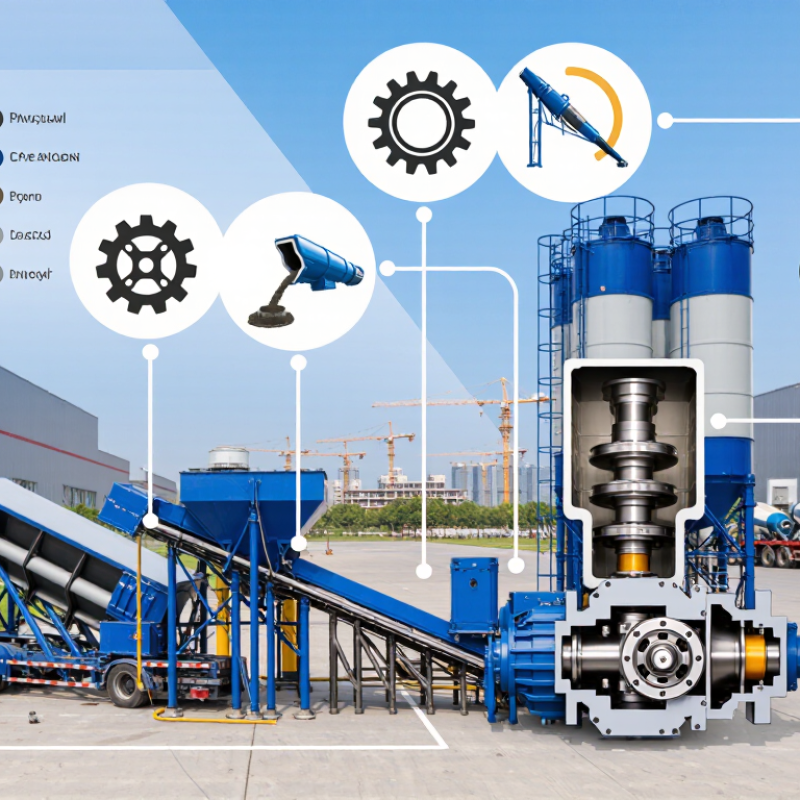
A JS twin-shaft mixer is defined by two horizontal shafts, counter-rotating paddles, and intensive forced mixing. Chinese manufacturers commonly offer batch capacities from 1 to 6 m³. That range fits small construction sites and large commercial projects.
A 1 m³ batch supports controlled output and easier recipe changes. A 6 m³ batch improves productivity, but it demands stronger drive components and consistent feeding. Global Cement and Concrete Association reports that the world uses over 14 billion m³ of concrete annually. Small efficiency losses can therefore become expensive at scale. The number matters.
Operating speed usually falls between 30 and 60 rpm. Lower speeds can reduce wear and control splashing. Higher speeds may improve dispersion, but they also increase power demand. Speed alone does not prove mixing quality. ACI 304R, Guide for Measuring, Mixing, Transporting, and Placing Concrete, stresses uniform mixing, timing, and correct material sequencing.
When comparing Chinese JS mixer manufacturers, inspect paddle clearance, shaft seals, gearbox protection, and discharge-door movement. Ask for uniformity test records, not only catalog capacity. ASTM C94/C94M provides practical requirements for evaluating ready-mixed concrete consistency and uniformity. Field checks should include moisture variation, aggregate size, and actual cycle time.
One detail is often overlooked. Rated capacity is not always usable capacity. I would verify the working fill level under real aggregate conditions. A larger mixer is not automatically better. That assumption deserves another look.

Top JS Concrete Mixer Manufacturers in China?
Ranking Chinese JS mixer manufacturers requires more than reading catalog figures. Start with verified output under realistic conditions, not only the rated cubic meters per hour. Ask for factory test records, batch cycle times, and aggregate moisture ranges. A mixer promising 90 cubic meters per hour may produce less on a demanding site. That difference matters.
Power is another practical measure. Compare motor kilowatts with mixing volume, shaft design, and overload protection. Higher power does not automatically mean better performance. It can increase electricity use and maintenance costs. Request a live demonstration with the same cement, sand, and stone ratios used in your project. Watch discharge speed, mixing consistency, and leftover material inside the pan. Small details reveal engineering quality.
Service often separates similar manufacturers. Check technician response times, spare-part availability, installation guidance, and warranty conditions. A reliable supplier should provide wiring diagrams, lubrication schedules, and operator training. Ask how quickly common parts can reach your site. In field assessments, these documents often matter more than polished brochures. Still, no ranking is perfect. Factory data may use ideal materials and experienced operators. Recheck the figures through references, inspection visits, and a trial batch before making a purchase.
A neutral benchmark by common JS mixer capacity classes. Output and motor power reflect typical published specifications; the service score is a procurement checklist index covering commissioning, spare-parts support, documentation, and warranty response.
Larger JS mixer classes generally provide higher hourly output but require greater installed motor power. When ranking suppliers, combine verified production capacity with energy configuration, spare-parts availability, installation support, and after-sales response time.
Top JS Concrete Mixer Manufacturers in China?
China-based manufacturers supply JS twin-shaft mixers for concrete plants ranging from 25 to 240 m³/h. Smaller plants often use compact units for municipal work, precast yards, or rural infrastructure. Larger installations usually require multiple mixers, synchronized batching, and stronger discharge systems. Rated capacity is only a starting point. Aggregate size, moisture, recipe, and cycle time can reduce actual output.
When comparing suppliers, request factory test records, shaft-seal details, gearbox specifications, and welding inspection documents. A reliable manufacturer should explain how the mixer handles abrasive stone and frequent starts. Ask for practical maintenance information too. Can operators replace wear plates without removing the entire shaft? Are spare seals and paddles available locally? These details matter during a night shift.
Some suppliers offer JS mixers across the full 25–240 m³/h range, while others focus on selected plant sizes. Check whether the quoted capacity reflects theoretical output or tested production. A 120 m³/h claim may change with a wet mix and long discharge time. Brochures can look convincing. They are not field evidence. Site references, commissioning records, and clear warranty terms provide stronger guidance, although even these should be reviewed carefully. A technically sound mixer may still perform poorly if the batching system, foundation, or operator training is overlooked.
Technical comparison of commonly specified JS-series twin-shaft mixer configurations for concrete plants
| Typical Plant Output | Common JS Mixer Class | Approx. Theoretical Output per Hour | Recommended Production Scenario | Typical Aggregate Bin Arrangement | Typical Control Configuration | Key Selection Consideration |
|---|---|---|---|---|---|---|
| 25 m³/h | JS500-class twin-shaft mixer | 25 m³/h | Small commercial batches, rural construction, precast components and small infrastructure projects | 2–3 compartments | Manual, semi-automatic or fully automatic PLC control | Compact layout and low initial investment |
| 35 m³/h | JS750-class twin-shaft mixer | 35 m³/h | Small ready-mix operations and periodic concrete production | 2–3 compartments | PLC control with weighing display and batch-record function | Suitable where demand is moderate and site space is limited |
| 50 m³/h | JS1000-class twin-shaft mixer | 50 m³/h | General ready-mix production, road maintenance and medium construction projects | 3–4 compartments | Automatic aggregate, cement, water and admixture dosing | Balanced option for routine commercial production |
| 75 m³/h | JS1500-class twin-shaft mixer | 75 m³/h | Medium-to-large ready-mix plants, municipal works and building projects | 3–4 compartments | Automatic PLC system with centralized operator interface | Requires stronger aggregate feeding and discharge capacity |
| 100 m³/h | JS2000-class twin-shaft mixer | 100 m³/h | High-volume ready-mix production and continuous infrastructure work | 4–5 compartments | Fully automatic batching and production monitoring | Check conveyor, cement-silo and truck-loading capacity as a complete system |
| 120 m³/h | Large JS-series twin-shaft configuration | 120 m³/h | Large commercial plants and projects with sustained daily demand | 4–5 compartments | PLC or SCADA-based control with recipe management | Continuous material supply is essential to achieve the rated output |
| 150 m³/h | JS3000-class twin-shaft mixer | 150 m³/h | Major infrastructure, precast yards and large-scale commercial batching | 4–6 compartments | Automatic control with production data logging | Consider dual-line feeding or reserve equipment for high utilization |
| 180 m³/h | High-capacity JS-series configuration | 180 m³/h | Large infrastructure projects requiring high daily concrete output | 5–6 compartments | PLC/SCADA control with centralized weighing and alarm management | Site power, aggregate storage and maintenance access become critical |
| 200 m³/h | JS4000-class or equivalent configuration | 200 m³/h | High-volume commercial production, bridges, dams and major civil works | 5–6 compartments | Fully automatic control with remote diagnostics capability | Verify mixer cycle time, discharge arrangement and truck turnaround |
| 240 m³/h | Large twin-shaft JS-series plant configuration | 240 m³/h | Very large infrastructure projects and high-demand centralized plants | 6 or more compartments | Redundant PLC/SCADA architecture with detailed production monitoring | Often requires a carefully engineered complete plant rather than a standalone mixer |
| Technical note: JS-series mixers are commonly associated with horizontal twin-shaft forced mixing. Published capacity figures are nominal theoretical values; actual output depends on concrete mix design, aggregate moisture, loading efficiency, mixing cycle time, weighing accuracy, material availability and truck-dispatch conditions. | ||||||
The table intentionally compares equipment classes and plant configurations rather than displaying company names, brand rankings or manufacturer-specific data.
Top JS Concrete Mixer Manufacturers in China?
Chinese JS concrete mixer suppliers differ sharply in drum volume, motor power, discharge speed, and service support. Large industrial models commonly offer 1,000–3,000 liters per batch, with twin-shaft designs reaching roughly 25–40 cycles per hour under suitable conditions. The Global Concrete and Cement Association reports that concrete production remains above 10 billion tonnes annually worldwide, making output consistency more important than brochure claims. Four leading Chinese suppliers typically range from 55–132 kW motors. Larger units suit central batching plants, while compact models fit restricted urban sites.
Key differences appear during daily operation. One supplier emphasizes high-capacity twin-shaft mixers and reinforced liners. Another focuses on automated controls, weighing accuracy, and faster cleaning access. A third offers compact JS models with lower transport weight, which can reduce foundation costs. The fourth often competes through flexible configurations and simpler maintenance. Actual discharge speed depends on aggregate size, moisture, and operator practice. Specifications can look impressive. Field results may still vary.
Tips: Request test data using your own aggregate. Check shaft torque, liner thickness, gearbox brand, water-meter accuracy, and spare-part delivery times. Research and Markets’ 2024 construction-equipment analysis highlights lifecycle cost as a major purchasing factor, not only initial price. Ask for a three-year maintenance estimate. I would also inspect weld quality personally; photographs are not enough. EN 206 and ASTM C94 provide useful quality references, but local plant conditions still require adjustment.
When evaluating JS concrete mixer manufacturers in China, buyers should inspect more than production photos. Ask for factory audit records, ISO 9001 certification, and documented quality procedures. A reliable supplier should identify steel grades, shaft materials, gearbox specifications, and welding controls. Request serial-number traceability for major components. It becomes useful when a replacement is needed years later.
Safety checks deserve physical evidence. Inspect shaft guards, access doors, emergency stops, overload protection, and electrical grounding. Hydraulic hoses should have pressure ratings and protective routing. Ask for noise and vibration test results from a loaded mixer, not only an empty machine. The control cabinet should include clear labels, reliable insulation, and an operation manual in the buyer’s language. Small details matter.
Export compliance depends on the destination market. Verify the applicable machinery, electrical, EMC, lifting, and pressure-equipment requirements before ordering. A CE mark alone does not prove conformity. Request the declaration of conformity, risk assessment, test reports, wiring diagrams, and inspection records. Check whether documents match the exact model and voltage supplied. Also confirm packaging strength, moisture protection, spare-parts support, and installation guidance.
Factory visits can reveal uneven paint, loose cable glands, or rushed weld finishing. These observations are not always deal-breakers, but they deserve written corrective actions. I would also test discharge gates repeatedly. One overlooked sticking gate can delay an entire batching operation. Claims sound convincing; measured evidence is safer.
Copyright © 2025. Rotech Pumps & Systems Inc. All rights reserved.