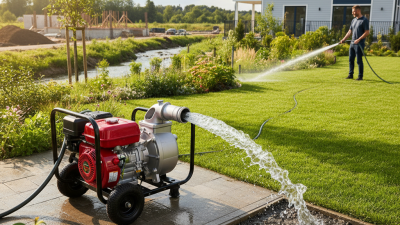
2026 Top Types of Water Pumps for Global Buyers

Choosing the right water pumps begins with the duty, not the product label. Global buyers must examine flow rate, total head, fluid temperature, solids content, power supply, and installation conditions. A pump moving clean water through a six-meter building riser faces a different task from a trash pump clearing muddy construction runoff.

Igor J. Karassik, a respected pump engineer and co-author of Pump Handbook, emphasized a practical truth: “The pump is only one part of the system.” That principle still matters. Pipes, valves, tanks, controls, and maintenance access can change real performance. A powerful pump may waste energy when the pipeline is poorly sized. A low-cost unit may become expensive after repeated seal failures.

This guide reviews major water pumps for global buyers, including centrifugal, submersible, self-priming, diaphragm, booster, solar, and sewage models. Each type has a useful operating range. Each also has limits. The comparison considers efficiency, materials, motor design, controls, serviceability, and lifecycle cost. It also highlights details buyers sometimes overlook, such as voltage compatibility, spare-part availability, noise, cable length, and corrosion resistance.

Field experience can reveal what brochures miss. A pump may meet its rated flow in a test tank but struggle with long suction lines. That is not a small mistake. It can stop an irrigation cycle, flood a basement, or damage the motor.

No single model fits every market. Weather, infrastructure, water quality, and technician skills vary widely. This overview aims to support informed decisions, while leaving room for careful site testing and professional verification.
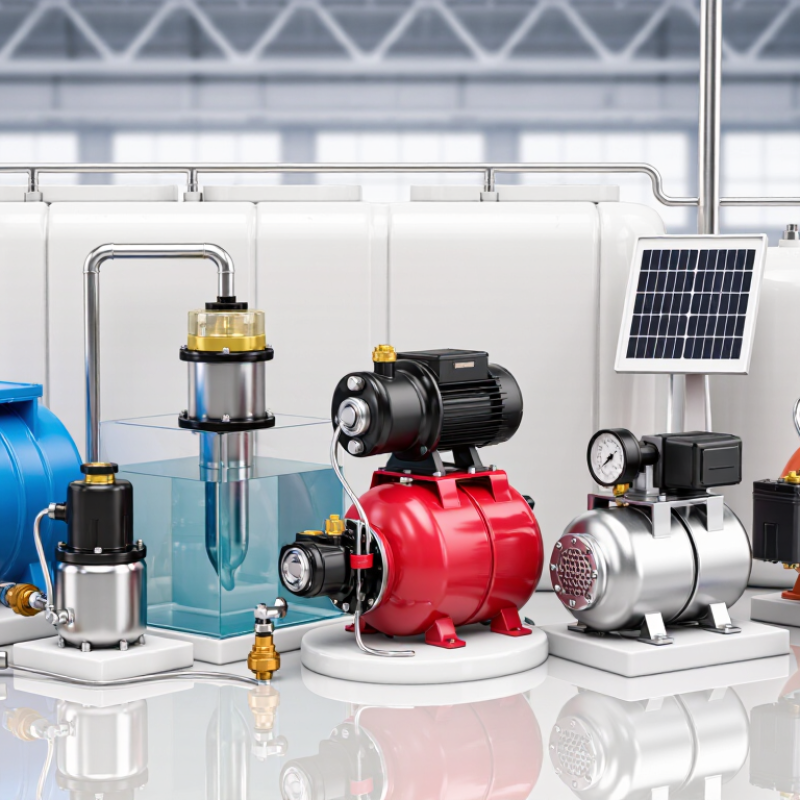
2026 Top Types of Water Pumps for Global Buyers

Understanding Water Pumps: Core Functions and Key Components

A water pump moves liquid by creating a pressure difference. Its job may be to lift water from a well, circulate it through a building, or drain a flooded area. The right design depends on the water source, required flow rate, and vertical lift. A pump that works well for a shallow tank may struggle with a deep well. Small details matter.

Most pumps share several core components. The impeller, or another moving element, transfers energy to the water. The motor supplies that energy, while the casing guides flow through the pump. Inlet and outlet ports connect the unit to pipes. Seals help limit leakage around moving parts. Some models also include a strainer, pressure switch, or control system. Keep these parts clean and correctly matched. A blocked inlet can reduce performance or cause damage.

Operating conditions shape pump life. Check the water for grit, because abrasive particles can wear internal surfaces. Confirm the required flow and head against the manufacturer’s performance data, rather than choosing by motor power alone. Installation matters too: a long, narrow pipe can add resistance. That is easy to overlook. I have seen pump selection treated as a simple size comparison, but real systems rarely behave so neatly. Clear specifications and routine inspection make decisions more dependable.

How Water Pumps Work: Power Sources and Fluid Movement

2026 Top Types of Water Pumps for Global Buyers
How Water Pumps Work: Power Sources and Fluid Movement

A water pump moves liquid by creating a pressure difference. Its power may come from an electric motor, an engine, or manual effort. The right source depends on available energy, flow needs, and site conditions. A remote farm, for example, may need a different setup than a building with steady electrical service.

Inside a centrifugal pump, a spinning impeller pushes water outward, then guides it toward the outlet. These pumps often suit steady flows and relatively clean water. Positive-displacement pumps trap and move set volumes of liquid with each cycle. They can handle some thicker fluids, but their flow may pulse.

Check the pump’s rated flow, head, fluid temperature, and material compatibility against your actual system. A label alone cannot predict performance; pipe length and bends matter too. This part is easy to underestimate.

Tips: Prime pumps that require it, and keep inlet lines free of leaks. Watch for unusual vibration, heat, or falling flow. Small changes can signal a blockage or wear, though diagnosis may take more than a quick glance.

Main Types of Water Pumps and Their Operating Principles

2026 Top Types of Water Pumps for Global Buyers

Main Types of Water Pumps and Their Operating Principles

Centrifugal pumps use a rotating impeller to increase water velocity and pressure. They suit clean water, irrigation, cooling, and general transfer duties. Their flow changes with system resistance, so oversized models may waste energy. Positive displacement pumps move a fixed volume during each cycle. Gear, screw, and piston designs handle viscous fluids or accurate dosing. Diaphragm pumps use a flexible membrane and check valves. They can manage dirty water and air-filled lines, but pulsation needs control.

Submersible pumps operate below the water surface. A sealed motor drives the impeller close to the intake, reducing suction losses. They are practical for wells, drainage pits, and floodwater removal. The U.S. Department of Energy reports that pumping systems may consume 25–50% of industrial facility electricity. The IEA also estimates motor-driven systems use about 40% of global electricity. These figures make efficiency more than a purchase detail. It is an operating-cost decision.

Tips: Check total head, flow rate, liquid temperature, solids, and duty cycle before selection. Compare efficiency at the real operating point, not only the catalog maximum. Add variable-speed control when demand changes often. Install a strainer and pressure gauge where suitable. Maintenance experience shows small leaks become large energy losses. I would still verify every calculation on site. Real installations are rarely perfect.

How to Choose a Water Pump for Different Uses and Conditions

How to Choose a Water Pump for Different Uses and Conditions

Choosing a water pump starts with the water source, required flow, and lifting height. Clean water from a storage tank may suit a centrifugal pump. Shallow wells often need self-priming equipment. Deep boreholes require submersible pumps designed for narrow spaces. Wastewater needs models with wider passages and materials that resist blockage. Do not treat these applications as interchangeable.

Measure the total head, not only the vertical distance. Include pipe length, bends, filters, and outlet pressure. Flow demand also matters. A household system may need steady pressure, while irrigation often requires higher volume. Check the electrical supply, duty cycle, water temperature, and installation environment. A solar-powered site needs different planning from a factory with three-phase power.

Oversizing is a common mistake. It can waste energy and create unstable pressure. Undersizing causes slow delivery and early wear. The first selection is rarely perfect without site measurements. Test the actual source level during dry periods, because seasonal changes can defeat careful calculations. In coastal areas, corrosion-resistant materials deserve extra attention. For farms, sand content should be checked before choosing an impeller. Keep access for cleaning and repairs. Maintenance space is often forgotten. A pump that fits the specification but cannot be serviced may become an expensive problem.

Global Buyer Factors: Efficiency, Materials, Maintenance, and Standards

For global buyers, pump efficiency begins with the duty point, not the catalogue headline. A pump running far from its best efficiency point can waste energy and wear faster. The U.S. Department of Energy’s Improving Pumping System Performance sourcebook notes that pumping systems can consume 25–50% of the electricity used in some industrial facilities. That range makes site-specific assessment essential: flow, head, operating hours, and control method all matter. Variable-speed drives can help where demand changes, but they are not automatically the best choice for steady-duty systems.

Materials should match the pumped liquid and the installation environment. Cast iron suits many clean-water duties; stainless steel may better resist corrosion, while elastomers and seals need checking against temperature and water chemistry. Still, no material is perfect. Ask for documented material grades and test conditions, not vague claims. The EU Ecodesign Regulation 547/2012 sets efficiency requirements for covered water pumps, offering buyers a useful reference point when comparing eligible products. Standards and certification scope vary by market, so confirm local requirements before ordering. Maintenance deserves equal attention: check seal access, bearing lubrication intervals, spare-part availability, and whether technicians can remove the pump without dismantling nearby pipework. A compact pump can look attractive on a drawing. It may be awkward in a cramped plant room.

2026 Top Types of Water Pumps for Global Buyers — Efficiency, Materials, Maintenance, and Standards

Compare common pump types by operating principle, typical uses, material options, maintenance needs, and relevant standards. Actual performance depends on pump size, design, fluid properties, installation, and operating point.

Pump Type Operating Principle Common Applications Indicative Efficiency Considerations Common Wetted Materials Maintenance Considerations Relevant Standards to Check Key Buyer Checks
End-Suction Centrifugal A rotating impeller adds velocity to the liquid; the casing converts part of that velocity into pressure. Water supply, building services, irrigation, cooling-water circulation, and general industrial transfer. Often a good choice for steady, moderate-to-high flow. Efficiency varies by size and duty point; operation near the best efficiency point generally reduces energy waste. Cast iron, ductile iron, bronze, stainless steel, and engineered polymers, selected for water quality and corrosion conditions. Inspect seals, bearings, alignment, vibration, and impeller condition. Avoid prolonged operation far from the recommended duty range. ISO 2858 covers specified end-suction pump dimensions; ISO 9906 addresses hydraulic performance acceptance tests. Verify the applicable edition and scope. Required flow and head, duty-point efficiency, motor supply, seal arrangement, suction conditions, and available service parts.
Submersible An electric motor and pump operate while submerged in the liquid, avoiding the need for a conventional surface suction lift. Groundwater wells, drainage, wastewater lift stations, construction dewatering, and some sewage duties. Performance depends on pump design, motor, installation depth, and operating point. Compare wire-to-water energy use where the complete system is relevant. Cast iron, stainless steel, bronze, and selected elastomers; abrasive or corrosive liquids may require specialized construction. Check cable condition, insulation, motor protection, seals, bearings, and solids handling. Prevent dry running and follow lifting and inspection procedures. ISO 9906 may be relevant to hydraulic acceptance testing. Electrical equipment and installation must also meet applicable local codes and protection requirements. Liquid level range, solids size, cooling conditions, cable length, ingress protection, motor protection, and retrieval access.
Vertical Turbine One or more impellers are installed below the liquid level and connected to a surface driver by a vertical shaft or a submersible motor. Deep wells, raw-water intakes, irrigation, reservoirs, and municipal or industrial water systems. Can suit high-capacity and deep-source duties. Overall efficiency depends on bowl stages, shaft losses, motor selection, and the system operating point. Cast iron, ductile iron, bronze, and stainless steel components are selected according to water chemistry and site conditions. Monitor shaft alignment, bearings, lubrication where applicable, vibration, and wear. Installation and removal may require lifting equipment. ISO 9906 can be used for hydraulic performance acceptance testing where applicable; local well, electrical, and installation requirements also apply. Well diameter and depth, drawdown, water level range, suspended solids, column length, driver type, and installation access.
Positive-Displacement (Rotary or Reciprocating) Traps and moves a defined volume of liquid per cycle or rotation; flow is closely related to speed, subject to slip and operating conditions. Metering, dosing, transfer of viscous liquids, and duties requiring controlled or relatively steady displacement. Can perform well at low flow or with viscous liquids, but efficiency is duty- and viscosity-dependent. A relief or pressure-limiting arrangement is essential where discharge blockage is possible. Cast iron, stainless steel, special alloys, and compatible elastomers or polymers, chosen for the pumped liquid and seal requirements. Inspect clearances, valves where fitted, seals, diaphragms or rotors, and lubrication requirements. Protect against overpressure and dry running where applicable. ISO 9906 is primarily a hydraulic performance acceptance standard for rotodynamic pumps; confirm the correct test and safety requirements for the specific positive-displacement design. Viscosity range, required flow accuracy, pressure, pulsation, materials compatibility, relief protection, and seal or diaphragm life.
Diaphragm Metering A reciprocating diaphragm displaces liquid; stroke length and frequency can be adjusted to control dosing flow. Water treatment chemical dosing, pH control, disinfection dosing, and other low-flow metering duties. Selection is normally based on dosing accuracy and operating range rather than comparison with large water-transfer pumps. Accuracy depends on calibration and stable suction and discharge conditions. Wetted components may include PVC, PVDF, stainless steel, PTFE, and other chemically compatible materials. Inspect the diaphragm, check valves, tubing, and connections. Recalibrate after maintenance and use suitable pressure relief and back-pressure arrangements. Check applicable local chemical-handling and electrical requirements, plus any project-specific metering, control, or safety specifications. Chemical compatibility, minimum and maximum dosing rate, turndown, pressure, suction lift, pulsation control, and calibration method.
Split-Case Centrifugal A horizontally or vertically split casing houses the impeller, allowing access to internal components without disconnecting major pipework in many arrangements. Large water-supply systems, cooling-water plants, fire-water services, and high-flow industrial circulation. Often used for high-flow duties; efficiency depends on impeller design, casing, size, and operation near the selected duty point. Cast iron, ductile iron, bronze, and stainless steel, depending on pressure, water chemistry, and project specifications. Check bearings, seals or packing, coupling alignment, vibration, and clearances. Plan inspection access and lifting arrangements for large assemblies. ISO 9906 is relevant to hydraulic performance acceptance testing where specified. Fire-system installations may require additional local approvals and standards. Flow range, pressure rating, foundation and alignment needs, service access, redundancy requirements, and applicable fire or water-system approvals.
Selection note: Efficiency figures are not fixed properties of a pump type. Request certified performance data for the required flow and head, and evaluate the complete system, including motor, controls, piping losses, and operating schedule. Material compatibility should be confirmed against the actual water chemistry, temperature, and any treatment chemicals.
×

Cart