What Is a Water Suction Pump and How Does It Work?

A water suction pump is a practical machine that moves water from a lower level to a higher point. It creates pressure differences inside a pipe. This simple action supports wells, drainage systems, irrigation lines, and household water supplies.

Pump engineer Dr. Lev Nelik explains, “A pump is a machine that adds energy to a liquid.” That energy usually comes from an electric motor or a fuel-powered engine. The motor turns an impeller, piston, or rotary element. Water then enters through the suction inlet and leaves through the discharge outlet. Seals, valves, and correctly sized pipes help maintain steady flow.

The details matter.

Before operation, the suction line should be airtight. A small crack can draw in air instead of water. The pump may then vibrate, lose prime, or produce only a weak stream. I have seen this overlooked during basic installations. It is an easy mistake, but not a harmless one.

This guide examines how a water suction pump works, what its main parts do, and where different designs perform best. It also considers suction lift, flow rate, pressure, priming, maintenance, and common operating failures. Readers should not judge a pump by motor power alone. A powerful unit can still perform poorly with a narrow pipe or excessive lift.

Real conditions are rarely perfect. Water may contain sand, air, or debris. Temperature can also change performance. Understanding these limits helps users choose equipment more responsibly and operate it with greater reliability.
What Is a Water Suction Pump and How Does It Work?

What Is a Water Suction Pump?

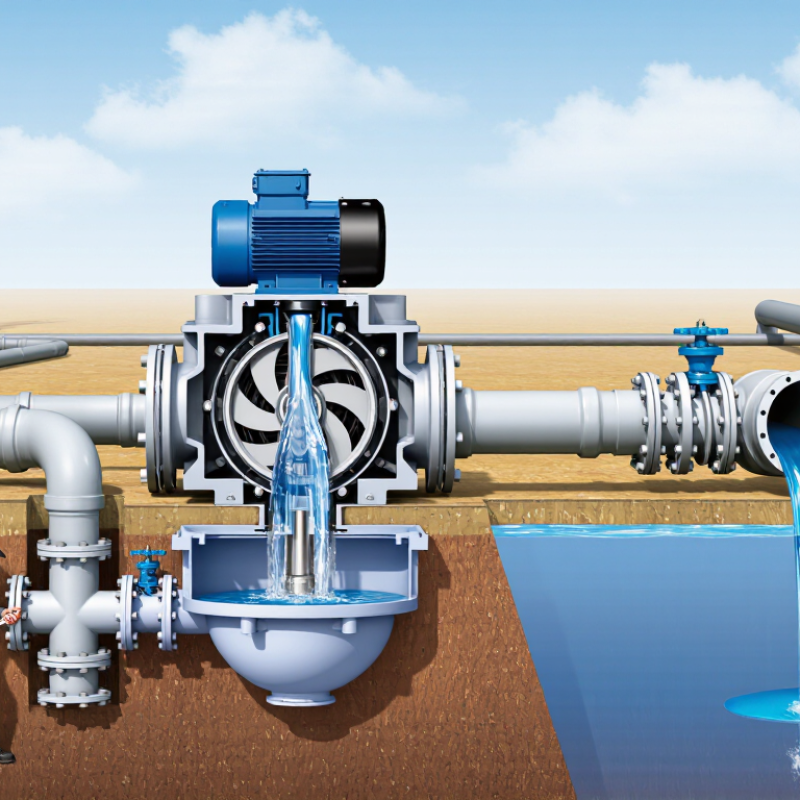
A water suction pump is a mechanical device that moves water from a lower or distant source to a chosen outlet. It does not truly “pull” water like a rope. Instead, the pump reduces pressure inside its inlet line. Atmospheric pressure then pushes water into the pump chamber. This pressure difference creates the suction effect. Common designs use an impeller, piston, or diaphragm. Each design creates movement differently. However, all require a sealed path for reliable operation. Even a tiny air leak can stop water flow. A pump may transfer water from a tank, shallow well, drainage area, or collection barrel.

In practical use, the operator connects an intake hose to the inlet and places a strainer below the water surface. Many pumps require priming, which means filling the chamber and hose with water before starting. Without priming, the pump may spin while moving mostly air. This can cause overheating or weak performance. Suction height also has a physical limit. Long hoses, narrow fittings, clogged strainers, and warm water can reduce efficiency. I have found that “more powerful” does not always mean “better.” The right pump should match the required flow rate, lift, hose size, and water quality.

Tips: Keep the intake submerged, but never press it into mud. Check joints for loose clamps and cracks. Clean the strainer after dirty-water work. Listen for rattling. It may signal air, debris, or cavitation. Small mistakes during priming can waste time and damage equipment.

What Is a Water Suction Pump and How Does It Work?

A water suction pump lowers the pressure at its inlet, allowing atmospheric pressure to push water into the pump. The chart shows the equivalent water head produced by different absolute pressures, calculated using water density of 1,000 kg/m³ and gravitational acceleration of 9.80665 m/s².

At standard sea-level pressure, the theoretical maximum water head is about 10.33 meters. In practical systems, the achievable suction lift is lower because of vapor pressure, pipe friction, air leakage, and pump design limitations.

How a Water Suction Pump Moves Water

What Is a Water Suction Pump and How Does It Work?

How a Water Suction Pump Moves Water

A water suction pump moves water by creating a pressure difference inside a sealed suction line. When its impeller or diaphragm moves, internal pressure falls. Atmospheric pressure then pushes water upward through the inlet pipe. That is the key action. The pump does not pull water like a rope.

At sea level, atmospheric pressure supports a theoretical water column of about 10.3 metres. Friction, pipe bends, air leaks, temperature, and altitude reduce the practical lifting height. Field technicians often find that a shorter suction line performs more reliably. If air enters through one loose fitting, the pump may lose its prime and stop moving water. The explanation sounds simple, but real installations are less tidy.

Pump efficiency also matters. The U.S. Department of Energy reports that pumping systems can represent about 25% of industrial electricity use. Correct pipe sizing and regular inspection therefore have measurable value. The United Nations World Water Development Report 2024 identifies agriculture as responsible for roughly 70% of global freshwater withdrawals. Small hydraulic losses can become significant across large irrigation networks. A suction pump must match the water source, lift height, flow demand, and pipe resistance. Otherwise, more motor power may produce less useful water movement.

Main Components of a Water Suction Pump

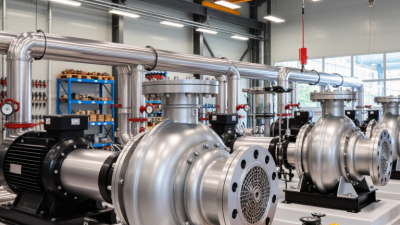
A water suction pump draws water through an inlet pipe and moves it toward an outlet. Its main components work as one system. The electric motor supplies rotational energy. In some models, a gasoline engine provides it instead. The impeller spins inside the pump casing. Its curved blades create lower pressure near the inlet and push water outward. Small pumps may use a diaphragm rather than an impeller. That design moves water through repeated flexing.

The inlet hose, strainer, and check valve protect the pumping process. A strainer blocks leaves, sand, and other debris before they reach the chamber. The check valve helps prevent water from flowing backward when the pump stops. This matters during priming. Without retained water, the pump may pull air instead of water. The casing directs water between the inlet and outlet ports. Seals around the shaft reduce leakage, although they can wear faster than expected.

A pressure switch may start or stop the motor automatically in household systems. Some pumps also include a pressure tank, which reduces frequent cycling. In field use, I check every connection before starting the pump. A loose clamp can admit air while showing no obvious water leak. That detail is easy to miss. The pump should remain level, and the inlet line should stay as short as practical. I once underestimated suction height; the pump ran smoothly but delivered almost no water. Performance depends on pipe size, water depth, air leaks, and the pump’s actual lifting capacity.

Types of Water Suction Pumps and Their Uses

A water suction pump draws water from a lower level and moves it through an outlet pipe. It creates lower pressure at the inlet, allowing atmospheric pressure to push water upward. The pump’s lift height depends on pipe length, water temperature, air leaks, and elevation.

Small details matter.

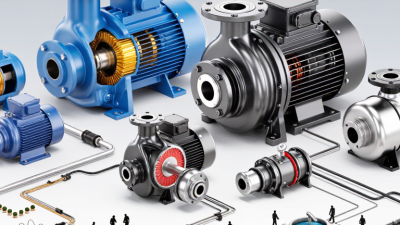
Centrifugal pumps suit clean water and steady flow. They work well for garden irrigation, household supply, and drainage tasks.

Self-priming centrifugal pumps are more practical when air may enter the suction line. They can restart with less manual preparation, although they still need correct installation.

Diaphragm pumps handle muddy water more gently and tolerate small particles. Their pulsing flow makes them useful for shallow wells, transfer work, and certain agricultural systems.

Submersible pumps sit inside the water, so they avoid many suction limitations. They are common in wells, pits, and flooded basements.

Choosing a pump requires more than matching pipe size. Check the required flow rate, total lift, water quality, and operating time.

A narrow suction hose can restrict performance and increase noise. Loose fittings may draw air without showing visible leaks. That mistake is easy to overlook.

Install a foot valve when backflow could empty the line. Keep filters accessible for cleaning, especially with surface water.

No pump fits every site perfectly. Field conditions often expose assumptions that specifications do not.

Testing the system under real load remains the most reliable check.

Factors That Affect Pump Performance

What Is a Water Suction Pump and How Does It Work?

A water suction pump creates lower pressure at its inlet, allowing atmospheric pressure to push water into the suction pipe. The impeller then accelerates the water and sends it toward the discharge line. Its real performance depends on more than motor power. It depends on how well the whole system is designed.

Suction lift is critical. A long, narrow pipe increases friction and reduces flow. Every sharp elbow adds resistance. Air leaks are especially damaging. Even a small leak near the inlet can make the pump lose prime and produce irregular discharge. Water temperature also matters because warmer water has higher vapor pressure, reducing available NPSH and increasing cavitation risk. The Hydraulic Institute’s ANSI/HI 9.6.1 guidance emphasizes checking NPSH margins during system design, not after installation.

Speed, impeller condition, and fluid viscosity further affect output. The affinity laws show that flow changes roughly with speed, while pressure changes with the square of speed. A small speed increase can therefore raise energy demand quickly. The U.S. Department of Energy’s Improving Pumping System Performance sourcebook reports that pumping systems may consume 25% to 50% of electricity in some industrial facilities. That figure deserves attention. A pump can appear efficient while oversized piping, throttled valves, or poor maintenance waste power. Field inspections should compare measured flow, pressure, current, and vibration with the original design. The calculation may still be wrong.

What Is a Water Suction Pump and How Does It Work? - Factors That Affect Pump Performance

Category Description Typical Data or Range Effect on Performance
Basic function A water suction pump removes air from the suction line or creates a low-pressure area at the pump inlet, allowing atmospheric pressure to push water toward the pump. Atmospheric pressure at sea level is approximately 101.3 kPa. The pump must maintain a sealed, air-free suction path to draw water consistently.
Typical operating principle An electric motor rotates an impeller or drives a piston, diaphragm, screw, or other pumping element. The pump then increases the water pressure at the discharge outlet. Common pump speeds are about 1,450–3,600 revolutions per minute for many electric motor-driven pumps. Speed, pump design, and operating point determine flow rate, pressure, power consumption, and noise.
Centrifugal suction pump Uses a rotating impeller to accelerate water outward. The casing converts part of the velocity into pressure. Common flow: approximately 0.5–100 m³/h; common head: approximately 5–80 m, depending on pump size and design. Suitable for continuous water transfer, but many models must be primed before starting.
Positive-displacement pump Moves a defined volume of water during each cycle using pistons, diaphragms, gears, or screws. Flow is generally proportional to speed; pressure may range from several bar to well above 10 bar, depending on design. Provides good suction capability and stable flow, but requires pressure relief if the discharge line can be blocked.
Maximum practical suction lift The vertical distance between the water surface and the pump inlet is limited by atmospheric pressure, vapor pressure, pipe losses, and pump design. The theoretical limit is about 10.3 m at sea level for cold water; practical installations are commonly limited to about 6–8 m. Greater suction lift reduces available inlet pressure and increases the risk of air leakage, poor priming, and cavitation.
Flow rate The volume of water delivered per unit of time. Measured in L/min, L/s, or m³/h. 1 m³/h equals approximately 16.7 L/min. Flow usually decreases as discharge head, pipe friction, or system resistance increases.
Total dynamic head The total energy per unit weight that the pump must provide, including elevation, pressure difference, and friction losses. Usually expressed in metres of water column. 10 m of water head is approximately 0.98 bar. A higher total head generally produces a lower flow rate for the same pump.
Suction pipe diameter The internal diameter of the pipe carrying water to the pump inlet. A pipe that is too small can create high water velocity and excessive friction loss. Using an adequately sized, short, and straight suction pipe improves inlet pressure and reduces cavitation risk.
Pipe friction and fittings Water loses energy as it passes through pipe walls, elbows, valves, filters, foot valves, and check valves. Friction increases with pipe length, flow velocity, surface roughness, and the number of fittings. Higher losses reduce delivered flow and can make the pump operate away from its best-efficiency point.
Air leaks and priming Loose connections, damaged seals, cracked hoses, or an improperly closed priming port can allow air into the suction line. Even a small air leak may prevent a non-self-priming centrifugal pump from creating stable suction. Symptoms include loss of prime, fluctuating flow, abnormal noise, and extended starting time.
Net positive suction head NPSH indicates how much pressure is available at the pump inlet above the water vapor pressure. Available NPSH should exceed the pump's required NPSH with a suitable safety margin. Insufficient NPSH can cause cavitation, vibration, noise, surface damage, and reduced capacity.
Water temperature Temperature affects water vapor pressure and the ability of the pump to avoid cavitation. Water vapor pressure rises significantly as temperature increases; at 20°C it is about 2.34 kPa absolute. Hotter water reduces the available suction margin and may require a lower suction lift or higher inlet pressure.
Water quality Sand, silt, algae, debris, and suspended solids can enter the suction system. A clogged strainer or foot valve can sharply restrict inlet flow. Contamination can increase wear, reduce flow, damage seals, and block impeller passages.
Elevation and atmospheric pressure Atmospheric pressure decreases as installation elevation increases. At higher elevations, the theoretical suction limit is lower than the approximately 10.3 m sea-level value. High-altitude installations require reduced suction lift and careful NPSH evaluation.
Motor speed and voltage The motor supplies the rotational or mechanical energy required by the pump. For similar centrifugal pumps, flow is approximately proportional to speed, while head varies approximately with the square of speed. Incorrect voltage, overload, or unstable speed can reduce output and cause overheating or premature failure.
Pump efficiency Efficiency is the useful hydraulic power delivered by the pump divided by the power supplied to it. Many small and medium water pumps operate roughly between 40% and 80% efficiency, depending on size and operating point. Operating near the best-efficiency point generally reduces energy use, vibration, and mechanical stress.
Maintenance indicators Common warning signs include unusual noise, vibration, leaking seals, overheating, reduced flow, and repeated loss of prime. Inspection intervals depend on pump type, operating hours, water quality, and manufacturer instructions. Regular inspection of strainers, seals, bearings, valves, electrical connections, and pipe joints helps preserve performance.
×

Cart