Why Choose an Industrial Water Pump?
Why choose an industrial water pump when many pumping options appear similar? The answer begins with operating conditions, not appearance. An industrial water pump is designed for demanding environments, including factories, processing plants, cooling systems, wastewater facilities, and irrigation networks. It must move water consistently, often under pressure, heat, contamination, or long operating hours.
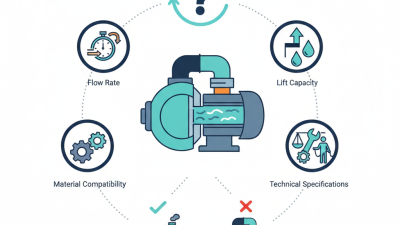
Dr. Lev Nelik, a recognized pump-system specialist and author, offers a useful principle: “The pump is only one part of the system.” That point matters. A pump may have strong efficiency figures, yet perform poorly when the pipe diameter, valve layout, or fluid characteristics are misunderstood. Selection should consider flow rate, total head, motor efficiency, seal design, corrosion resistance, maintenance access, and expected duty cycle. Small details matter.
Reliability is the real value.
From practical experience, the correct industrial water pump can reduce unplanned shutdowns and energy waste. It can also simplify inspections when technicians can reach seals, bearings, and strainers safely. Still, no pump is perfect. Oversizing may increase energy consumption, while choosing a low-cost model may create frequent repairs. This is where honest evaluation becomes necessary. Buyers should review performance curves, test data, supplier qualifications, and service support before making a decision. A clear specification usually prevents expensive surprises. The best choice is not always the largest pump or the cheapest one. It is the pump that matches the system, the water, and the people responsible for keeping everything running.

Industrial Water Pumps Explained: Types, Duty Ranges, and Applications
Why choose an industrial water pump? It moves large water volumes reliably across demanding facilities. Unlike small domestic units, industrial pumps are selected by duty range: flow, head, fluid temperature, and operating hours. A centrifugal pump suits clean water and steady transfer. A positive displacement pump supports controlled flow and thicker liquids. Submersible pumps operate inside sumps, drainage pits, and flooded chambers. Axial-flow pumps move high volumes at low head.
Applications vary widely. Cooling systems need stable circulation through long pipe networks. Manufacturing lines may require filtered process water at a precise pressure. Wastewater plants often handle suspended solids, so impeller clearance and seal protection matter. The correct pump must match the duty point, not just the pipe size. Engineers also check NPSH, motor load, corrosion resistance, and maintenance access. A technically correct pump can still perform poorly when suction conditions are ignored. That mistake is common, especially during rushed replacements.
Tips: Measure actual flow and pressure before selection. Inspect the water for solids, temperature, and chemicals. Leave space for seal replacement and cleaning. Test the pump under real operating conditions, because laboratory figures can feel optimistic. Records also help, though many sites keep incomplete readings. That gap deserves attention.
How Flow, Head, Efficiency, and NPSH Determine Pump Selection
Why Choose an Industrial Water Pump?
How Flow, Head, Efficiency, and NPSH Determine Pump Selection
An industrial water pump must match the system, not just the pipe size. Flow describes the required volume, such as 80 cubic meters per hour. Head represents the energy needed to overcome elevation, friction, valves, and pressure differences. A pump delivering high flow may still fail when the discharge line rises sharply. Field measurements matter.
Efficiency affects operating cost throughout the pump’s working life. Select a pump near its best efficiency point when possible. Running far from that point can increase vibration, heat, seal wear, and electricity use. I have seen systems perform poorly because engineers used the maximum flow rate instead of the normal duty point. That choice looked safe on paper, but it created unstable operation.
NPSH deserves careful attention. Net positive suction head available must exceed the pump’s required value, with a practical safety margin. Hot water, long suction pipes, clogged strainers, and excessive lift reduce available NPSH. Low margin can cause cavitation, producing a harsh gravel-like sound and damaging the impeller. Keep the suction line short and flooded where possible. Check conditions at the worst operating case, not only during commissioning. A neat calculation can still fail. Temperature changes, air leaks, and inaccurate gauges may distort the result. Recheck them.
Why Choose an Industrial Water Pump?
Flow, head, efficiency, and NPSH are the key parameters for selecting a reliable industrial water pump.
The chart shows representative non-brand-specific operating points for a centrifugal pump handling clean water.
Higher efficiency reduces energy consumption, while adequate NPSH margin helps prevent cavitation.
The selected pump should meet the required flow and head at the system duty point.
How Variable-Speed Drives Reduce Throttling Losses and Energy Demand
Why Choose an Industrial Water Pump?
How Variable-Speed Drives Reduce Throttling Losses and Energy Demand
In industrial water systems, demand rarely stays constant. A centrifugal pump may deliver 100 cubic meters per hour, then half that later. A fixed-speed motor keeps pushing, so operators close a discharge valve. That restriction controls flow, but it turns useful pressure into heat and turbulence. The motor still consumes much of its energy.
A variable-speed drive changes motor speed instead of forcing the valve to absorb excess pressure. When demand falls, the impeller slows and flow decreases with it. For centrifugal pumps, power can decline approximately with the cube of speed, although real systems vary. A modest speed reduction may produce a noticeable drop in electrical demand. This matters in cooling loops, treatment plants, and process-water networks with changing loads. Less throttling can also reduce noise, vibration, and valve wear.
Good results depend on measurement, not assumptions. Technicians should check flow, pressure, motor load, minimum-flow requirements, and control response during commissioning. A pressure sensor in the wrong location can make the drive hunt between speeds. That wastes energy and may shorten equipment life. The savings are not automatic. Poorly matched pumps, oversized motors, or aggressive settings can erase part of the benefit. In practice, compare logged kilowatt demand before and after installation across similar operating periods. The evidence may reveal an uncomfortable fact: the pump was selected for a peak condition that rarely occurs.
How 60–85% Pump Efficiency Influences Industrial Water Costs
Why Choose an Industrial Water Pump?
How 60–85% Pump Efficiency Influences Industrial Water Costs
Industrial water pumps often run for thousands of hours each year. Their efficiency directly affects electricity use, heat generation, and operating costs. A pump operating at 60% efficiency wastes more input energy than one reaching 85%. That difference becomes expensive.
Consider a pump moving 100 cubic meters of water hourly against a 40-meter head. At 60% efficiency, it may require about 18 kilowatts of electrical power. At 85%, the demand falls near 13 kilowatts. Running 8,000 hours annually could save roughly 40,000 kilowatt-hours. At $0.12 per kilowatt-hour, that difference approaches $4,800 yearly. Actual savings vary.
The estimate is never perfect.
During plant energy audits, I check flow meters, pressure gauges, motor loads, and valve positions. A pump can show good efficiency while the system wastes energy through throttled valves or oversized piping. I have also seen clean impellers lose performance after sediment buildup. Small pressure changes matter. Maintenance records help reveal the pattern.
Selecting the right pump requires more than comparing catalog efficiency. Engineers should match the duty point with daily demand, pipe friction, water quality, and operating hours. Variable-speed control can reduce energy use during lower-demand periods. However, poor programming may create unstable flow and shorten equipment life. Real measurements should guide the decision, not assumptions alone.
Why Choose an Industrial Water Pump? - How 60–85% Pump Efficiency Influences Industrial Water Costs
| Pump Efficiency |
Annual Water Volume
(m³/year) |
Input Power
(kW) |
Energy Intensity
(kWh/m³) |
Annual Electricity Use
(kWh/year) |
Annual Energy Cost
(USD/year) |
Energy Cost
(USD/m³) |
Annual Cost Saving vs. 60%
(USD/year) |
| 60% |
600,000 |
22.70 |
0.02270 |
136,200 |
$13,620 |
$0.0227 |
$0 |
| 65% |
600,000 |
20.96 |
0.02096 |
125,723 |
$12,572 |
$0.0210 |
$1,048 |
| 70% |
600,000 |
19.46 |
0.01946 |
116,743 |
$11,674 |
$0.0195 |
$1,946 |
| 75% |
600,000 |
18.16 |
0.01816 |
108,960 |
$10,896 |
$0.0182 |
$2,724 |
| 80% |
600,000 |
17.02 |
0.01702 |
102,150 |
$10,215 |
$0.0170 |
$3,405 |
| 85% |
600,000 |
16.02 |
0.01602 |
96,141 |
$9,614 |
$0.0160 |
$4,006 |
|
Increasing efficiency from 60% to 85% reduces calculated electricity consumption and annual energy cost by approximately 29.4%, under the stated operating conditions.
|
|
Calculation basis:
Constant flow of 100 m³/h, total dynamic head of 50 m, operating schedule of 6,000 hours per year, electricity price of $0.10/kWh, water density of 1,000 kg/m³, and gravitational acceleration of 9.80665 m/s².
Hydraulic power is calculated as ρ × g × Q × H; electrical input power is calculated as hydraulic power divided by pump efficiency.
Values are engineering estimates rounded to the nearest practical unit. Actual costs may vary with flow, head, motor efficiency, controls, operating profile, electricity tariff, and maintenance condition.
|