
What Are the Top 10 Industrial Pump Manufacturers in China?
China’s industrial pump sector is broad, technically varied, and changing quickly. Its manufacturers serve water treatment, construction, mining, energy, agriculture, and chemical processing. Comparing them requires more than checking catalog prices or production figures. Application fit matters. So do materials, efficiency, service coverage, certifications, and the availability of replacement parts.
Pump engineer Igor J. Karassik’s work emphasizes the relationship between a pump and its operating system. A concise paraphrase of that principle is: “Choose for the system, not the pump alone.” That distinction matters when a unit must handle abrasive slurry, maintain pressure across a long pipeline, or run continuously beside a hot process line. The companies in this guide are assessed through practical factors, including product range, manufacturing capability, documented performance, and export experience. No ranking can suit every buyer; requirements differ, and public company data can be uneven. Some details may deserve closer verification. Treat the list as a starting point, then confirm specifications, test records, and local support directly with each manufacturer. The goal is a clearer view of China’s leading industrial pumps suppliers—and a more careful shortlist for real operating conditions.
Defining Industrial Pumps and Their Role in China
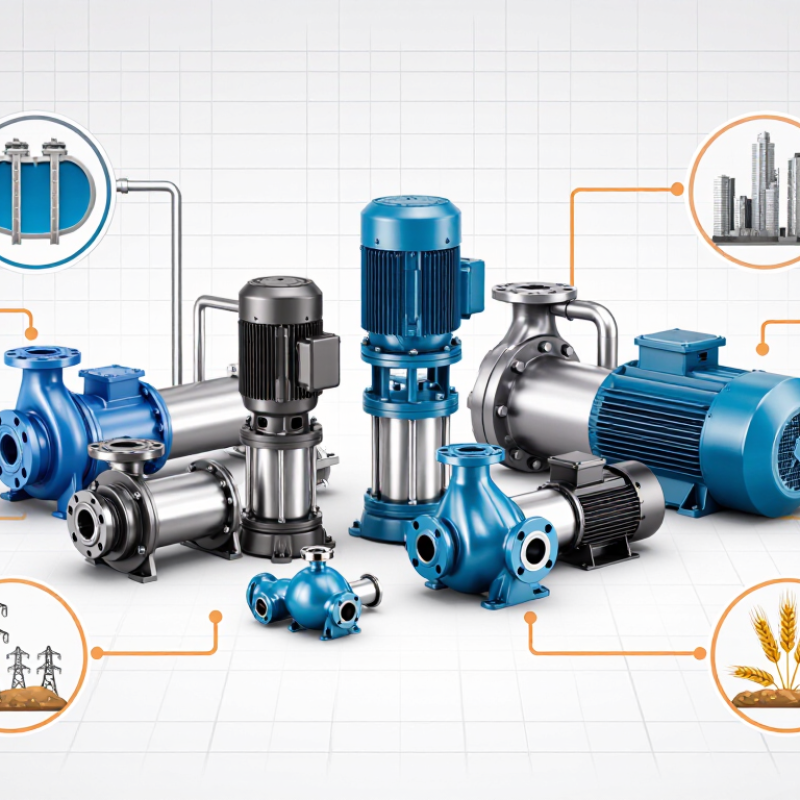
Industrial pumps move water, oil, chemicals, and other fluids through production systems. In China, they support municipal water networks, power generation, mining, agriculture, and manufacturing. Their work can be quiet but essential: a pump may keep cooling water flowing or maintain pressure in a factory line. That matters daily.
Common designs include centrifugal pumps for steady, high-volume flow and positive-displacement pumps for controlled delivery of thicker fluids. The right choice depends on flow rate, pressure, fluid temperature, and whether the liquid contains grit or corrosive substances. A mismatch can waste energy, wear seals, or interrupt production. Details can disappoint.
China’s varied industries create demand for pumps in many sizes and operating conditions. A maintenance inspection may reveal more than a catalogue: vibration, unusual noise, leaks, and changing discharge pressure can signal trouble. Materials and motor efficiency matter, but so do installation, spare-part access, and service support. No single design suits every site. Even a technically sound selection may underperform if pipe layout or operating habits are overlooked. These practical factors help explain what industrial pumps do and what to assess when comparing manufacturers.
What Are the Top 10 Industrial Pump Manufacturers in China? - Defining Industrial Pumps and Their Role in China
Industrial pumps move liquids or slurries through processes, treatment systems, and infrastructure. The table below summarizes ten widely used industrial pump types and their typical roles; it does not rank or identify manufacturers.
| No. | Industrial Pump Type | Basic Operating Principle | Typical Applications | Role in Chinese Industry and Infrastructure |
|---|---|---|---|---|
| 1 | Centrifugal pump | A rotating impeller adds energy to the liquid, producing flow and pressure. | Water supply, cooling-water circulation, general process transfer, and wastewater handling. | A versatile choice for moving water and relatively low-viscosity liquids in municipal services and industrial facilities. |
| 2 | Multistage centrifugal pump | Multiple impellers in series increase the pressure developed by the pump. | Boiler feed, high-rise water supply, mine drainage, and high-pressure process duties. | Used where water or process liquid must be delivered at higher pressure, including power, building, and mining applications. |
| 3 | Axial-flow pump | A propeller-like impeller moves a large volume of liquid mainly along the pump shaft. | Flood control, drainage, irrigation, and low-lift water transfer. | Supports high-volume water movement in irrigation and drainage systems, especially where the required lift is relatively low. |
| 4 | Mixed-flow pump | The impeller moves liquid with both axial and radial components. | Drainage, irrigation, water transfer, and circulation duties requiring moderate head and substantial flow. | Provides an option between axial-flow and centrifugal designs for regional water-management and industrial circulation needs. |
| 5 | Submersible pump | The motor and pump operate while submerged in the liquid being pumped. | Sewage lifting, construction-site dewatering, groundwater extraction, and sump drainage. | Can be installed in pits, wells, and wet wells, helping move wastewater and groundwater without a long suction line. |
| 6 | Magnetic-drive pump | A magnetic coupling transfers torque to the impeller without a conventional shaft seal. | Transfer of corrosive, hazardous, or volatile liquids in chemical processes. | Its sealless design can reduce leakage paths in applications where containment of process liquids is important. |
| 7 | Gear pump | Intermeshing gears carry liquid from the inlet to the outlet in fixed volumes. | Lubricating oil, fuel, polymers, and other liquids that can be handled by the pump materials and design. | Used for controlled transfer of oils and other viscous liquids in manufacturing and process equipment. |
| 8 | Screw pump | One or more rotating screws convey liquid along the pump casing. | Viscous liquids, oil transfer, sludge, and duties requiring steady, low-pulsation flow. | Can handle certain viscous or solids-bearing fluids in industrial processes and wastewater treatment, subject to pump design. |
| 9 | Diaphragm pump | A reciprocating diaphragm displaces liquid in a chamber; check valves control flow direction. | Chemical dosing, slurry transfer, and handling of corrosive or solids-bearing liquids. | Useful for applications needing positive displacement and, in suitable configurations, containment of the pumped fluid. |
| 10 | Metering pump | A positive-displacement mechanism delivers a controlled, adjustable volume per stroke or cycle. | Precise dosing of treatment chemicals, additives, and process reagents. | Helps regulate chemical addition in water and wastewater treatment and in industrial process control. |
Note: Pump suitability depends on factors such as flow rate, pressure or head, liquid properties, temperature, materials, and operating conditions. These pump categories are not a manufacturer ranking.
Related Posts
-
2026 Best Industrial Pumps for Global Buyers Insights?
-
2026 How to Choose the Best Pump Products for Your Needs?
-

How to Choose the Best Pump Products for Your Needs?
-
2026 Top Types of Pumps You Need to Know About?
-
How to Choose the Right Pump Products for Your Needs?
-
How to Choose the Right Pump Catalog for Your Needs?